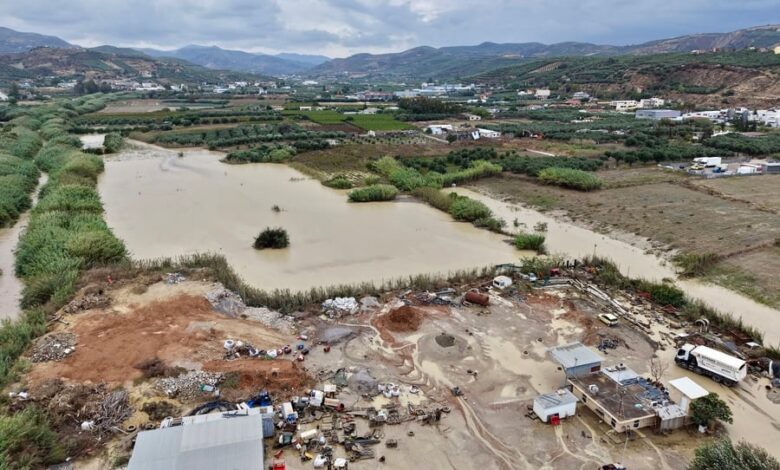
The emergency declaration followed a storm that recorded 361.4 millimeters (14.23 inches) of rain at Anogeia between Sept. 30 and midday Oct. 1, according to the National Observatory of Athens. The extreme precipitation caused floodwaters to cut roads, damage crossings, and trigger landslides, forcing emergency crews to conduct rescues and water-pumping operations across the region.
Human toll and infrastructure damage
The storm proved deadly in the Rethymno regional unit, where an 80-year-old livestock farmer was found dead near Karines in the Municipality of Agios Vasileios after being reported missing. Authorities stated he was discovered near a stream under debris carried by floodwaters.
In the town of Livadia, floodwaters damaged a bridge area, causing a vehicle carrying a couple to fall into a riverbed. Both occupants were transported to the University Hospital of Heraklion, where early reports indicated their lives were not in danger. The violence of the waters was evident in other parts of the island, where raging floodwaters swept cars through streets and destroyed walking bridges, prompting multiple water rescues.
In Mylopotamos, the impact on daily life has been significant. Schools and municipal childcare facilities remained closed for a second day on Friday, citing the new weather warning and serious damage to the road network. A torrent at Zoniana overflowed for a second day, leading firefighters to move two minors from one home to another as a precautionary measure. Municipal crews, regional authorities, and private contractors have been working to reopen routes and remove debris, though access to some communities remains difficult due to the extent of the damage.
Forecast for second wave
Concern has intensified as a new period of heavy rain begins to develop over the island. Greece’s Civil Protection authorities warned that saturated soil and already damaged infrastructure could make even less intense rainfall dangerous. The National Observatory forecasts heavier rain and thunderstorms from Friday afternoon through Saturday, particularly across northern, mountainous, and semi-mountainous Crete.

Met Office data classified Saturday’s rainfall episode as Category 4, or “very significant,” on its rainfall index. A separate Red Code mobilisation, ordered by Civil Protection, remains in force from Sept. 30 through Oct. 4, placing emergency services, local governments, and equipment on heightened readiness due to the forecast risk of flooding.
Residents in Mylopotamos have received a new 112 emergency alert urging them to limit travel as water and debris have again collected on roads. Until the dangerous weather passes, authorities stated that the priority remains keeping roads passable, protecting residents, and responding to new flooding. A full damage assessment for the municipality is scheduled to begin only after the immediate weather threat has subsided.