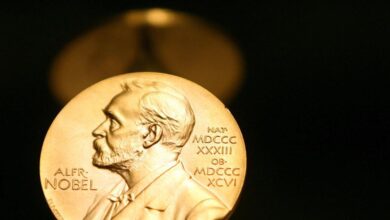
The prize acknowledges work conducted from the 1980s onward, during which Hopfield and Hinton independently applied concepts from physics to create methods that mimic the brain’s ability to process information. While the field of artificial intelligence is often associated with the structure of the brain, the laureates utilized specific physical models to solve computational problems related to memory and learning.
Physics as a tool for computation
John Hopfield’s contribution centers on the creation of an associative memory network. In his model, nodes within the network—representing pixels in an image or other data points—are connected in a manner analogous to synapses in the human brain. Hopfield applied principles from condensed matter physics, specifically the physics of atomic spin, where atoms act as tiny magnets. By describing the network’s state in terms of energy, similar to a spin system, he developed a method to store and reconstruct patterns. When the network is fed a distorted or incomplete image, it systematically updates the values of its nodes to lower the system’s energy, thereby identifying and reconstructing the stored image that most closely resembles the input.
Geoffrey Hinton built upon this foundation by inventing the Boltzmann machine. Named after the 19th-century physicist Ludwig Boltzmann, this network uses tools from statistical physics, a branch of science that studies systems composed of many similar components, such as the temperature of a gas made of many molecules. Hinton’s method allows the network to autonomously find properties in data. The machine is trained by feeding it examples that are likely to arise during its operation, enabling it to learn to recognize characteristic elements within a dataset. This approach allows for tasks such as classifying images or generating new examples based on the patterns it has learned.
The U.S. National Science Foundation (NSF) highlighted that it supported the pioneering work of both laureates in the 1980s. This support helped establish the foundation for what is now considered a major technological revolution. The NSF noted that their breakthroughs used fundamental concepts from physics to develop computer technologies that mimic organic brain functions, specifically memory and learning. Hopfield’s seminal 1982 paper, “Neural networks and physical systems with emergent collective computational abilities,” is cited as a key milestone in this development.
Impact and recognition
Ellen Moons, Chair of the Nobel Committee for Physics, stated that the laureates’ work has already provided significant benefits to the field of physics itself. Artificial neural networks are now utilized in a vast range of areas, including the development of new materials with specific properties. The application of these networks extends beyond physics, forming the core of modern machine learning systems.
Sethuraman Panchanathan, Director of the NSF, described the work as creating an “entirely new foundation” that led to what is now called AI, potentially the greatest innovation of the generation. He emphasized that beyond their scientific breakthroughs, Hopfield and Hinton provided invaluable training to numerous students who have since become innovators and leaders in the scientific enterprise.
The recognition of Hopfield and Hinton underscores the interdisciplinary nature of modern scientific progress. By treating information processing as a physical system governed by energy landscapes and statistical probabilities, they provided the mathematical and conceptual framework necessary for the explosive development of machine learning. Their work demonstrates that understanding the fundamental workings of nature can lead to new realms of technological capability, bridging the gap between physical laws and digital computation.