
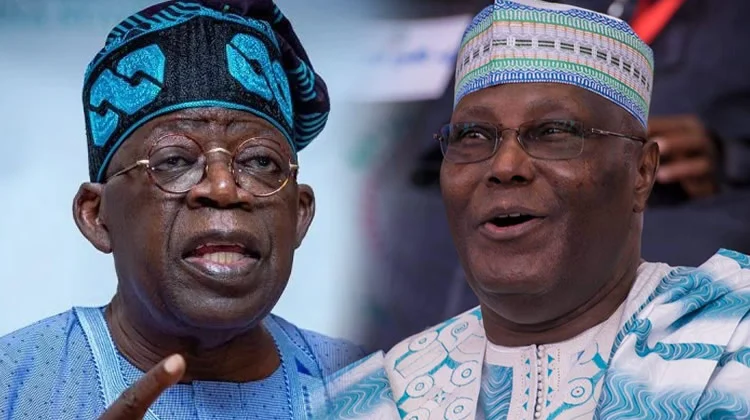
In a statement issued on Sunday by Phrank Shaibu, Director of Strategic Communications for the ADC Presidential Campaign Council, Abubakar challenged the Federal Government to agree to a substantial wage increase that reflects prevailing economic realities. He argued that workers are facing a sharp decline in purchasing power despite the statutory wage hike implemented earlier this year.
Abubakar criticized the administration’s handling of the cost-of-living crisis, describing it as a “ruthless economic squeeze” in which workers are paid more on paper but are effectively living on less. He accused the government of removing the petrol subsidy before establishing adequate protections for working families, noting that the subsequent price increases have outpaced wage adjustments.
“The government pulled away the floor, offered workers a flimsy umbrella and now applauds itself while the rain beats down on them,” Abubakar said. He added that fuel, transport, food, and rent have “devoured” workers’ earnings, characterizing the situation as a cruel arithmetic of the current cost-of-living crisis.
To illustrate the erosion in value, Abubakar compared the purchasing power of the current wage against the previous rate using petrol prices as a benchmark. He noted that at the April 2023 national average petrol price of N254.06 per litre, the former N30,000 minimum wage could purchase approximately 118 litres of fuel. In contrast, at the current price of approximately N1,400 per litre in major cities like Lagos and Abuja, the N70,000 wage buys only about 50 litres.
“The payslip has grown, but the fuel it can buy has more than halved,” Abubakar stated. “Tinubu has given workers a larger number and left them with a smaller life. That is hardship dressed up as a wage increase.”
The remarks come amid renewed pressure on the government regarding petrol prices and broader household budgets. Recent reports indicate petrol prices are around N1,400 per litre in Lagos and Abuja, with higher prices recorded in parts of northern Nigeria. Abubakar argued that high energy costs extend beyond fuel stations, influencing the prices of food and essential commodities as transportation costs rise.
The Federal Government increased the minimum wage from N30,000 to N70,000 in July 2024 following negotiations with organised labour. At the time, President Tinubu signed the bill into law and indicated that the wage would be reviewed after three years, a reduction from the previous five-year statutory cycle. However, Abubakar maintained that the economic environment has changed significantly since that agreement, rendering the current wage insufficient.
Abubakar also compared Nigeria’s minimum wage unfavorably with those of other African oil-producing countries, although he acknowledged that wage structures and living costs vary across nations. He urged President Tinubu to clarify his position on a further wage increase, warning against prolonged negotiations without a definite outcome.
“If he has no intention of raising workers’ pay, he should say so plainly and stop stringing the Nigeria Labour Congress and other labour leaders along,” Abubakar said. “Nigerian workers deserve an answer, not another round of meetings that ends where it began.”
Looking ahead to the 2027 election, Abubakar pledged that his administration would begin work on raising the wage floor from its first day in office. He outlined a platform that includes targeted social protection, support for domestic production, and interventions in the petroleum sector. He proposed a targeted production subsidy for petroleum products refined in Nigeria, subject to spending limits, public accounting, and independent auditing, to ensure measurable relief at the pump.