
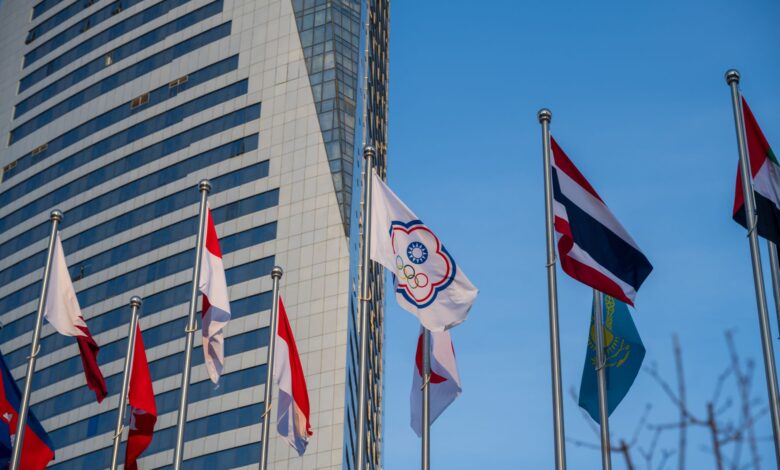
The establishment of the People’s Council marks a distinct phase in Kazakhstan’s ongoing political transformation. By institutionalizing a channel for public participation in state decision-making, the administration aims to create a more responsive governance structure. Tokayev highlighted the importance of avoiding bureaucracy within the council, positioning it as a mechanism to elevate local concerns to the national level. This structural adjustment reflects a broader effort to modernize the state-society interaction framework, ensuring that diverse societal groups have a defined role in the political process.
Strategic Economic Alignment
While domestic political structures are being refined, Kazakhstan is simultaneously consolidating its external economic partnerships, with a pronounced focus on China. During the Kazakhstan-China Investment Forum in Almaty, President Tokayev identified strengthening the “enduring friendship” with Beijing as one of the most important goals of the country’s foreign policy. He cited the historical coexistence of the two nations, noting a long-standing tradition of mutual respect and harmony that has persisted through various geopolitical shifts.
Tokayev argued that amid a period of global instability and uncertainty, Kazakhstan and China must operate as reliable partners to address shared challenges. To facilitate this, he proposed that the Investment Forum become a permanent platform for direct engagement between the business communities of the two nations. Additionally, the President announced the launch of a joint initiative titled “Common History, Destiny. Designed and Made in Both China and Kazakhstan.” This program signals a deepening of industrial and technological cooperation, moving beyond simple trade to collaborative production and design.
The economic context for these diplomatic moves is supported by recent macroeconomic data. Over the past seven years, Kazakhstan’s GDP has grown by 29%, reaching $306 billion. The country’s foreign exchange reserves and National Fund assets now exceed $138 billion. Furthermore, Kazakhstan attracted more than $162 billion in investment during this period. The small and medium-sized business sector has also expanded significantly, now accounting for more than 40% of the economy. These figures provide the financial foundation upon which new bilateral agreements and domestic reforms are being built.
Defense Leadership Change
Amid these political and economic developments, the Kazakh leadership made a significant personnel change in the defense sector. President Tokayev dismissed Defense Minister Dauren Kosanov and appointed Aidos Myrzakhmetov to the position. This decision followed a tragic incident in which 14 servicemen were killed during military exercises in the Caspian Sea. The dismissal underscores the administration’s response to accountability within the military apparatus during a period of heightened security attention.
The juxtaposition of these events reveals a government managing multiple fronts simultaneously. Domestically, the launch of the People’s Council seeks to legitimize and streamline public engagement, while the defense leadership change addresses operational failures and ensures strict adherence to safety and command protocols. Externally, the emphasis on China reflects a strategic calculation to secure economic stability and political support in a volatile international environment. By linking its economic growth narrative with deepened ties to Beijing, Kazakhstan positions itself as a stable partner capable of navigating global uncertainties.
As the new Defense Minister assumes his duties and the People’s Council begins its operational work, the focus will likely turn to how these institutions interact with existing legislative bodies and how the proposed joint programs with China materialize into tangible industrial projects. The success of these initiatives will depend on the ability of the new political platforms to deliver concrete results for citizens while maintaining the strategic partnerships that underpin the country’s economic resilience.