
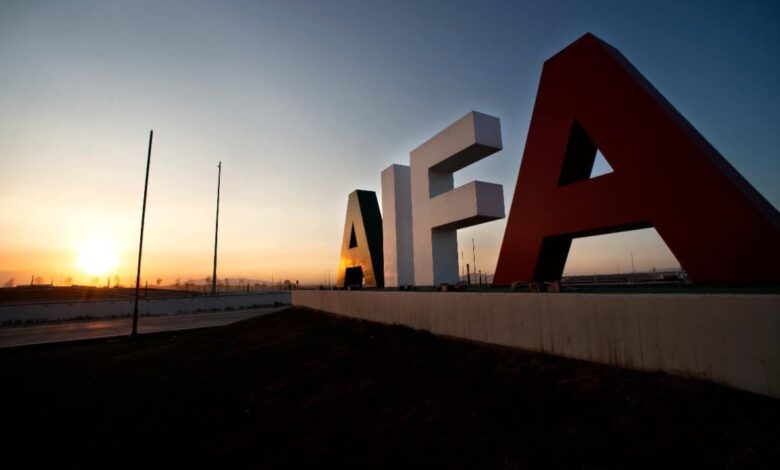
The recognition of AIFA by the U.S. Department of Transportation (DOT) marks a de-escalation in a conflict that had disrupted air connectivity between the two nations. The dispute originated in 2023 when Mexico transferred cargo operations from the historic Benito Juárez International Airport (AICM) to AIFA. U.S. authorities argued this move violated the 2015 bilateral air transport agreement, leading to the cancellation of 13 routes by Mexican carriers into the U.S. in October 2025. These measures significantly impacted Mexican airlines, which rely on the U.S. market for approximately 80% of their international traffic.
During a press conference on November 17, President Sheinbaum announced that her government, U.S. carriers, and authorities had agreed to a new distribution of slots. “Before that meeting, a new distribution was made in which Mexican airlines cede their slots to U.S. airlines under a principle of competitiveness,” Sheinbaum stated. While specific details of the slot scheme were not disclosed, the President noted that cargo airlines appeared satisfied with the arrangement. A bilateral working group, comprising officials from Mexican transport agencies and the DOT, will now oversee the implementation of these reforms and evaluate regulatory progress.
Rail Expansion and Operational Challenges
The inauguration of the rail line is part of a broader strategy by the Morena government to recover Mexico’s passenger rail services, a project accelerated from its origins during the previous administration. The line features six new stations—Cueyamil, La Loma, Teyahualco, Prados Sur, Cajiga, and Xaltocan—along with the Clara Krause Terminal station. The terminal is equipped with six escalators and platforms capable of handling nine trains, while the entire line is monitored by 294 surveillance cameras and 448 speakers.
Despite the political and infrastructural milestones, the project has faced significant financial and operational hurdles. The cost of the Buenavista–AIFA line increased by over 90%, rising from an initial MX$12.479 billion (US$730 million) to more than MX$23.689 billion (US$1.38 billion). Initial operations have also revealed constraints; the line began service with only four of its ten trains running every 30 minutes, leading to overcrowded platforms and waiting times of up to an hour during launch events. The Ministry of Infrastructure, Communications and Transportation (SICT) reported that the line will eventually increase frequency to every 12 minutes, with a maximum daily capacity of 80,000 passengers. Currently, the fare is set at 45 pesos (US$2.60) for the first month, a fraction of the cost of ride-hailing services, which charge between 600 and 900 pesos per trip.
The rail link is integral to AIFA’s long-term expansion strategy. Isidoro Pastor Román, Director General of AIFA, outlined a phased plan extending to 2052. The first phase aims to increase capacity to 20 million passengers annually by 2032, while the second phase will double that to 40 million by 2042. Passenger traffic reached 7.06 million in 2025, hitting approximately 95% of projections, with expectations of 8.3 million travelers in 2026. The airport has already handled more than 1.15 million metric tons of cargo between March 2022 and April 2026.
For Mexican aviation executives, the priority is the rapid execution of the new agreement. Leaders from Aeroméxico, Volaris, and Viva have emphasized the need to conclude the regulatory measures imposed in 2025 to restore full connectivity. As the rail line begins to carry thousands of passengers daily, the success of AIFA will depend on balancing domestic infrastructure integration with the restored stability of transborder air routes.