
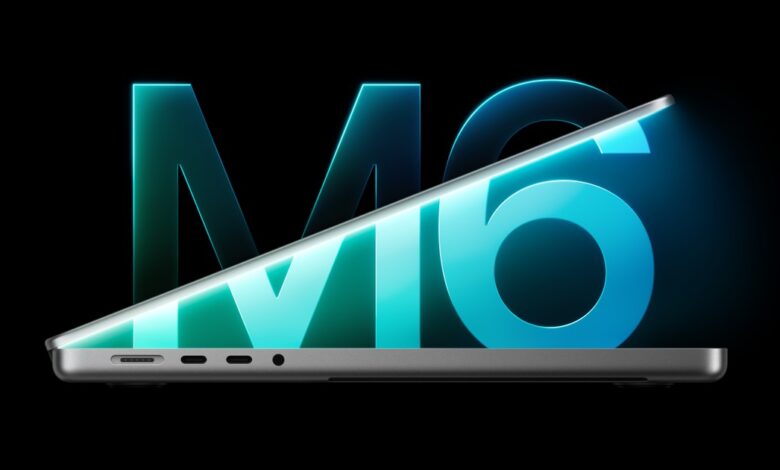
The technological core of this release is the M6 architecture, which Apple claims delivers up to 30 percent faster graphics and 25 percent faster AI workloads compared to the previous M5 generation. For users upgrading from the original M1 chip, the company projects performance gains of up to 11x in graphics and 13x in AI performance. These improvements are attributed to a 12-core CPU, described by Apple as featuring the “world’s fastest CPU core,” and a 12-core GPU equipped with Neural Accelerators in each core. The inclusion of the Dual 16-core Neural Engine is a distinct architectural addition aimed at accelerating local large language model (LLM) inference, allowing users to run AI tasks locally rather than relying on cloud services. Apple asserts that this setup supports features like Apple Intelligence and Siri AI across macOS 27, while preserving user privacy by keeping data on the device.
Connectivity and battery life have also been upgraded to support these heavier workloads. The new MacBook Pro features Wi-Fi 7 and Bluetooth 6, alongside “superfast storage” intended to handle large file exports and demanding AI workflows. Apple claims the device offers up to 24 hours of battery life, maintaining performance consistency whether plugged in or running on battery. The hardware is housed in the familiar 14-inch chassis, available in space black and silver, with options for a nano-texture Liquid Retina XDR display, a 12MP Center Stage camera, and a six-speaker sound system. Pre-orders opened on October 28, with retail availability scheduled for November 6, 2026.
Despite the technical specifications, the launch has been met with immediate skepticism regarding its value proposition. The base 14-inch M6 MacBook Pro is priced at $1,999 for a configuration with 16 GB of RAM and 512 GB of storage. Tech analysts note that Apple raised prices across its Mac lineup earlier in the year, with the base 14-inch model seeing a $300 increase. This pricing has created a “serious problem” for consumers, particularly those looking to optimize their budget for AI capabilities.
Independent reviewers have highlighted a stark contrast in value when comparing the new MacBook Pro to other recently discounted Apple products. Currently, the M6 Mac Mini is on sale for $779, a $120 reduction from its retail price, while the 13-inch M5 MacBook Air is $150 off. For the same $1,999 price tag as the base M6 MacBook Pro, a consumer could purchase both devices. This combination is particularly relevant for users who utilize a desktop Mac as an always-on AI agent, controlled remotely via a laptop. By configuring the Mac Mini with up to 32 GB or 64 GB of memory, this dual-device setup may offer more robust AI processing power for the same cost as the single, more expensive laptop.
Furthermore, an alternative option within the same price bracket is the M5 MacBook Pro equipped with the M5 Pro chip, which costs only $200 more than the base M6 model. This device appears identical on the outside but offers better internal performance, complicating the value calculation for buyers who do not strictly require the M6’s specific architectural improvements. While the M6 chip’s dual Neural Engine is noted to speed up certain AI tasks in creative applications, the premium price for the base 16 GB configuration remains a point of contention. Analysts suggest that until independent, comprehensive testing of the M6 MacBook Pro is completed, the price alone questions whether there are better ways to spend a $2,000 budget within the Mac ecosystem.
The launch of the M6 MacBook Pro signifies a shift in Apple’s hardware strategy, where on-device AI capability is becoming a primary differentiator. The integration of Neural Accelerators in the GPU and the expanded Neural Engine reflects the industry’s move toward local AI processing to address privacy concerns and latency issues associated with cloud-based models. However, the commercial reality of this shift is currently muddied by aggressive discounting of previous-generation hardware, which undermines the perceived value of the new flagship laptop. As pre-orders continue, the market will likely focus on whether the M6’s specific AI advantages justify the premium over the M5 Pro or over a multi-device setup that leverages the current sales on the Mac Mini and MacBook Air.