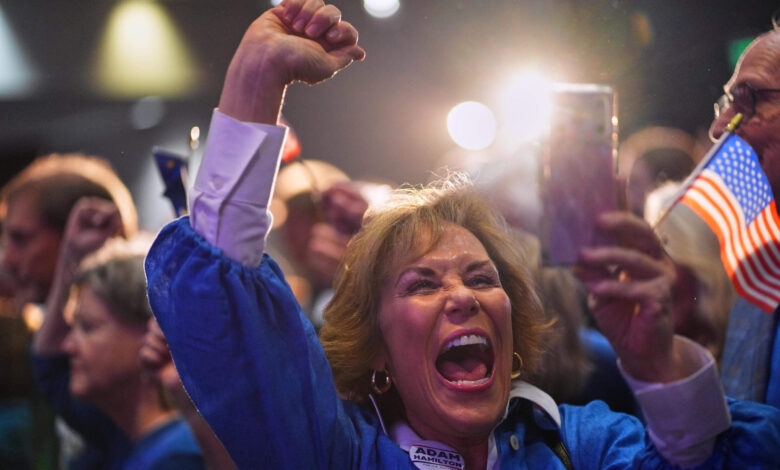
The magnitude of the Democratic victory was underscored by wins in states that had previously served as reliable strongholds for the Republican Party. Kansas, for instance, elected a Democrat to the U.S. Senate for the first time since 1932. In Maine, the election results challenged the long-held perception of Senator Susan Collins as a Republican “moderate,” while South Carolina, a state President Donald Trump had won by nearly 18 points in the 2024 election, rejected the bid of the late Senator Lindsey Graham’s sibling for a Senate seat. These geographic shifts indicate a broad-based rejection of the current political establishment rather than a narrow demographic swing.
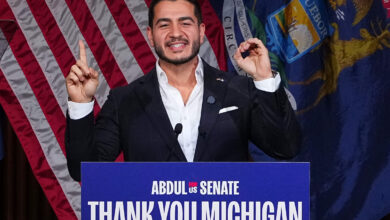
Individual electoral outcomes highlighted the intensity of the campaign cycles, which were marked by significant controversy and attacks on the personal integrity of candidates. Dr. Amy Acton was elected governor of Ohio, defeating a campaign strategy that, according to post-election analysis, involved smearing her as a liar, a claim linked to the indictment of her stepfather for childhood rape. Similarly, Dr. Abdul El-Sayed, a Michigan-born Rhodes Scholar of Egyptian heritage, was elected U.S. Senator from Michigan after voters rejected racist characterizations of him as a “jihadist.” In Texas, former middle school teacher James Talarico secured a Senate seat, overcoming a campaign narrative that distorted his empathy for gay and trans youth into allegations of pedophilia. These victories suggest that voters in key swing and red states prioritized policy and personal integrity over the aggressive negative tactics employed by the opposing party.
Despite the electoral defeat of the Republican Party’s congressional candidates, the executive branch remains under the control of President Donald Trump, who will serve out the remainder of his term alongside Vice President JD Vance. This division of power creates a complex political dynamic. President Trump has denied that the Republican losses are attributable to his leadership, but political analysts and international observers note the correlation between the administration’s policies and the voter backlash. The incoming Democratic leadership faces the challenge of governing alongside an incumbent president who is expected to continue pursuing his agenda, including potential efforts to influence the U.S. Supreme Court during the lame-duck session to extend conservative dominance on the nation’s highest court.
The political significance of this shift extends beyond simple party control; it represents a mandate for specific policy actions. The incoming Democratic majority is under pressure to move quickly on issues such as the closure of ICE detention centers, the redirection of federal funding from foreign military engagements, and the mitigation of economic disparities. There is a distinct urgency noted by political commentators to avoid internal debates over radical versus incremental change or the prospect of impeachment trials, focusing instead on the immediate consequences of the previous administration’s policies on the public.
International reactions to the election results have been varied. For many observers outside the United States, the defeat of the Trump administration’s political allies provided a sense of relief, described by some as “schadenfreude.” This sentiment was fueled by the spectacle of the campaign itself, including incidents where President Trump publicly described the physical attributes of male political figures in ways that contradicted the conservative values of his base. Observers noted the irony of hardline supporters standing behind the president as he objectified male senators, a moment that highlighted the disconnect between the administration’s rhetoric and the behavior of its leader.

However, the path forward remains uncertain. While the Democratic victory is historic, it does not eliminate the challenges facing U.S. governance. The next two years will be defined by the balance of power between a Democratic Congress and a Republican White House. The incoming leaders must navigate a judiciary that has, according to critics, ceded authority to the executive branch, and an administration that is expected to accelerate its retribution campaign against political opponents. The coming months will test whether the electoral mandate translates into substantive legislative change or if the structural entrenchment of the previous administration’s policies will prove difficult to reverse.
As the January 3 swearing-in approaches, the focus shifts from the celebration of victory to the practical realities of governance. The Democratic leadership is tasked with addressing the “squalid” conditions of detention centers and the “feckless” foreign policy initiatives criticized by voters. The success of this new Congress will depend on its ability to maintain unity and leverage its institutional authority to check the executive branch, a role that has been contested in recent years. The political narrative is no longer about who holds power, but how that power will be exercised in the face of deep societal divisions and an incumbent president determined to maintain his influence until the end of his term.