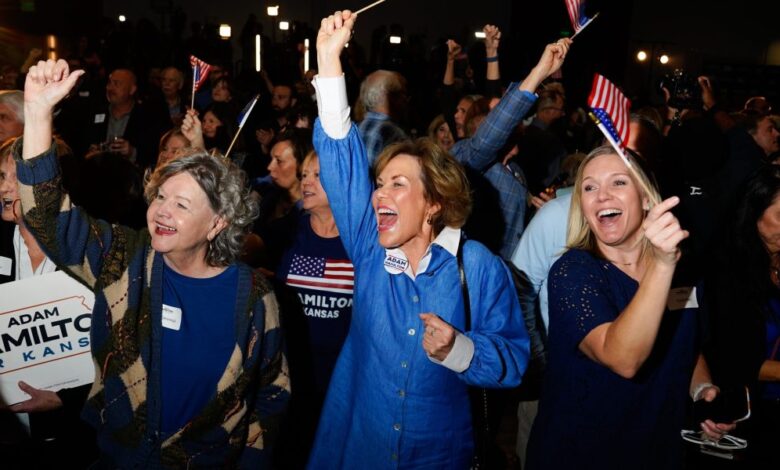
The electoral shift was particularly notable in states that President Donald Trump won easily in the 2024 presidential election. Kansas, which had not elected a Democrat to the Senate in nearly a century, joined a list of deep-red states where Democratic candidates prevailed. NBC News analysts noted that voters in Kansas, South Carolina, Texas, Ohio, and Iowa not only backed Democrats for the Senate but, in several instances, for governor as well. This outcome challenges the long-held geographic deadlock that has defined U.S. politics for the past decade.
The political consequences of the loss are immediate. Control of the Senate grants Democrats an effective veto over President Trump’s remaining nominees for the rest of his term. In the House, the Democratic majority ends Republican control, which had been held since 2023. With all 435 House seats on the ballot, the party’s ability to flip battleground districts in Pennsylvania, Michigan, New York, Kentucky, and Colorado signals a broad-based turnout surge rather than a localized gain.
Voters indicated that the election served as a referendum on the presidency. Demographic data shows that across age groups, opposition to Trump was the primary motivator for voting, with 60% of voters aged 18 to 29 citing opposition to him, compared to only 7% to 22% who voted in support. Even among voters aged 65 and older, who were the most likely demographic to back Trump at 22%, the majority leaned toward opposition. Trump, who was not on the ballot, claimed on his Truth Social platform that Republicans would have “won IN A LANDSLIDE” had he been a candidate.
Political strategists caution that while the results are historic, the durability of this tectonic shift remains to be seen. Joshua Huder, a Georgetown political scientist, noted that for Democrats to maintain these gains in the red center of the country, they must engage with issues vital to those regions, such as the farm bill. David Polyansky, a Texas Republican strategist, observed that the results may entice Democrats to make a serious bid for Texas’s 40 electoral votes in the next presidential cycle, a move that would force Republicans to spend significant resources on defense. Jen O’Malley Dillon, a Democratic campaign strategist, acknowledged the complexity of reaching voters in a polarized nation, stating that the party is in a good position “as long as we don’t screw it up.”
The next major political step will be the organizational consolidation of these new Democratic majorities. While the immediate focus is on the legislative agenda and confirmation processes, the long-term implication is a potential redraw of the path to the presidency, with conservative states now considered competitive battlegrounds.