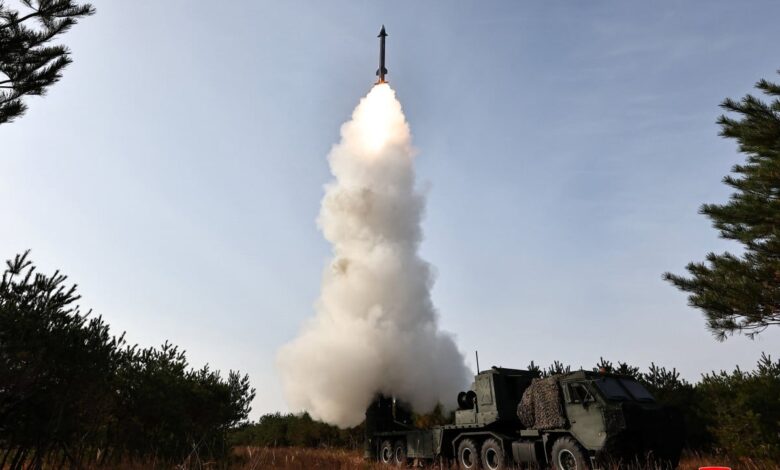
Pyongyang tested a new surface-to-air missile system and conducted a strike drill using long-range strategic cruise missiles early Wednesday, Korean time. This marked the fourth weapons test carried out by the North Korean state in the past week. The timing of these military exercises aligns with the immediate aftermath of the US elections, suggesting a strategic recalibration in response to the changing political landscape in Washington.
In Manila, the Philippines voiced optimism that the Democratic Party’s resounding midterm win would lead the United States to adopt a different approach to President Trump’s hardening immigration crackdown. The crackdown has ensnared many Filipinos, and the change in legislative power has given hope to Jose Manuel Romualdez, Manila’s representative, that checks on executive policy may be forthcoming. The Democratic gains provide the opposition with the legislative authority to check presidential policies, a development that directly impacts the diplomatic posture of US allies and partners regarding domestic US enforcement actions.
The Democratic Party’s control of both the House and the Senate represents a significant check on the administration’s ability to enact unilateral policy changes without legislative oversight. For North Korea, the diminished likelihood of direct diplomacy with the President suggests a strategic pivot away from engagement and toward military readiness. The North Korean leadership appears to be bracing for a longer period of tension, utilizing weapons tests to assert its military capabilities during this transition in the US political balance.
The concurrent developments highlight the global ripple effects of the US midterm elections. While the Philippines seeks relief from immigration enforcement through legislative checks, North Korea interprets the same political shift as a signal that diplomatic avenues are narrowing. The outcome of the elections has thus created divergent geopolitical responses: one seeking to leverage new legislative power for policy adjustment, and the other accelerating military activity in anticipation of a more adversarial US stance.
The next expected development will be the formal response from US officials to North Korea’s recent series of weapons tests and the subsequent legislative actions taken by the newly empowered Democratic majority in Congress regarding immigration policy.