
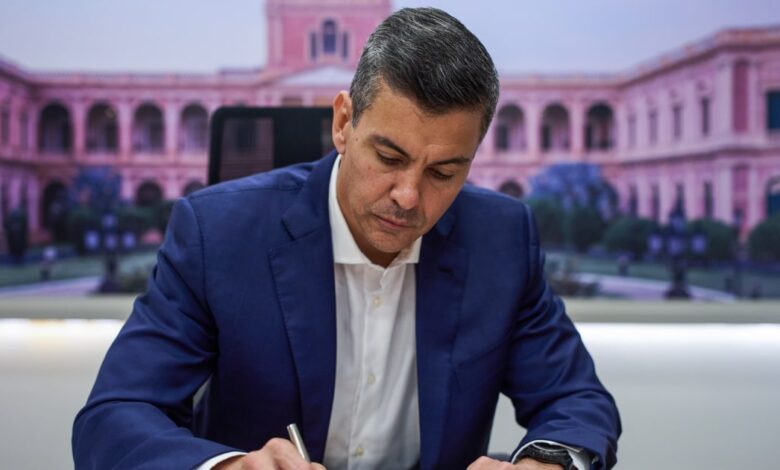
In a recorded video address on Thursday, Peña stated he was resigning “with the stability of our country, social peace and the need to preserve our democratic institutions in mind.” The decision places Vice President Pedro Alliana next in line for the presidency, though his formal assumption of power remains subject to procedural hurdles in the legislature.
The political crisis stems from the rapid decline of Ueno, which had grown from a niche fintech player into a mid-tier bank administering close to $850 million in public funds. Paraguay’s central bank intervened after determining that Ueno had breached minimum solvency requirements. This regulatory action resulted in the freezing of accounts for the bank’s roughly 3 million customers in a country with a total population of 6.5 million. The collapse has already led to the resignation of the head of the central bank and the detention of eight Ueno executives, who turned themselves in after prosecutors issued arrest warrants on Tuesday. Courts have ordered the freezing of these executives’ assets, with some subsequently placed under house arrest as the investigation widens.

President Peña, an economist elected in 2023, faced intense scrutiny due to his past shareholding in Grupo Vázquez, the parent company that owned Ueno until March 2025. Lawmakers accused Peña of conflicts of interest, misuse of pension funds, and institutional cover-ups linked to the bank’s failure. In his resignation address, Peña rejected allegations of improper ties, describing the controversy as a political escalation of a technical and regulatory issue. He expressed his “greatest wish” that the return of funds be guaranteed and that the deposit guarantee fund fulfill its purpose to protect public resources.
The loss of confidence in the presidency was explicit. Peña lost the backing of members of his own conservative party ahead of a scheduled impeachment debate. Despite the president’s resignation, the lower house of Congress proceeded with its extraordinary session on Thursday. The lower house approved the impeachment of Peña while simultaneously rejecting an impeachment motion against Vice President Alliana. The measure now moves to the Senate, which is scheduled to vote on the impeachment proceedings later Thursday. Additionally, Peña’s resignation must be ratified by the Senate. Legal experts note that an ongoing impeachment trial could delay the process of Alliana being sworn in to replace Peña.
The crisis has had immediate repercussions on Paraguay’s standing in international markets. The country’s sovereign international bond prices tumbled following news of the resignation. Analysts warn that the incident has undermined Paraguay’s hard-won reputation as a stable destination for foreign investment, particularly from neighboring Brazil. In a note to clients, JPMorgan observed that the Ueno developments had “rapidly acquired a political dimension,” adding that risks to the wider financial system would hinge on “the speed and transparency” of the authorities’ response. Ueno itself has made no public statement regarding the collapse or the political fallout.
Peña, described as an ally of U.S. President Donald Trump, had previously argued that any wrongdoing should be addressed through the courts rather than political maneuvering. However, the scale of the customer impact and the detention of key executives shifted the dynamic, leading to protests that demanded his resignation. The Senate’s upcoming votes on both the ratification of the resignation and the status of the impeachment proceedings will determine the timeline for the transfer of power and the legal consequences for those involved in the Ueno collapse.