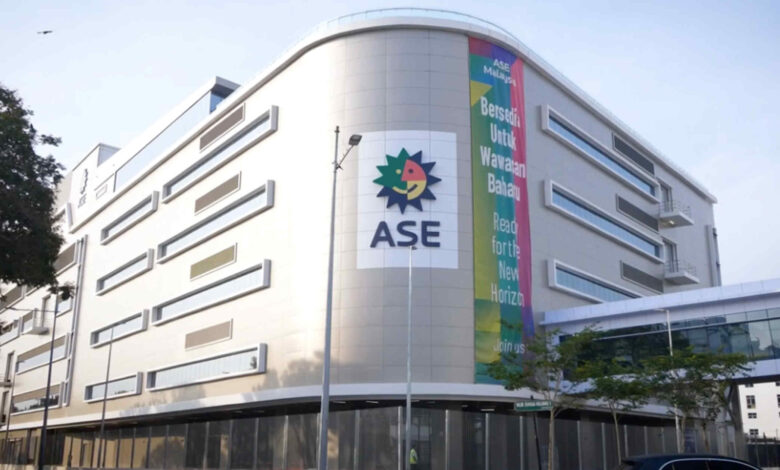
At the center of this economic anxiety is the semiconductor industry, where Taiwan’s manufacturing giants have increasingly turned to Malaysia as a critical hub for advanced packaging and testing. Companies such as ASE (Advanced Semiconductor Engineering), a major Taiwanese chipmaker, have recently entered or expanded their operations within Malaysia. For these firms, the country is not merely a secondary market but a vital node in the global chip supply chain. Industry players are now warning that the current bilateral strains could dent future investment, suggesting that the confidence required for long-term capital expenditure is sensitive to the political climate between the two jurisdictions.
The situation presents a complex contradiction in official messaging versus on-the-ground business sentiment. While the trade talks have been suspended, Prime Minister Anwar Ibrahim has publicly stated that Malaysia-Taiwan economic relations remain strong. This official assurance aims to reassure investors and maintain the momentum of existing projects. However, the decision to shelve the talks is a concrete action that contrasts with verbal reassurances. In the world of international trade, the cancellation of high-level dialogue is often interpreted as a signal of cooling relations, even if existing contracts remain intact.
The significance of this development extends beyond the immediate diplomatic friction. The semiconductor industry relies heavily on predictability. When geopolitical remarks trigger diplomatic fallout, it introduces an element of uncertainty that can affect decision-making processes for new factory construction, equipment purchases, and workforce planning. The warning from industry players is not necessarily that current operations will halt, but that the pipeline of *future* investment—the capital that has not yet been committed—may become more cautious. Investors evaluate risk not just on tax incentives or logistics, but on the stability of the political relationship between the host country and the source of capital and technology.

There is a distinct lack of specific numerical data in the available reports regarding the exact scale of pending investments that might be at risk, nor are there specific figures detailing the immediate financial impact on Malaysia’s GDP or export volumes. This absence of granular data underscores the nature of the current threat: it is potential rather than realized. The “pure anger” expressed in Taipei is a qualitative indicator of diplomatic temperature, not a quantitative measure of economic loss. Consequently, while the strategic importance of Malaysia in the chip supply chain is clear, the specific magnitude of the potential investment dent remains an open variable.
This episode highlights the increasing vulnerability of trade relationships to geopolitical statements. In previous decades, trade and diplomacy could often operate in parallel, with commercial ties persisting despite political differences. Today, the integration of supply chains, particularly in high-tech sectors like semiconductors, makes these links more sensitive. A remark that might have been dismissed in the past can now trigger a re-evaluation of business strategies. The shelving of the talks is a defensive move by both sides, possibly to prevent further escalation, but it also removes a key mechanism for resolving commercial disputes and coordinating policy.
For households and workers in Malaysia who are employed in these semiconductor factories, the immediate impact is likely to be minimal, as existing jobs and production lines continue to operate. The concern lies in the long-term trajectory: if future expansions are delayed or scaled back due to diplomatic strain, the growth in high-skilled employment and the associated wage premiums could be affected. The distinction here is between the current state of employment, which remains strong, and the future trajectory of job creation, which is now subject to geopolitical risk assessment.

The disagreement between the Prime Minister’s assurance of strong relations and the industry’s warning of potential investment dents is a key uncertainty. Official statements aim to project stability to the market, while industry warnings reflect the internal risk assessments of corporations. Resolving this disconnect will require more than verbal assurances; it will likely necessitate a restoration of dialogue. The cancellation of the talks is a pause, but it is a visible one that has altered the perception of the commercial environment.
As the semiconductor sector remains a primary driver of Malaysia’s high-tech export strategy, the interplay between Kuala Lumpur and Taipei is crucial. The industry’s reliance on Taiwanese technology and capital means that any friction has direct economic consequences. The next critical step will be whether either side initiates a new channel of communication or if the silence persists. For now, the shelved talks stand as a symbol of the heightened sensitivity in which modern trade operates, where a single diplomatic remark can ripple through the boardrooms of major manufacturers and affect the long-term investment landscape.
The immediate focus for businesses remains on maintaining current operations while monitoring political developments. The warning from industry players serves as a reminder that economic resilience is not just about physical infrastructure but also about diplomatic stability. As the “One China” issue continues to dominate the diplomatic discourse, the commercial implications will remain a secondary but significant undercurrent, watched closely by those who depend on the flow of chips and capital across the region.