
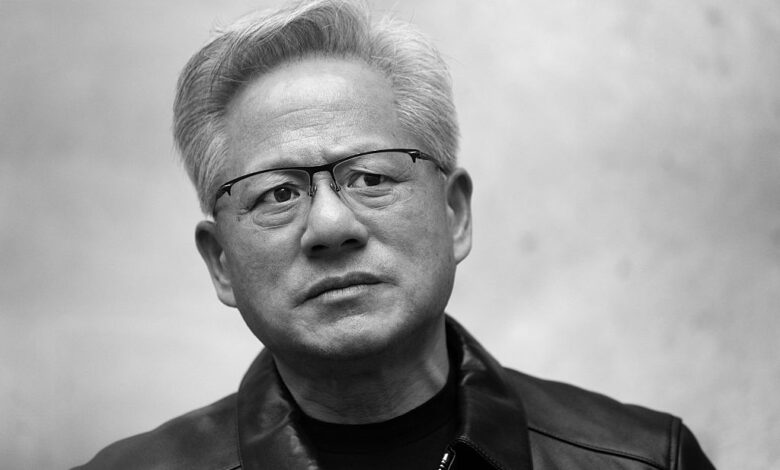
Huang, a co-founder who has led Nvidia since its inception three decades ago, was widely regarded as the central figure behind the company’s dominance in the AI chip market. His exit has not caused an immediate collapse in market confidence, but it has exposed structural vulnerabilities in how some of the world’s most valuable corporations are managed. The immediate response has been to place seasoned internal leaders in charge. Colette Kress, who has been with the company since 2013, has taken over as interim CEO, while Harvey Jones assumes the role of chair. Both are Silicon Valley veterans tasked with steadying the ship during a period of significant market sensitivity.
The financial stakes are considerable. Nvidia’s computer chips are at the core of the generative AI revolution, and its $4 trillion valuation makes it one of the most valuable companies globally. This valuation is not just a reflection of current earnings but is heavily driven by sweeping financial investments and expectations across the AI industry. Critics have long warned of a potential bubble in AI valuations. While the departure of a founder-CEO is a significant event, observers note that the company’s survival is not solely dependent on Huang’s personal presence. Adam Kobeissi, an investor and financial writer, argued that the company is likely to survive and thrive, stating, “This is not some sort of bubble-popping moment where everything comes crumbling down.” He emphasized that while Huang was the “godfather” of the AI revolution, he was not the sole architect of the company’s success.
However, the transition has highlighted a critical gap in corporate oversight. Charles Elson, founding director of the University of Delaware’s Weinberg Center for Corporate Governance, noted that Nvidia’s board should have had a clearer succession plan and stronger oversight mechanisms in place. The allegations leading to Huang’s departure, including reports that he hired a law firm known for covering up scandals a year prior, suggest that internal monitoring may have been insufficient. Gil Duran, author of *The Nerd Reich: Silicon Valley Fascism and the War on Democracy*, predicted that these errors would be studied in business and public relations crisis management classes, citing a board that was “completely missing out on most of the truth and the facts.”
The implications extend beyond Nvidia to the broader structure of Big Tech. Carissa Veliz, associate professor of philosophy at the Oxford Institute for Ethics in AI, framed the issue as one of democratic and economic vulnerability. She argued that allowing a single individual to wield such power over decisions affecting the economy and national security reveals a systemic flaw. “We have shifted from a framework where corporations prove they are doing good for the country to one where they are essentially structured to care only about shareholder profits,” Veliz said. This concentration of power, she noted, leaves the economy vulnerable if that power is compromised or mismanaged.
Despite these governance concerns, operational continuity appears to be holding. Ryan LaSalle, CEO of cybersecurity company Nisos, expressed confidence in the interim leadership, noting that Kress enjoys significant loyalty within the company. “In a company of that much brainpower, there will be some natural leaders who can help shepherd them to the next chapter,” LaSalle said. The presence of experienced executives like Kress and Jones suggests that Nvidia has the internal depth to manage the transition without immediate disruption to its supply chain or R&D pipeline.

For the broader market, the episode serves as a stress test for the AI sector. If Nvidia can navigate this leadership change without a significant slump in performance or investor confidence, it may reinforce the view that the AI boom is grounded in tangible technological progress rather than mere hype. Conversely, any stumble could trigger a reassessment of valuations across the sector, particularly among companies heavily reliant on Nvidia’s chips. The next few weeks will be critical, as the new leadership must demonstrate stability to both employees and shareholders.
As Nvidia moves forward under Kress and Jones, the focus will shift from the scandal to strategic execution. The company must maintain its position as the backbone of AI infrastructure while addressing the governance questions raised by Huang’s departure. For investors and policymakers, the key metric will be whether Nvidia’s operational performance remains robust, proving that its value is embedded in its technology and market position, not just its charismatic founder. The outcome of this transition will offer valuable insights into the resilience of the world’s most valuable technology firms.



One Comment