
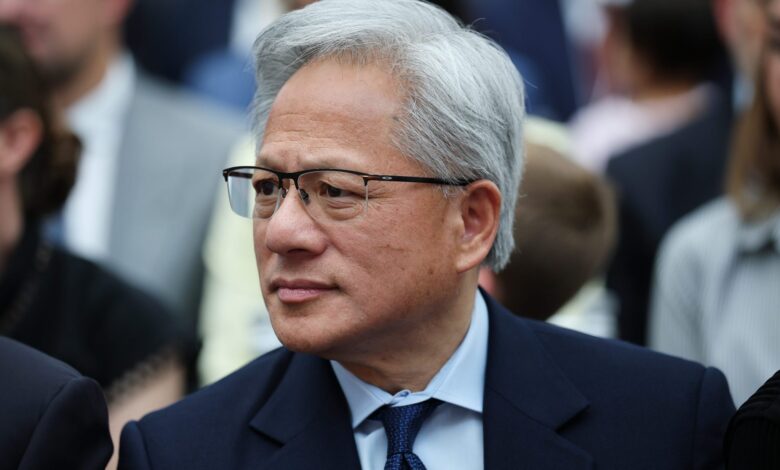
The leadership change is occurring against the backdrop of renewed scrutiny regarding Nvidia’s financial reporting practices and its ties to Megaspeed, a Singapore-based distributor that was once one of the company’s largest buyers in Asia. The central issue involves a modification in how Nvidia categorizes and reports revenue from Singapore, a shift that took place around the same time the company placed Megaspeed on an internal block list, prohibiting further sales.
Accounting Methodology and Geographic Revenue
In the fiscal quarter ending in July 2025, Nvidia reported $10.2 billion in revenue from Singapore, representing 22% of the company’s total global revenue. This figure marked an 81% year-over-year increase in sales from the region. However, in the subsequent earnings report for the three months ending in October 2025, Singapore vanished from Nvidia’s geographic revenue breakdown. The updated report listed only four markets: the United States, Taiwan, China, and “Other.”
The alteration was driven by a change in the metric used to allocate revenue. Previously, Nvidia reported revenue based on the “customer billing location,” a method that historically resulted in significant volumes being attributed to Singapore because customers used the country to centralize invoicing, even when products were shipped elsewhere. In the October 2025 report, Nvidia stated it was separating markets based on the “location of the customers’ headquarters.” This technical shift effectively removed the Singaporean invoicing hub from the primary geographic disclosures, altering the visible profile of the company’s revenue streams.
The Megaspeed Dispute and Export Controls
The timing of this accounting change is closely linked to the company’s actions regarding Megaspeed. In June 2025, Nvidia added Megaspeed to its internal block list, according to the Wall Street Journal. Around the same time, the company stopped reporting revenue from Singapore as a distinct geographic segment in its breakdowns.

Allegations surrounding Megaspeed are severe. The Information, a tech news outlet, has reported that Megaspeed and its Malaysian subsidiary, Speedmatric, moved at least $7.5 billion in Nvidia chips to China, in violation of U.S. export laws. U.S. export controls restrict the sale of advanced AI chips to China to prevent the proliferation of strategic technology. The U.S. Department of Justice and the Department of Commerce are currently investigating Megaspeed for these potential export control violations.
Singaporean authorities shared that they investigated Megaspeed and its former executive, Alice Huang, beginning in February 2025. Singapore concluded that there was insufficient evidence of espionage, but it barred Huang from re-entering the country. Huang, who is alleged to be an operative for China, was involved in a personal relationship with Jensen Huang, a fact that has added a layer of personal and professional conflict to the corporate narrative. Huang has denied wrongdoing, and Jensen Huang has previously stated that there is no evidence of Nvidia chips being smuggled to China. However, the U.S. investigation remains active.
Expert Analysis: Correlation and Causation
The relationship between the accounting change and the Megaspeed dispute remains a subject of debate among experts. Shiva Rajgopal, a professor of accounting and auditing at Columbia Business School, noted to Fortune that while the timing is “curious,” correlation does not necessarily imply causation. “It is impossible to say with just public information whether concerns around Megaspeed’s export control adherence or Alice Huang’s alleged espionage caused Nvidia to change how it reported revenue,” Rajgopal said.
Nevertheless, Rajgopal emphasized that the change will likely become a focal point in the Department of Justice and Department of Commerce investigations. Auditors and regulators are expected to examine what Nvidia knew about the end-use of Megaspeed’s chips, how the company documented customer compliance, and whether the personal relationship between Huang and the former CEO influenced business decisions. Furthermore, analysts will assess whether investors were provided with an accurate picture of the risks associated with potential smuggling in Asia.

Regarding the interim leadership, Rajgopal pointed out that Colette Kress’s role as CFO will be scrutinized, particularly regarding financial disclosures. However, he clarified that based on public filings alone, there is no evidence that Kress was aware that the earnings reporting change was potentially related to Megaspeed. “I wouldn’t say Kress must have known,” Rajgopal said. “These are just financial statements. Nothing is illegal. It’s disclosed.”
Strategic Implications for Nvidia
The transition from a founder-led CEO to a finance executive raises questions about Nvidia’s long-term strategic direction. Rajgopal argued that a CFO running a tech company is generally “not a good idea,” particularly for a firm as deeply tech-heavy as Nvidia. He noted that finance executives rarely remain in CEO roles in the tech sector because they may lack the specific buy-in of the technical community. The company’s immediate priorities will shift from sustaining financial momentum to recreating the forward-looking technical vision that Huang provided, a role distinct from that of a finance head.
Nvidia did not respond to Fortune’s request for comment, including inquiries into whether the change in earnings reporting was connected to the addition of Megaspeed to its block list. As the U.S. investigations proceed, the interplay between corporate accounting practices and international trade compliance will remain under close watch. The next significant development will likely involve formal findings from the U.S. Department of Commerce or further disclosures from Nvidia regarding the resolution of the Megaspeed account.