Technical Capabilities and Strategic Reach
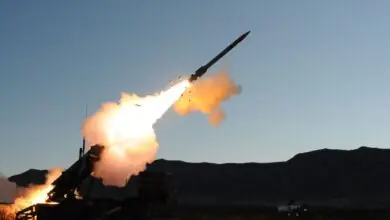
The FP-7, designed by the defense company Fire Point, boasts a range of approximately 250 kilometers. This capability extends Ukraine’s reach significantly beyond the limits of many conventional artillery systems and shorter-range drones. In the context of modern hybrid warfare, a tactical ballistic missile with this range allows for the engagement of high-value infrastructure, command centers, and logistics hubs that were previously out of reach for standard ground-based fire support.
The introduction of the FP-7 is particularly notable given the manufacturer’s stated development trajectory. Fire Point has indicated that the missile is being developed with dual-use potential, including its capability to function as an interceptor. This hybrid design suggests a platform engineered for versatility, potentially allowing for rapid adaptation between offensive strike missions and defensive air and missile defense roles. Such flexibility is a critical advantage in a conflict where resource allocation must be optimized and where the threat vector can shift rapidly between air and ground domains.
The operational significance of a 250-kilometer range is profound. It enables forces to project power deep into contested territories while maintaining a degree of standoff distance from enemy counter-battery fire. This reduces the risk to the launching platform and complicates enemy defensive planning, as interceptors must be positioned further back to cover the expanded threat envelope. The missile’s kinematic profile and speed, characteristic of tactical ballistic systems, also present a steeper challenge for air defense networks compared to slower-moving cruise missiles or uncrewed aerial vehicles.
Strategic Implications and Uncertainties
The deployment of the FP-7 underscores Ukraine’s continued pursuit of indigenous defense production and technological integration. By utilizing a domestically designed system, the country reduces its dependency on specific foreign supply chains for long-range strike capabilities, a vulnerability that has been a central concern throughout the duration of the war. The move signals a maturation of the local defense industry, capable of producing complex ballistic systems that meet operational requirements.
However, the limited public details surrounding the initial launch introduce elements of uncertainty. The classification of the target and the effects means that independent verification of the missile’s accuracy, lethality, and operational reliability in a real-world combat environment remains pending. Military analysts will closely monitor subsequent disclosures to determine if the FP-7 can sustain a consistent sortie rate and maintain the precision necessary for high-value targets. The transition from a designed specification to a proven combat asset often involves a period of refinement, and the initial deployment is just the first step in that process.
For the opposing forces, the emergence of a new ballistic threat necessitates a reassessment of air defense positioning and resource allocation. The 250-kilometer radius effectively creates a larger danger zone, requiring more extensive coverage and potentially stretching defensive resources thin. This dynamic could force a strategic retreat of critical assets further from the front lines, indirectly affecting the operational tempo of ground forces.

The use of the FP-7 also highlights the increasing complexity of the battlefield, where the line between offensive and defensive systems is blurring. A missile designed to serve as both a strike weapon and an interceptor reflects the multi-domain nature of modern warfare, where platforms must be adaptable to emerging threats. As the conflict enters its later stages, the integration of such advanced, versatile systems will likely play a pivotal role in determining the strategic outcome.
While the specifics of the October 1 strike remain undisclosed, the mere presence of the FP-7 in the operational inventory changes the calculus of deterrence and engagement. It demonstrates a capability that was not previously fully accounted for in the strategic planning of the opposing side. The next confirmed developments will likely focus on the frequency of use, the types of targets engaged, and any adjustments made to the system based on initial combat feedback. Until then, the FP-7 stands as a symbol of the technological evolution of the conflict, marking a new phase in the long-range engagement of forces.