The USS Theodore Roosevelt aircraft carrier and its accompanying strike group departed San Diego on Sunday, heading toward the Middle East. According to U.S. officials, the carrier is expected to arrive in the region around mid-November. Upon its arrival, the Roosevelt will join the USS George H.W. Bush, which has been deployed in the area since March, and the USS George Washington, which arrived from Japan during the summer. This configuration would result in up to three aircraft carrier strike groups operating in the theater, a significant concentration of naval firepower that one U.S. official described as providing “much more firepower” to the region.
However, the specific operational role of the Roosevelt remains under consideration. While one official stated the carrier could be an additional asset, another noted that it has not yet been determined whether the Roosevelt will replace one of the currently deployed carriers or serve as a supplementary force. Concurrently, the Makin Island Amphibious Ready Group departed for the Middle East on Monday. This unit comprises three amphibious ships and carries thousands of Marines from the 13th Marine Expeditionary Unit. It is expected to arrive by the end of November, joining another amphibious group and Marine expeditionary unit already deployed to the region over recent months. In total, these movements could place up to 10,000 additional sailors and Marines in the Persian Gulf area.
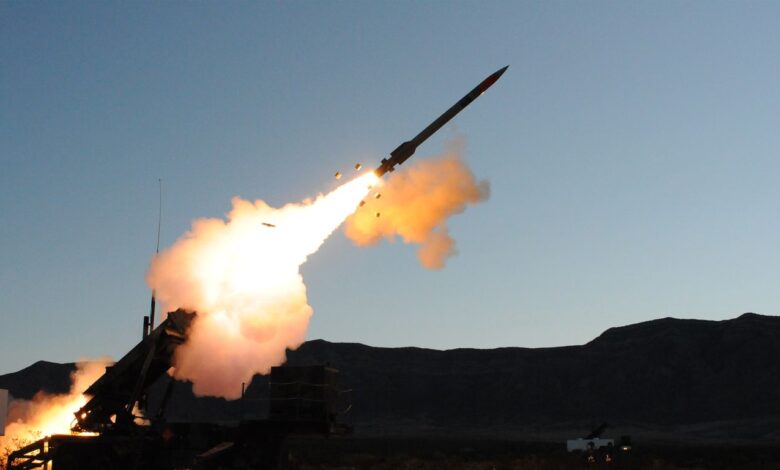
Alongside the naval buildup, the U.S. military has reinforced air defense capabilities for key allies. In recent weeks, two additional Patriot missile batteries were sent to Saudi Arabia and Qatar to protect critical oil and natural gas facilities. Last month, one battery was deployed to Saudi Arabia to guard a key oil facility, while another was sent to Qatar to protect a natural gas installation. These measures are intended to reassure both nations that the U.S. will protect their strategic energy assets in the event of renewed hostilities with Iran.
The protection of these facilities is a prerequisite for broader military cooperation. The U.S. requires Saudi Arabia’s permission to use its airspace if major combat operations resume. Officials indicated that Riyadh is unlikely to grant such access if it perceives its oil infrastructure as vulnerable to Iranian retaliation. This diplomatic dynamic was evident in early August, when leaders of Saudi Arabia and Qatar lobbied Washington against launching massive strikes on Iranian energy infrastructure. Their concerns regarding potential Iranian counter-strikes on their energy facilities were cited by U.S. officials as a key factor in the decision to pivot toward an economic pressure campaign at that time.
The deployment of additional Patriot systems has raised logistical concerns regarding force readiness elsewhere. Since the start of the conflict with Iran, Patriot batteries and their interceptors have become a highly sought-after commodity. The U.S. military has transferred these assets from other regional commands to the Middle East, a practice that has raised internal concerns about the readiness of forces in other parts of the world. The diversion of air defense resources to protect Gulf energy infrastructure highlights the tension between reinforcing allied security and maintaining global deterrence capabilities.
President Trump has framed the next phase of the conflict in stark terms, stating, “Now I have to make a decision: either Iran signs the deal, or it won’t exist any longer.” He indicated on Thursday that he is considering renewing a bombing campaign in the coming weeks. A spokesman for U.S. Central Command (CENTCOM), Capt. Tim Hawkins, declined to comment on the specific details of the troop movements or the status of the air defense deployments. The arrival of the Roosevelt and the Makin Island group will further solidify the U.S. military presence, setting the stage for potential strategic decisions in the coming weeks.