
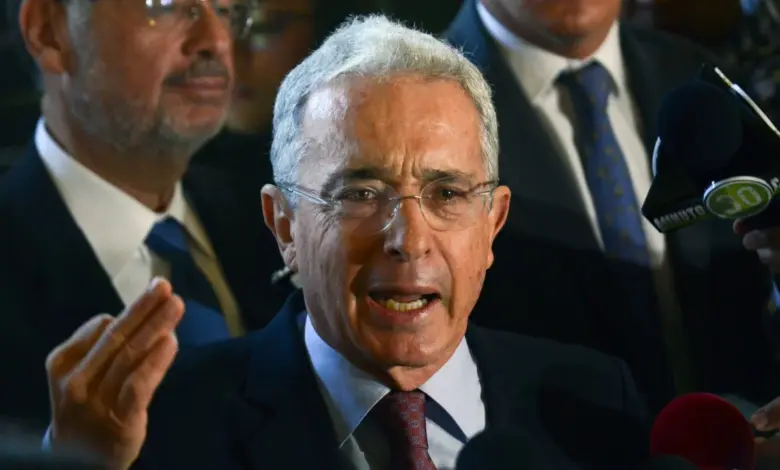
The conviction carries significant legal consequences, potentially facing the 73-year-old former president with a prison sentence of a decade or more. However, the judicial process also serves as a gateway for further scrutiny. By establishing his guilt in this specific matter, the court has cleared a path for potential prosecution on more serious counts, including his alleged broader support for paramilitary organizations and their links to the drug trade.
Uribe’s legal troubles are not isolated to this single case. In June 2026, the Prosecutor General’s Office opened a separate formal investigation into his alleged ties to a paramilitary group in his native Antioquia province. The charges in this new investigation include aggravated conspiracy to commit a crime and the murder of a protected person. Prosecutors allege that Uribe facilitated the activities of an illegal armed group that used the Guacharacas estate, owned by the Uribe Velez family at the time, as a base. The investigation also examines his possible involvement in paramilitary raids in the townships of La Granja and El Aro in Ituango between 1996 and 1997, as well as the 1998 murder of human rights defender Jesús María Valle Jaramillo, who had publicly denounced Uribe during his tenure as governor of Antioquia.
In response to the latest developments, Uribe stated on social media that he had been called to testify regarding his role in the aforementioned massacres and assassination. His defense has previously maintained his innocence, a stance echoed by current President Iván Duque, who asserted his belief in Uribe’s “innocence and honorability.” Duque’s public support has drawn criticism for potentially interfering with the independence of the judiciary.
The legal proceedings against Uribe are unfolding against a backdrop of intense public polarization. Recent polling indicates that a near-majority of Colombians disagree with the Supreme Court’s decisions, including the earlier imposition of house arrest on August 4, 2020. Supporters have organized demonstrations in major cities such as Bogotá, Barranquilla, and Medellín, often using cars to protest while adhering to pandemic-era restrictions, waving national flags and chanting in solidarity. This reaction underscores Uribe’s enduring influence as a transformative statesman who led Colombia’s military recovery from the late-20th-century crisis, a period characterized by the dominance of Marxist guerrilla groups like the FARC and ELN, and the rise of right-wing paramilitaries.

Uribe’s controversial legacy is further complicated by historical documents detailing U.S. intelligence assessments of his connections to the drug trade. A declassified 1991 Defense Intelligence Agency report identified Uribe, then a senator, as a “close personal friend of Pablo Escobar” and a politician dedicated to collaboration with the Medellín Cartel at high government levels. While a 2004 memo from Peter Rodman to Secretary of Defense Donald Rumsfeld expressed skepticism about the specific Escobar link, it conceded that Uribe “almost certainly had dealings with the paramilitaries” during his time as governor. Subsequent State Department cables published in 2018 listed Uribe among suspected “Narcopols,” reflecting years of diplomatic concern regarding his ties to figures such as the Ochoa Vásquez brothers.
The contrast between Uribe’s former status as a close ally of the United States—having received the Presidential Medal of Freedom from President George W. Bush in 2009—and his current status as a convicted former president highlights the evolving standards of accountability in Latin American democracies. While neighboring countries have also seen former leaders face judicial scrutiny, from Peru’s Pedro Pablo Kuczynski to Brazil’s Luiz Inácio Lula da Silva, Uribe’s case is unique in Colombian history. The next formal step will likely involve sentencing for the current conviction and the continued progression of the Prosecutor General’s Office investigation into the alleged paramilitary crimes.



2 Comments