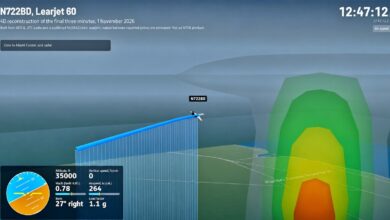

Video footage and audio recordings indicate the plane entered a near-vertical nosedive before exploding on impact, creating a large crater and scattering debris across the surrounding area. Governor Ron DeSantis stated that while the crash caused significant damage to local infrastructure, including water lines and roads, there were no reports of injuries or fatalities among people on the ground. Approximately 600 residents from a nearby mobile home park were evacuated as a precaution.
The National Transportation Safety Board (NTSB) is leading the investigation in collaboration with the FAA. Aviation attorney and former NASA engineer Mike Slack, who reviewed preliminary flight data and audio clips, suggested that severe weather conditions were a significant factor. He noted that the pilot reported “moderate turbulence” and “fighting with icing” shortly before the crash, followed by a descent rate exceeding 6,000 feet per minute. Slack described the situation as a “weather-induced event,” questioning how the aircraft ended up in such close proximity to an intense thunderstorm and why it was unable to avoid it.

Local weather reports indicated that thunderstorms were active in the region at the time of the crash. DeSantis described the incident as a “big-time tragedy,” praising the swift response of Palm Beach County fire and rescue crews. The Military Trail, a six-lane highway near the crash site, remains closed, with authorities estimating that at least 30 days will be required to restore traffic flow. The NTSB has assembled an investigation team and is scheduled to hold a media briefing in West Palm Beach on Monday.
The identities of the passengers and crew have not yet been released by federal authorities. Austin-Bergstrom International Airport confirmed the flight was classified as general aviation rather than commercial. Officials have not determined the definitive cause of the crash, and the investigation into the flight path and pilot decision-making is ongoing.