The central issue in the proceedings was not merely the content of the statements made, but the evidentiary foundation required to prove that these statements constituted criminal threats within the specific timeframe of the charges. According to evidence presented at the hearing, the defendant had allegedly vented his anger at Moroccan authorities through a series of videos posted on TikTok. Thirteen such videos were reportedly sent anonymously to the police. In one instance, the man allegedly threatened Morocco’s ambassador to France, urging her to “increase her security.” Another recording showed an individual, whose identity was not formally established in the reported evidence, burning a caricature of the Moroccan monarch after setting fire to its eyes.
The defense strategy focused heavily on the timeline and the nature of the platform used. While the defendant acknowledged in court that he may have expressed anger in videos posted on a private TikTok account, he stated that he had deleted them upon arriving in France more than two years prior to the trial. The dating of these recordings emerged as the pivotal point of contention. Prosecutors, the lawyer representing the civil parties, and the defense attorney all noted the significant technical and procedural difficulty in establishing precisely when the videos had been created. This uncertainty undermined the prosecution’s ability to link the specific content to the period covered by the formal charges.
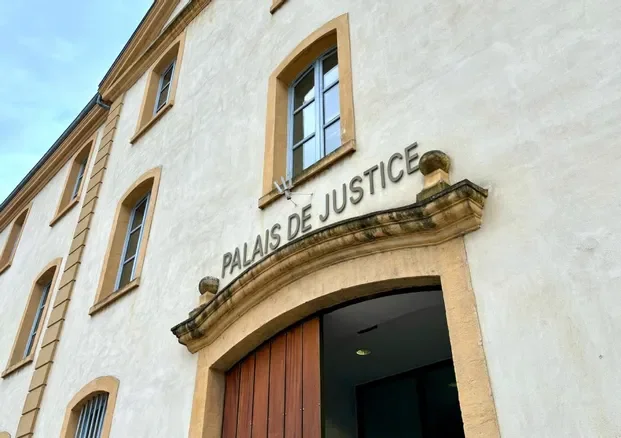
The Roanne court’s decision rested on the principle that the recordings did not correspond to the period covered by the charges. The judges also observed that the videos had been shared on a private channel and only came to the attention of the civil parties after they were anonymously forwarded to the police. Consequently, the court found an absence of sufficient evidence to establish the facts as charged, leading to the acquittal. This legal reasoning underscores a distinct procedural standard in the French judicial system regarding the admissibility of digital evidence, particularly when metadata or precise timestamps are ambiguous.
This verdict exists in a broader context of differing legal approaches to the depiction and criticism of monarchs, particularly in the Kingdom of Morocco. While the French court required rigorous proof of intent and timing to sustain criminal charges for threats, the source material references a separate instance where a cartoonist was jailed in Morocco over caricatures of the king. This juxtaposition illustrates the divergent legal environments that can apply to individuals with ties to both nations. In the French case, the private nature of the TikTok account and the lack of immediate public dissemination were factors that contributed to the defense’s argument against the severity and veracity of the alleged threat within the charged timeframe.
The case also highlights the role of digital platforms in modern legal disputes. TikTok, a private social media channel in this instance, served as the medium for the alleged threats. The fact that the content was private until it was anonymously reported to police complicates the narrative of public incitement. The court’s focus on the private nature of the channel suggests a consideration of the intended audience and the potential for immediate harm, differentiating it from public broadcasts. The anonymity of the sender of the videos to the police further obscured the immediate context in which the authorities first encountered the material, adding a layer of complexity to the investigation.
Economically and socially, such cases reflect the ongoing tension between diaspora communities and their countries of origin, particularly when family disputes escalate into legal matters involving state figures. The defendant’s status as a French-Moroccan national places him at the intersection of two legal systems. The acquittal in France does not preclude other forms of legal or diplomatic engagement, but it does set a precedent in the Loire department regarding the standard of proof required for digital threats. The involvement of the Moroccan ambassador as a target adds a diplomatic dimension, although the court’s decision was based on domestic criminal law principles regarding evidence and timing rather than international treaty obligations.
The ambiguity surrounding the identity of the individual in the video burning the caricature further weakened the direct link between the defendant and the most visually striking piece of evidence. Without formal establishment of identity, that specific clip could not be definitively attributed to the accused, rendering it less effective as direct proof of the charged acts. The court’s reliance on the “absence of sufficient evidence” indicates a strict adherence to the presumption of innocence, requiring that all elements of the crime be proven beyond reasonable doubt, including the temporal aspect of the offense.
As this case concludes in the French courts, the broader implications for how digital content is handled in cross-border legal disputes remain relevant. The next point of observation will be how similar cases are adjudicated in other jurisdictions and whether this acquittal influences future legal strategies in cases involving threats against foreign dignitaries. The interplay between private digital expression, anonymous reporting, and strict evidentiary standards continues to shape the legal landscape for individuals navigating multiple national identities.