
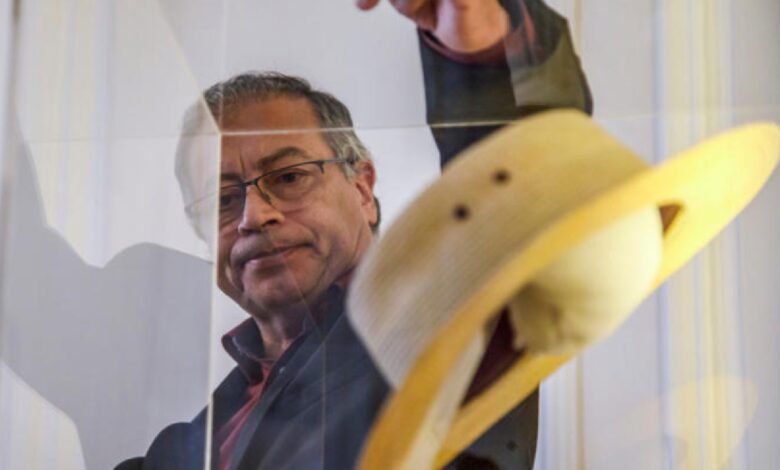
The suspension halts the legal status of the hat, which was unveiled by President Gustavo Petro at the Casa de Nariño in June. The court preliminarily ruled that the Ministry opted to “recognize” the asset to apply specific protections, rather than following the standard procedure for “declaring” assets of cultural interest. Under Article 8 of Law 397 of 1997, as amended by Law 1185 of 2008, the Ministry must obtain a prior favorable opinion from the National Council of Cultural Heritage and assess whether a Special Management and Protection Plan is required. The Council of State found that the Ministry failed to submit the decision to the Council or conduct the necessary assessment, thereby departing from the established legal procedure.
The designation had already generated intense political debate before the court’s intervention. President Petro, who was a member of the M-19 group during the armed conflict, declared the hat a “heritage of love” and a symbol of peace during its unveiling in the Council of Ministers’ Hall. The hat, measuring 35.5 centimeters in length, was woven from natural and synthetic fibers with a brown leather band. It was presented to Petro by the “Officers of Bolivar,” a group of M-19 exiles in Sweden who had safeguarded the item in a vault for decades.

The M-19 guerrilla group signed a peace agreement with the government of President Virgilio Barco in 1990, with Pizarro wearing the hat during the weapons surrender ceremony in Caloto, Cauca. However, the group is also associated with the 1985 takeover of the Palace of Justice in Bogotá, an event that killed 109 people, including magistrates and civilians. Critics of the designation argued that honoring an object linked to such events constituted an insult to the victims of the armed conflict.
“Petro’s intention to turn a hat supposedly worn by M-19 commander Carlos Pizarro into an object of national worship is an unprecedented insult to the victims of that terrorist group,” stated former President Andrés Pastrana. Former President Álvaro Uribe Vélez described the entry of the hat into the presidential palace as a “National Shame.” Senator María Fernanda Cabal called for legislation prohibiting the honoring of criminals or terrorists.
Supporters of the measure, including Liliana Ángulo Cortés, director of the National Museum of Colombia, framed the designation as part of the nation’s collective memory of the peace process. The museum team had prepared a specialized museographic setup for the artifact, which was intended to remain in a display case in a significant space within the Casa de Nariño.

The Council of State emphasized that its preliminary ruling does not prejudge the final legality of Resolution 218. The final decision on the matter will be determined in the judgment that brings the legal proceedings to an end. Until then, the hat’s status as declared national cultural heritage remains suspended, leaving the artifact in a legal limbo while the administrative court reviews the procedural requirements of the Ministry’s original order.
This legal challenge highlights the ongoing tension in Colombia regarding how to manage the memory of the armed conflict. While the government sought to integrate symbols of the peace process into national heritage, opponents viewed the act as a politicization of historical trauma. The court’s focus on procedural compliance underscores the strict legal boundaries governing the designation of national cultural assets, regardless of their political significance.