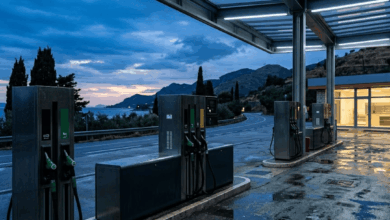
In Germany, Chancellor Friedrich Merz’s administration has responded to the fiscal strain by cutting energy taxes specifically aimed at lowering petrol prices. This policy move carries significant political weight, arriving just as the nation prepares for state key elections. By reducing the tax burden on fuel, the government seeks to alleviate direct costs for commuters and businesses, attempting to insulate the domestic economy from the broader volatility in global energy markets. The intervention highlights a growing trend among European governments to use direct fiscal tools to manage the shock of elevated wholesale prices.
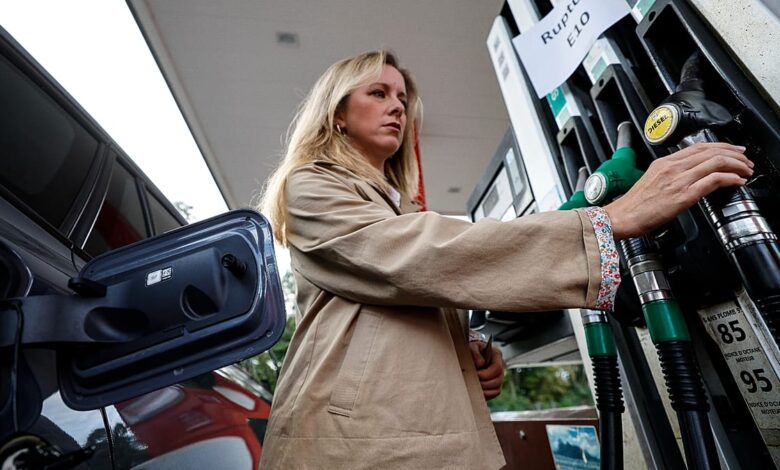
While Germany focuses on tax relief, France is confronting a different dimension of the crisis: physical supply constraints and social unrest. Approximately one in five filling stations in France now reports shortages of at least one type of fuel. This scarcity is compounding the financial burden on consumers, who are increasingly planning their movements to minimize refueling stops. One resident described the shift in behavior, noting that if fuel were cheaper, she would refill her tank routinely, but current prices force her to combine multiple errands into a single route to avoid the expense. The sentiment reflects a broader pattern of rationalization among households seeking to protect their disposable income.
The situation has escalated beyond consumer discomfort into industrial and agricultural disruption, particularly affecting the fishing industry. Local fishermen, preparing for the scallop season, are facing diesel prices that render putting to sea a near-certain financial loss. In response, they have resorted to mass blockades of refineries across the country. The government’s response has been contentious; authorities have deployed special police units to manage the blockades, a move that critics argue prioritizes order over constructive dialogue. President Emmanuel Macron has acknowledged the chaotic nature of the situation and has written to the European Commission, requesting a relaxation of certain EU rules on fuel production. His argument centers on the need for increased supply, suggesting that temporary compromises on production standards may be necessary to restore market balance, while attributing the root causes of the instability to geopolitical factors.
Broader Market and Policy Responses
The German and French measures are part of a coordinated, yet fragmented, European response to a record fuel price shock. Spain is also expanding support mechanisms, though the specific instruments vary by nation. The overarching challenge for the European Union is the potential for further external shocks, including possible US restrictions on diesel exports, which could tighten supply further. Current policy strategies rely on a combination of subsidy expansion, tax cuts, and regulatory adjustments to ease the impact on both consumers and industries.
The data indicates that the price surge is widespread, with the 25% average increase serving as a baseline for a region experiencing significant inflationary pressure in the energy sector. For grid and transport operators, the reliability of fuel supply is becoming as critical as its cost. In France, the interplay between political unrest and supply logistics has created a feedback loop where shortages fuel protests, which in turn disrupt supply chains. In Germany, the political calculus is different, with tax cuts serving as a preemptive measure to maintain public support ahead of electoral deadlines.
As the crisis persists, the distinction between measured market outcomes and political responses becomes blurred. While the tax cuts in Germany offer immediate, albeit partial, relief, the structural issues of supply and demand remain unresolved. The French experience demonstrates how acute shortages can rapidly destabilize specific sectors, such as fisheries, when price signals become prohibitive. The coming weeks will be determined by the effectiveness of these diverse national strategies and the EU’s ability to mitigate risks from external trade restrictions. For the ordinary European consumer, the immediate reality remains one of careful calculation, where every liter of fuel purchased represents a direct deduction from household stability.