
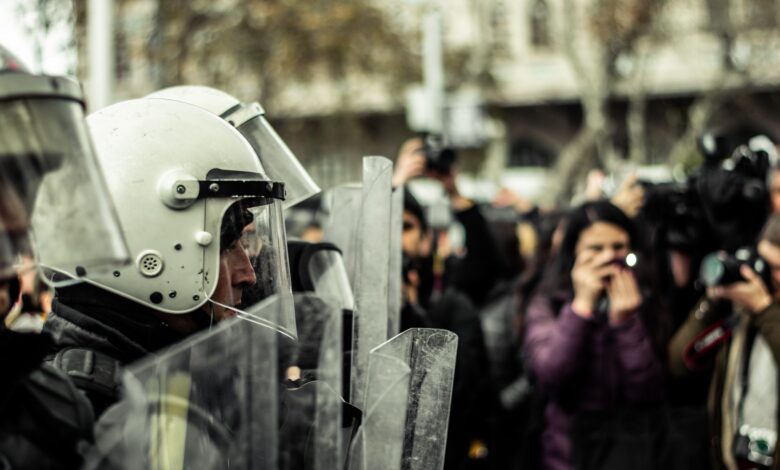
The violence erupted on Saturday, when nationwide demonstrations over high living costs and declining public services turned violent ahead of a key government decision. According to the interior ministry, nearly 2,400 people were arrested, with shops looted, buildings covered in graffiti, and violent groups clashing with police across the country. The physical toll on law enforcement was significant; the ministry reported that nearly 1,000 police officers and gendarmes were injured. In Paris, where 110,000 of the estimated 550,000 nationwide marchers gathered, police deployed tear gas and stun grenades on Sunday afternoon to disperse crowds at Place de la République, where bicycles were set ablaze. Authorities confirmed that one protester died of cardiac arrest during the Paris demonstrations, though no further details were provided.
This wave of instability is directly linked to the fiscal strategies of Prime Minister Sébastien Lecornu’s minority government, which seeks €54 billion ($61 billion) in fiscal savings to narrow the country’s growing deficit. The National Assembly is scheduled to hold a formal vote on the first part of this budget bill on Tuesday. France’s financial position has become increasingly precarious; the national debt ballooned to a record €3.6 trillion in the second quarter, reaching 119% of GDP. As interest rates spike globally, the cost of servicing this debt is rising, creating intense pressure on the government to implement austerity measures that have proven deeply unpopular with the citizenry.
The protests follow a month-long student movement focused on teacher shortages and school conditions, a grievance that quickly broadened to include wider union demands regarding public services and living standards. While hundreds of thousands participated in peaceful marches, the situation deteriorated as violent fringe groups targeted public buildings and commercial infrastructure. Interior Minister Laurent Nuñez stated on Sunday that several hundred shops sustained considerable material damage. In Bordeaux, Mayor Thomas Cazenave reported that up to 100 stores were looted, while in Lyon, a tourist office was set on fire. Protesters also forced their way into Marseille’s city hall, highlighting the geographic spread of the disorder.
President Emmanuel Macron, whose final months in office are increasingly defined by mounting political, fiscal, and social discontent, responded with a mix of condemnation and administrative review. In a televised address on Sunday evening, Macron expressed bewilderment at the destruction, asking, “What was going through their minds? How can French people do this to France?” He characterized the actions as unjustified and excusable by no circumstance, pledging an “uncompromising” response to what he described as “agitators from ultra-left fringe groups, joined by numerous delinquents.” Despite the severity of the riots, Macron stopped short of declaring a state of emergency or imposing a curfew. Instead, he authorized prefects and mayors to ban specific gatherings where necessary to protect public buildings and local businesses. Additionally, the President ordered a review to determine if there had been failings in intelligence gathering or police preparedness, while asking the government to convene students, teachers, lawmakers, unions, and business leaders this week to produce “concrete proposals” to address the crisis.
The political fallout from the unrest is already reshaping the landscape of next year’s presidential campaign. Marine Le Pen, the far-right opposition leader and frontrunner for the presidency, argued that the troubles demonstrated that Macron’s government is “running on fumes, exhausted and disoriented.” Conversely, Jean-Luc Mélenchon, the far-left presidential candidate, asserted that Macron must answer the demands of the protesting high-school students, warning that the country could be heading toward “events that will eventually become uncontrollable.” These competing narratives highlight the deep polarization in French politics as the government attempts to stabilize both the streets and the state’s finances.
Economic actors are also drawing lines in the sand. Economy Minister Roland Lescure has vowed government support for business owners who have suffered losses, but he also issued a stern warning: “Those who break things will pay, repair the damage and be held accountable for their intention to sow chaos.” This stance reflects the government’s attempt to balance social unrest with the need to maintain economic confidence and the rule of law.
As the dust settles on the riots, the focus returns to the parliamentary chamber in Paris. The vote on Tuesday represents a critical juncture: if the budget passes, the government will proceed with its austerity plan, potentially facing continued social resistance. If it fails, the minority government may face a crisis of legitimacy, further destabilizing a political environment already strained by record debt and deep societal fractures. The burned town hall in Limoges remains a symbol of the tangible costs of this political deadlock, a reminder that the debate over France’s fiscal future is no longer confined to legislative halls but has spilled into the physical fabric of the nation’s cities.



One Comment