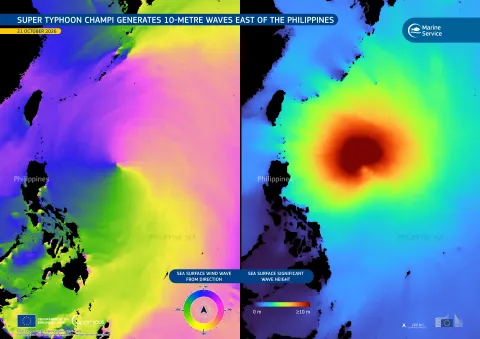
The storm’s intensity is driving extreme marine conditions in the surrounding ocean. Data from the Copernicus Marine Service indicate that significant wave heights near the storm’s centre have reached 10 metres. This measurement, which reflects the average height of the highest one-third of waves, is visualised in dark red areas on ocean surface maps. The wind-generated waves spiral around the storm’s centre in an anticlockwise pattern, consistent with the circulation dynamics of Northern Hemisphere tropical cyclones. These conditions pose severe risks to maritime safety and coastal infrastructure in the storm’s path.
The Copernicus Marine Service provides the ocean monitoring and forecasting data used to track these extreme conditions. Such data are critical for assessing storm impacts, supporting maritime operations, and enabling coastal preparedness measures. The current wave and wind data for 21 October 2026 illustrate the immediate physical effects of the storm on the sea surface, offering a precise snapshot of the environmental hazard posed by the system.

Champi’s trajectory places it on a course toward Taiwan, where residents and authorities are likely to monitor the storm’s approach in the coming days. The 18 fatalities in the Philippines underscore the lethal potential of super typhoons, even before landfall in the next target region. As the system continues its west-northwest movement, the combination of record-breaking wind speeds and 10-metre waves suggests that coastal areas in the storm’s path face significant danger from storm surge and high winds.
No specific forecast for landfall in Taiwan is provided in the available data, but the storm’s current position and speed indicate it remains a major threat. The primary limitation of the current information is the lack of updated casualty figures beyond the initial 18 deaths and the absence of specific damage assessments for the Philippines beyond the general description of destruction. The focus of the available data remains on the storm’s meteorological characteristics and its immediate impact on ocean conditions.