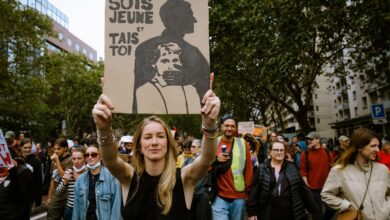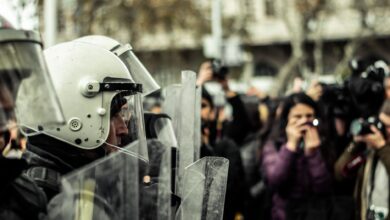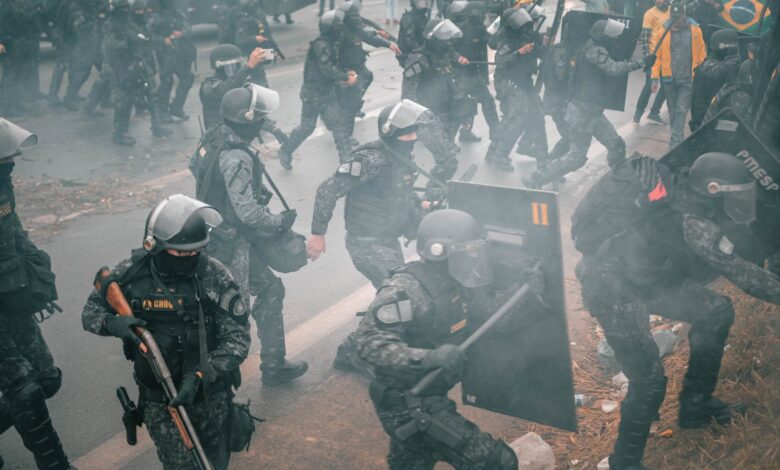
Prime Minister Sébastien Lecornu convened a crisis cabinet meeting on Monday to assess the damage and the response. The unrest began on Saturday when over half a million demonstrators, largely peaceful, took to the streets to protest rising living costs and the perceived degradation of public services, particularly state education. However, the demonstrations were disrupted by groups of masked activists and vandals, leading to widespread destruction. Riot police responded with tear gas and water cannons, but the Interior Ministry reported that approximately 1,000 officers were injured, seven of them seriously. The failure to prevent the violence has fueled accusations that the government was ill-prepared and under-policed for the scheduled demonstrations.
In response to the chaos, President Emmanuel Macron delivered a televised address to the nation on Sunday, calling for “calm and order” and national unity. He assured the public that perpetrators would be punished, though he did not announce a state of emergency or a temporary curfew, despite rumors circulating in the media. The speech, however, has been roundly criticized by political opponents and on social media forums for lacking concrete detail. Critics question how vandals will be held accountable, how cities will be protected ahead of further protests, and how destroyed businesses will be compensated. The absence of specific policy measures has left many feeling that the state is reacting rather than leading.
The political context of the riots is deeply tangled with the upcoming presidential election, scheduled for six months away. Macron is widely viewed as a lame-duck president, and the current turmoil is being leveraged by his rivals. Marine Le Pen of the nationalist right, positioning herself as a strong law-and-order candidate, posted a video blaming the “Macronist administration” for being “out of steam, exhausted, and disoriented.” Conversely, Jean-Luc Mélenchon of the hard left alleged government “incompetence” in handling the crisis. This political infighting has drawn the ire of citizens; one teacher and father of three, Edouard, noted, “While we worry for our safety, they use this situation as a pre-presidential election political football.” The perception is that leadership is divided, with figures like the Interior Minister and Prime Minister blamed for the operational failures on the streets.
Beneath the immediate security crisis lies a deeper structural strain. France is grappling with spiraling public debt, with investors pressing for fiscal control. The government faces a precarious dilemma: implementing necessary cuts to public services or welfare risks provoking further unrest, as seen in the current protests. Sophie Binet, Secretary General of the CGT union, accused Macron of failing to address students’ concerns and the cost-of-living crisis, arguing that the issue has been passed down to the Prime Minister without adequate resolution. This disconnect between state fiscal priorities and public expectations is eroding trust in institutions, a sentiment echoed by Yaël Braun-Pivet, president of the lower house of parliament, who has called for an inquiry into the weekend’s events.
The institutional framework is further weakened by a paralyzed and deeply divided parliament, split between three vying political blocks. This legislative gridlock limits the government’s ability to pass emergency measures or engage in constructive dialogue with student and teachers’ bodies, as demanded by the protesters. The situation recalls the tensions of 2018, when the “yellow jacket” movement staged demonstrations for over a year. Indeed, that movement, along with a cross-section of trade unions, has announced new, large-scale protests for 5 November. While students are currently on half-term break, providing a brief respite, the authorities are bracing for further volatility.
As the dust settles on the shattered streets, the central question facing France is whether the state can restore confidence before the next wave of demonstrations. The graffiti in Paris remains a potent symbol of the anxiety gripping the nation. With the election race heating up and the government accused of being reactive rather than proactive, the coming weeks will test the resilience of French democratic institutions. The hope for a dialogue remains, but for now, the country holds its breath, watching to see if order can be reestablished or if the fractures in both the streets and the political landscape will widen further.