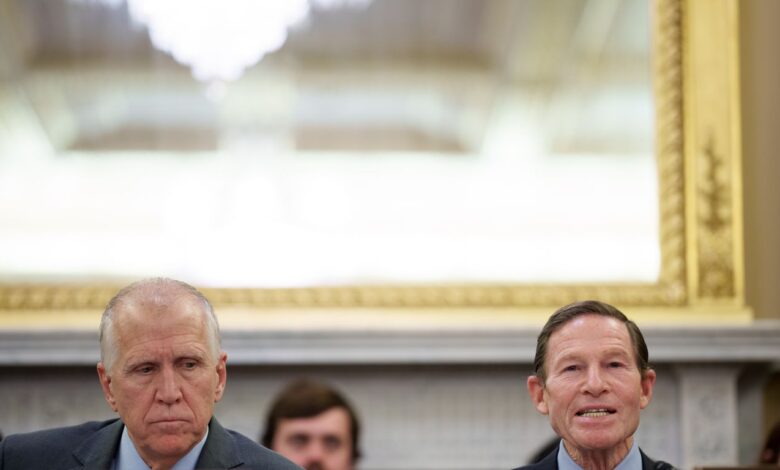
The diplomatic push comes amid a sharp disagreement between Kyiv and Washington regarding military support. On Monday, Zelensky lobbied a bipartisan group of U.S. senators, led by Thom Tillis (R-N.C.) and Richard Blumenthal (D-Conn.), claiming the Trump administration has quietly imposed restrictions on intelligence sharing and weapons supplies. Zelensky stated that Ukraine has not received early warnings for Russian ballistic missile attacks on three occasions in the past week and that the delivery of Patriot interceptors and AIM-9x missiles for the NASAMS system is stalled because Defense Secretary Pete Hegseth has not signed off on the transfers, despite NATO nations having paid for them.
Ukrainian officials assert these measures are intended to pressure Zelensky into accepting a deal that includes concessions to Russia, specifically requests to stop targeting Russian oil refineries. The crisis reportedly began ten days ago during negotiations in Miami, where Witkoff and Kushner allegedly threatened to cut off U.S. intelligence and weapons sales if Ukraine continued striking refineries. U.S. officials have denied imposing restrictions or making such threats, stating only that Ukraine, as an ally, should avoid actions that hurt American consumers. They maintain that the U.S. remains a strong partner providing munitions and intelligence.
President Trump addressed the dispute on Monday, asserting that the U.S. is still sharing intelligence with Ukraine. He stated he did not know who ordered the throttling of the Starlink satellite system, which Zelensky said remains partially restricted, hampering Ukraine’s ability to shoot down Russian drones. “But I am gonna find out,” Trump said. He also criticized Zelensky, saying, “Frankly Zelensky is not helping matters much. He doesn’t want to stop the war,” and suggested it “maybe it’s time for Zelensky to let somebody else negotiate on behalf of Ukraine.”
In response to the senatorial group, both Tillis and Blumenthal affirmed bipartisan support for Ukraine. Blumenthal stated that “appeasement won’t work with Putin” and that congressional action would follow. The Oslo talks are described by the U.S. official as a fluid process focused on two tracks: securing Ukraine’s future with credible security guarantees and developing a comprehensive proposal for Russia to end the war. Following Oslo, Witkoff plans to travel to Russia to present the ideas developed in consultation with Ukraine and European partners to President Vladimir Putin. The discussions also include efforts to secure the release of Stephen Hubbard, a retired American teacher detained in Russia.
The next expected step is the presentation of the developed peace framework to the Russian leadership, a move that will test whether the work completed in Oslo can form the basis for serious negotiations.