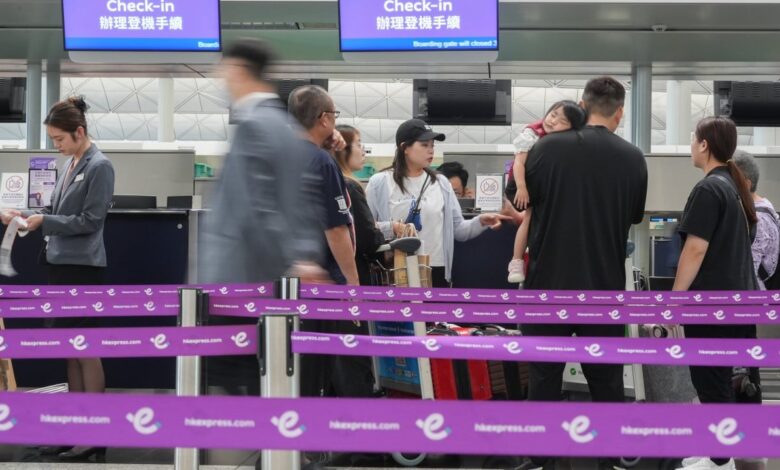
The most substantial portion of the service reductions has been announced by HK Express, a budget carrier based in Hong Kong. The airline confirmed it would cancel ten flights scheduled for Friday between Hong Kong and Taiwan. These cancellations are not distributed evenly across all destinations; six of the cancelled services were destined for Taipei, the region’s capital and largest air hub. The remaining four cancellations were split between Taichung and Kaohsiung, with two flights serving each city.
In addition to the outright cancellations, HK Express announced that four other flights serving Taichung and Kaohsiung have been postponed. These services, originally scheduled for Friday, will now operate on Saturday. The airline stated that it is actively notifying affected passengers regarding their new arrangements, a standard procedure in aviation operations to manage rebooking and passenger communication during major weather disruptions.
The geographic scope of the disruption extends beyond the Taiwan Strait to include routes to Japan, although specific details regarding the number of Japanese flights affected or the specific carriers involved in those cancellations were not detailed in the initial reports. The combined total of cancelled and rescheduled flights exceeds a dozen, indicating a coordinated response among multiple operators or a significant volume of disruptions from the primary affected carrier.
It is important to distinguish between the immediate operational impacts and the broader meteorological context. While the typhoon is the direct cause of these specific flight cancellations, weather events of this nature are part of the seasonal pattern of tropical cyclones in the Western Pacific. The term “Super Typhoon” refers to a specific classification based on wind speeds and storm intensity, denoting a system of extreme power. The decision by airlines to preemptively cancel or delay flights is a standard safety and logistical protocol, driven by the forecasted intensity of the storm and its projected path, rather than a singular anomaly.
The impact on travelers is immediate, with passengers facing potential delays, rebooking requirements, and the logistical challenges of altered travel plans. The focus on routes to Taipei, Taichung, and Kaohsiung highlights the significance of cross-strait air travel, which serves as a vital link for tourism, business, and family connections. The postponement of flights to Saturday suggests that the airline anticipates conditions may improve sufficiently by that day to resume operations, though this remains subject to ongoing meteorological assessments.
Airline announcements in such scenarios are typically based on the latest available forecasts from meteorological agencies. The precision in listing the number of flights by destination (six to Taipei, two to Taichung, two to Kaohsiung for cancellations; four total for postponements) allows for a clear accounting of the operational impact. This level of detail is crucial for both the airline’s internal planning and for passenger communication.
While the source material confirms the scale of the disruption and the specific carriers involved in the most significant cancellations, it does not provide data on the typhoon’s current wind speeds, pressure, or exact landfall predictions. Therefore, the analysis remains focused on the aviation response and the immediate effects on specific air routes. The situation is dynamic, with “further disruption expected” in the coming days, indicating that the current measures are likely a preliminary response to a developing situation.
The response from HK Express and other airlines serves as a case study in how commercial aviation adapts to extreme weather events. The decision to cancel rather than operate through dangerous weather conditions prioritizes safety and asset protection. The notification of affected passengers is a critical step in mitigating the human impact of these operational changes, ensuring that individuals are informed of their options and next steps.
As Super Typhoon Champi continues to move, the aviation industry in the region will continue to monitor conditions closely. The next significant development will likely be further updates from airlines regarding additional cancellations or the resumption of delayed services, contingent on the storm’s actual trajectory and intensity. The situation underscores the vulnerability of air transport networks to extreme weather events, a key consideration for both operational planning and long-term climate adaptation strategies in the region.