
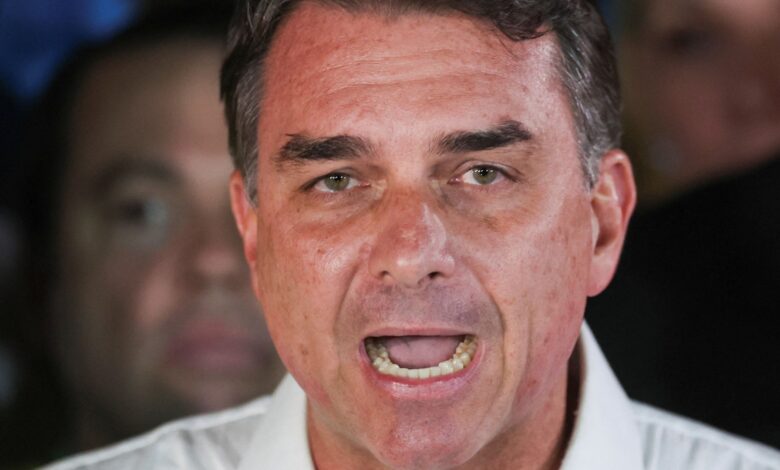
The central legal development involves the enforcement of a Supreme Court order issued by Justice Alexandre de Moraes. The court had mandated that Bolsonaro surrender his passports to prevent him from leaving the country. Bolsonaro stated in an Instagram post on Monday that he received the order outside the residence where his father, former President Jair Bolsonaro, is under house arrest. He claimed he had planned to comply with the directive. However, reports indicate that the deadline to turn in the documents passed, resulting in the cancellation of his passports. Despite this, Argentine authorities noted that the senator and his family possessed valid travel documents and faced no legal impediment to entering Argentina, highlighting a gap between domestic Brazilian judicial orders and the practical enforcement of such restrictions across international borders.
The principal legal question now centers on the intersection of senatorial immunity, domestic criminal investigations, and international travel. Bolsonaro is facing two primary investigations: one alleging money laundering through a sports betting company using funds taken from government pensions for senior citizens, and another examining his financial connections to a disgraced banker from whom he allegedly accepted millions of dollars to finance a biopic about his father titled “Dark Horse.” Bolsonaro has denied wrongdoing in both cases. Under Brazilian law, he retains immunity from prosecution until his senate term concludes in February 2027. His departure to the United States, where the State Department confirmed it would issue visas to him and his family, raises questions about whether this move is intended to circumvent the potential loss of that immunity or to remain out of reach of Brazilian judicial processes.
President Lula addressed the departure on Tuesday, stating outside the presidential residence in Brasilia that Bolsonaro had left the country. Lula characterized the act as an admission of liability, remarking, “Those who are not liable do not fear. A fellow who secretly leaves his country, that’s because he is liable for something.” He further noted that Brazil is the “second country” of the Bolsonaro family, implying the United States is the first. These comments underscore the political tension surrounding the election results, which Bolsonaro has refused to concede. He has indicated an intention to seek the annulment of the election results, citing the evening extension of voting hours past the planned 5 p.m. closing time. While his political party, the Liberal Party, publicly acknowledged the results on Tuesday, Bolsonaro has not yet formally conceded, mirroring the refusal to accept defeat displayed by his father in the 2022 election.
The international dimension of the case is further complicated by statements from US President Donald Trump, who said on Wednesday that he would “approve” of Bolsonaro’s presence in the US. Trump described the family as “fine people” and characterized the Brazilian election as “very strange” and “terrible.” He also reiterated his belief that Jair Bolsonaro was a victim of persecution by Brazilian judicial authorities. This diplomatic support adds a layer of geopolitical complexity to what remains primarily a domestic legal matter regarding corruption and electoral integrity.
The situation also involves the broader context of the Bolsonaro family’s legal status. Jair Bolsonaro is currently serving a sentence of more than 20 years for plotting a coup to overthrow Lula after the 2022 election. Flavio Bolsonaro’s brother, Eduardo, who resides in the US, was convicted in absentia in June for illegally lobbying the Trump administration and sentenced to four years in prison. Eduardo had previously advised his sibling to leave the country if he lost the election. While Flavio Bolsonaro’s exact current whereabouts were initially unclear, with reports varying between the US, Ecuador, and en route, the documented path through Argentina establishes a verifiable timeline of his exit.
The refusal to concede the election and the subsequent departure from the country leave several legal questions unresolved. The Brazilian Supreme Court’s order to surrender passports was bypassed through cross-border travel, a move that Argentine authorities deemed legal under their own jurisdiction. As Bolsonaro’s senatorial immunity remains intact until February 2027, the immediate threat of prosecution is suspended, but the investigations into pension fund misuse and campaign financing continue. The next confirmed legal step will likely involve the Brazilian judiciary’s response to the failed enforcement of the travel ban and the progression of the corruption cases, while the political battle over the election results continues in the absence of a formal concession.