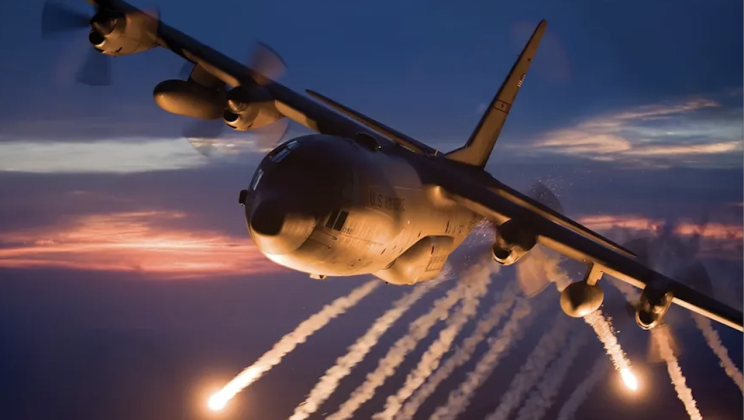
This operational activity coincides with a significant strategic decision by Taipei. The ROCAF has confirmed plans to procure ten C-130J Super Hercules transport aircraft from the United States. Concurrently, the air force has canceled the “Taiwushan-3” upgrade program, which was previously intended to modernize its existing fleet of 19 C-130H aircraft. The C-130Hs, which entered service in 1984 with procurements continuing into the late 1990s, were slated to receive new cockpit interfaces, enhanced maritime search and rescue capabilities, simulators, improved global positioning systems, and collision-avoidance equipment. However, military officials indicated that a cost-based reassessment led to the cancellation. The financial burden of software upgrades was deemed high, and life extension measures would have required costly structural reinforcement of the airframes.
The shift to acquiring new C-130J aircraft represents a move toward a “high-low mix” operational model. In this framework, the newer C-130Js will be assigned to more demanding missions, such as night operations, leveraging their improved range, payload capacity, and ability to operate from shorter runways. The remaining C-130H aircraft will undergo more limited domestic upgrades to handle routine missions. Taipei-based defense analyst Su Tzu-yun noted that the C-130J’s digital cockpit and improved engines allow for faster and safer logistics operations. He characterized the pairing of new and upgraded older aircraft as a more systematic approach to equipment management, balancing operational capability with sustainment demands.
The C-130J is a comprehensive update of the original C-130 design, which first entered service in 1999 with new engines, a flight deck, and avionics. Although the C-130 is a pre-Vietnam War era design with roots in the Korean War, the J variant has served with 27 countries. In East Asia, South Korea, Indonesia, and the Philippines are the only other operators. For the ROCAF, the C-130 remains the heaviest military transport in production available from the United States, as the larger C-17 and C-5 are out of production. Globally, however, the C-130 is dwarfed by the Russian Il-76 and the Chinese Y-20, the latter being the largest military transport currently in production.
Despite the logistical benefits of the new fleet, significant strategic questions remain regarding the wartime utility of medium transport aircraft in the Taiwan Strait. The ROCAF’s bases are all within close proximity of the Chinese mainland. The People’s Liberation Army (PLA), with which the ROCAF remains in a state of civil war, leads the world in long-range anti-aircraft capabilities. Specifically, the 40N6 missile, deployed by S-400 air defense systems, has demonstrated the capability to destroy high-value aircraft at ranges of up to 400 kilometers, even at low altitudes, as seen in engagements in Ukraine and in Indian operations against Pakistan. Furthermore, the PL-17 air-to-air missile provides an even longer engagement range and can equip over 400 of the PLA’s J-16 fighters.
The procurement decision also occurs against a backdrop of political and economic pressure. Following multiple indications from U.S. President Donald Trump and other officials that Taipei is expected to significantly increase defense spending, the shift from upgrading existing airframes to purchasing new platforms reflects an attempt to optimize resource allocation. The historical context of the C-130 in the region is also notable; during the 1950s and 1960s, the CIA operated C-130s for supply runs to support former Republic of China Armed Forces personnel in Myanmar who conducted raids into Chinese territory. Today, the aircraft’s role has shifted from covert support to visible, albeit vulnerable, logistical lifelines.
As the ROCAF integrates the C-130J into its inventory, the balance between operational necessity and survivability will remain a central tension. The recent evacuation of travelers from Kinmen highlights the immediate need for reliable airlift, yet the advanced air defense networks across the strait pose a formidable challenge to any fixed-wing transport operation in a conflict scenario. The next confirmed development in this area will likely involve the specific delivery schedules of the C-130Js and the extent of the “limited domestic upgrades” applied to the surviving C-130H fleet.