
The primary threat identified by health officials is PM2.5, consisting of extremely fine and hazardous airborne particles. These microscopic pollutants penetrate deep into the lungs and enter the bloodstream, contributing to a sharp increase in respiratory illnesses, cardiovascular diseases, and chronic lung complications. Health experts warn that prolonged exposure carries devastating long-term consequences, particularly for vulnerable groups such as children, the elderly, and individuals with pre-existing medical conditions. Major urban centers, especially Lahore and nearby districts, remain among the worst-affected regions, where dense smog during winter months disrupts daily life and exposes millions to dangerous pollution levels.
This environmental disaster does not respect borders. In neighboring India, the capital city of Delhi has ordered all primary schools to cease in-person classes until further notice due to the escalating air pollution crisis. The metropolitan area, home to more than 30 million people, consistently tops global rankings for air pollution in winter. Estimates suggest that the smog reduces life expectancy for Delhi’s residents by up to seven years. On Thursday, Delhi’s chief minister, Atishi, announced the shift to online classes via social media, citing rising pollution levels. The deterioration in air quality has led to widespread disruptions, including flight and train cancellations, and a surge in hospital admissions for patients suffering from breathing and gastrointestinal issues.
The crisis has also prompted Pakistan’s Punjab province to declare a health emergency. Senior provincial minister Marriyum Aurangzeb stated at a press conference that “smog is currently a national disaster.” In response, authorities have cancelled time off for medical staff, shut down all education institutions, and ordered restaurants to close early, with takeaway services limited to 8 pm. A lockdown has been imposed in the cities of Multan and Lahore, and construction work has been halted. In Lahore, a city of 11 million, average Air Quality Index (AQI) readings exceeded 600 on Friday, far surpassing the threshold of 300 considered hazardous to health. Similarly, in Delhi, the government banned non-essential construction and appealed to citizens to use public transport and avoid coal and wood for heating.
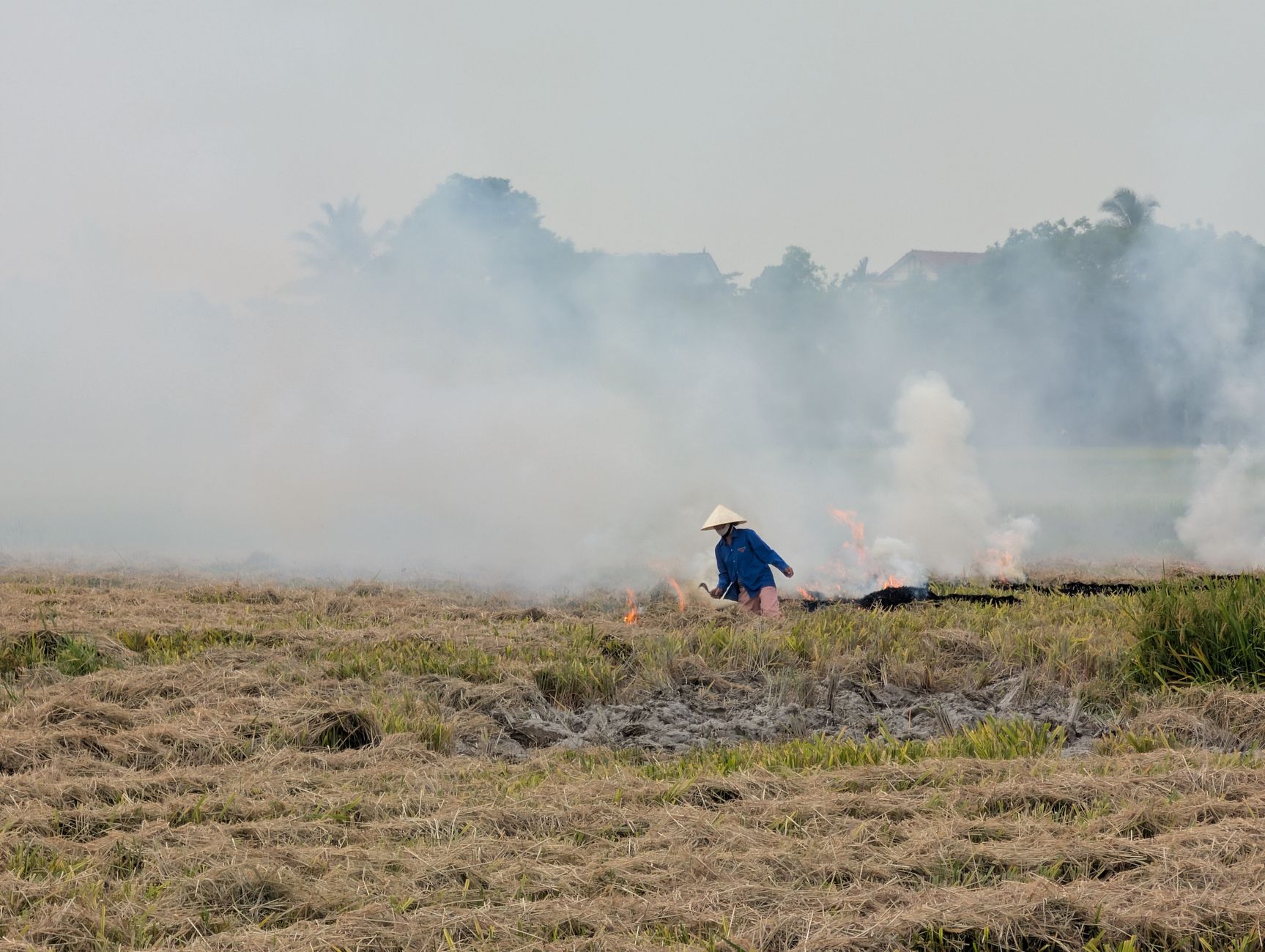
The scientific and meteorological factors contributing to this annual misery are well-documented. The smog is primarily blamed on stubble burning by farmers to clear fields for ploughing, combined with factory emissions and traffic fumes. Cooler temperatures and slow-moving winds trap these deadly pollutants, creating a toxic haze that persists from mid-October until at least January. The severity of the current episode is illustrated by measurements taken in northern India, where PM2.5 levels were recorded at more than 50 times the World Health Organization’s recommended daily maximum. The haze was so thick that it obscured the Taj Mahal, located more than 100 miles from Delhi, and sickened nearly 2 million people in Punjab alone.
Despite the mounting evidence, policy responses have often been criticized as inadequate or fragmented. In India, the Supreme Court ruled this October that clean air is a fundamental human right, ordering both central and state authorities to take action. However, critics argue that political disagreements between rival politicians in neighboring states, and between central and state-level authorities, have compounded the problem. Politicians are accused of avoiding measures that might anger powerful farming constituencies. Delhi’s recent initiative to use three small drones to spray water mist was derided by critics as a “sticking plaster” solution to a complex public health crisis.
In Pakistan, authorities are accelerating efforts under the National Clean Air Policy 2023. Officials state that stricter action will be taken against crop residue burning, smoke-emitting vehicles, and industrial polluters. Monitoring systems and enforcement mechanisms are being strengthened to combat the worsening smog conditions. The urgency of these measures is heightened by demographic trends; Pakistan’s rapidly expanding urban population is expected to reach nearly 120 million by 2030. Without urgent reforms, this growth is likely to further aggravate environmental degradation and toxic emissions.
The broader context of this crisis is framed by global climate trends. As the smog choked the streets of Delhi and Lahore, researchers from the Global Carbon Project warned that planet-warming fossil fuel emissions would hit a record high this year. While the immediate cause of the winter smog is a combination of local emissions and meteorological stagnation, the long-term trajectory points to an intensifying environmental challenge. Marriyum Aurangzeb noted that the situation will not resolve itself quickly, stating, “It will not all be over in a month or a year. We will evaluate the situation after three days and then announce a further strategy.” For now, the focus remains on mitigating the immediate health risks in a region where the air itself has become a silent killer.
