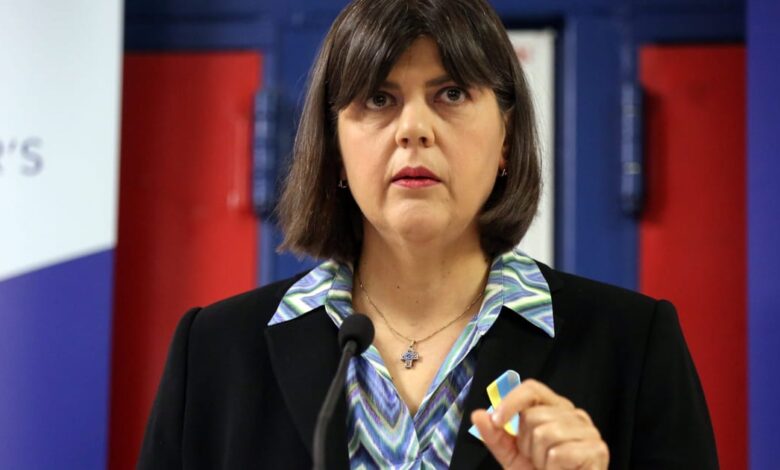
Kövesi’s departure marks the first leadership change for the institution since its launch. As she exits, she identifies three structural threats that could undermine the EPPO’s independence and credibility: inadequate funding, administrative delays, and persistent political pressure. “If you ask EPPO to abstain and to not do anything because there are elections in Europe, we will not work at all,” Kövesi stated, rejecting the premise that the office’s investigative activities should be paused during electoral campaigns.
The core of Kövesi’s critique centers on the EPPO’s capacity to enforce the rule of law regarding EU funds. Ideally, the office requires 230 delegated prosecutors to function effectively, but the current budget covers only 180. She cited limited security resources and delays in updating operational rules as further impediments to investigating fraud affecting both EU and national budgets. These resource constraints have been particularly acute in member states such as Greece and Poland, where jurisdictional conflicts and staffing shortages have complicated operations.
Greece has emerged as a flashpoint in Kövesi’s final assessment. She accused the Greek state of making the “most blatant attempt to intimidate” the European prosecutors. This tension crystallized around the renewal of terms for three Greek European delegated prosecutors. The Greek Supreme Judicial Council decided to limit their terms to two years, rather than the five years recommended by the EPPO. Kövesi characterized this move as an effort to undermine the institution’s autonomy.
The dispute is inextricably linked to the OPEKEPE farm subsidy scandal, a major investigation into the fraudulent use of EU agricultural funds. Kövesi noted that while some cases from the OPEKEPE probe are now in court, the investigation has been overshadowed by political noise. “All the noise was created to blame EPPO that we play politics instead of discussing what happened in reality,” she said. Last April, the Greek Parliament was asked to lift the immunity of 11 members of parliament named in the case file. Ultimately, only four were referred to court, a process that drew criticism in Greece for being hasty. From the EPPO’s perspective, however, the process was procedurally correct. “When we ask for the lifting the immunity, it’s not about the guilt. It’s just a condition to allow the prosecutors to make the investigation and to gather evidences,” Kövesi explained.
Defending the substance of the OPEKEPE investigation, Kövesi outlined the specific findings that drove the prosecutions. She stated that EU money intended for honest farmers had been diverted to individuals who falsely claimed to be farmers. These beneficiaries used the funds for luxurious cars and fancy trips, leaving legitimate agricultural workers without support. “I don’t see any links between what we did, our activity, our cases, and electoral campaigns,” she asserted. “The only connection is when you have some unhappy politicians, they want to attack EPPO, and they try to intimidate and stop us from doing our job.”
While the EPPO has faced criticism from skeptics who argue it encroaches on national sovereignty, Kövesi argued that organized crime thrives in the absence of coordination between national authorities. She maintained that collaboration with the EPPO enhances, rather than diminishes, the protection and security of citizens. Reflecting on her tenure, she claimed the office has helped detect more crimes across member states and strengthened safeguards for the EU budget, a mission she said she would undertake again despite the difficulties.
The challenges Kövesi highlights are not merely procedural; they reflect a broader geopolitical and domestic friction within the European Union. As the EPPO transitions to new leadership, it enters a period of heightened scrutiny. The institution must navigate not only the technical hurdles of underfunding and administrative lag but also the political resistance from member states that view European-level prosecution as an interference in domestic affairs. The case of the Greek delegated prosecutors and the OPEKEPE scandal serves as a precedent for the tensions the next head of the EPPO will likely face.
As Kövesi leaves her post, the question of the EPPO’s future remains unresolved. The institution is tasked with upholding the integrity of the EU budget, yet it operates in a political environment where its independence is frequently contested. The “soft kill” she warns against is not a single act of sabotage, but a cumulative erosion of resources and legitimacy. For the incoming leadership, the priority will be to stabilize the institution’s administrative base while continuing to pursue high-profile fraud cases, ensuring that the EPPO remains a credible guardian of European public funds rather than a target of political retaliation.