
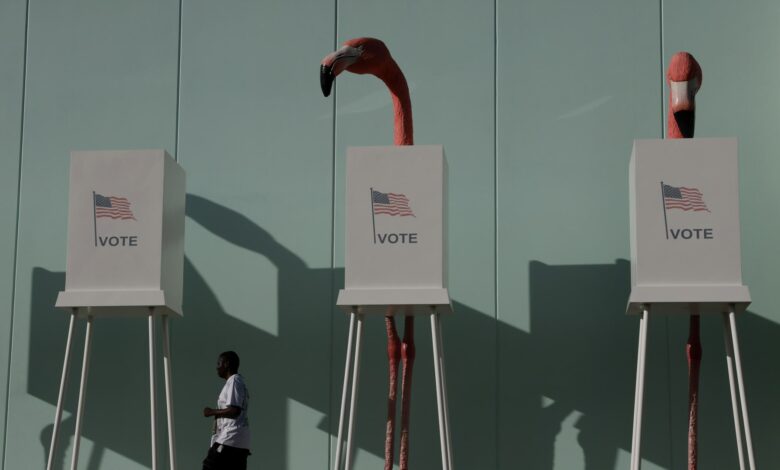
Investor sentiment reflects the high probability of a Democratic House majority. A October 27 report from Wolfe Research surveyed 138 investors, finding that 96% believed Democrats would prevail in the House. The firm noted that the polling error required for Republicans to retain control would be unprecedented in modern history. While 58% of investors polled expect a Democratic Senate, Wolfe Research puts the probability at 49%, describing the Senate race as significantly less certain than the House flip. Raymond James and TD Securities have similarly aligned their base cases around a strong Democratic performance in both chambers.
Political analysts warn that a Democratic-controlled Congress facing a Republican White House will likely result in gridlock. Trump’s veto power would effectively block major policy shifts, such as the ambitious spending agenda proposed by Democrats, which Piper Sandler projects could add $5 trillion to the deficit over the next decade. This proposal includes repealing tariffs and reversing cuts to Medicaid and healthcare subsidies. However, a Democratic Senate could impact the Federal Reserve’s independence, as any new nominees would require Senate confirmation, potentially blocking candidates who do not support central bank autonomy.
Voter motivation is heavily influenced by perceptions of government integrity. An exclusive Harris poll for The Guardian found that nearly nine in ten Americans believe government corruption is a problem, defined as officials prioritizing personal or donor financial interests over the public good. Specifically, 76% of voters stated that elected officials care more about self-enrichment than improving the economy for ordinary people. Corruption was cited as a more concerning issue than corporate power, with 65% of voters selecting corruption and 29% selecting corporate power. While the cost of living remains the single most important issue for 36% of voters, corruption ranks as the next top concern, ahead of immigration, housing, and crime.
Public opinion on corruption is polarized by party. Forty percent of voters, including 29% of Republicans, stated that the Republican Party has a larger corruption problem. Conversely, 21% said Democrats have the bigger issue, while 32% viewed both parties as equally corrupt. Independents, who are pivotal in swing races, were more likely to single out Republicans, with 34% pointing to the GOP and 13% to Democrats. These perceptions arise amid a backdrop of significant financial controversies, including the demolition of the White House East Wing for a ballroom funded largely by private donors, and the expansion of the Trump family’s cryptocurrency business, which has reportedly generated $1 billion for the president since his return to office.
In the Rio Grande Valley, Texas, border policy and immigration enforcement have become central to the local political discourse. The region, which shifted from a Democratic stronghold in 2020 to a Republican win in 2024, is now witnessing a backlash against mass deportation campaigns. Residents cite a lack of due process in immigration detentions, with some families reporting rapid deportations following administrative hearings. This shift in sentiment suggests that previous support for stricter border enforcement may be eroding, potentially contributing to the broader Democratic surge in polling.
The upcoming election will determine the balance of power in Washington for the next two years. While specific legislative outcomes remain uncertain due to the anticipated gridlock, the election will clarify the extent of public mandate for policy changes or continued executive action. The next scheduled step is the general election on November 3, 2026, where voters will select members of the House of Representatives and Senate.