

The central economic development here is the tension between immediate profit realization and future guidance. While Maersk reported a profit miss for the third quarter, the company raised its outlook for the following year. This dual signal reflects a market grappling with the durability of the current shipping environment. Throughout the summer, Maersk upgraded its guidance twice, spurred by stronger demand and significant supply line disruptions. These disruptions, particularly in the Red Sea and the Strait of Hormuz, have effectively tied up vessel capacity, tipping the supply-demand balance in favor of shipowners and driving up freight rates.
The impact of these geopolitical disruptions on the trading environment has been substantial. By rerouting vessels and increasing transit times, the conflicts have reduced the effective capacity available to the market. This constraint has allowed carriers like Maersk to command higher prices for their services. However, the market is now focused on what happens as these disruptions normalize. Analysts note that as carriers, including Maersk, resume transits through the Red Sea, the support for elevated freight rates is set to fade. Excess capacity is expected to weigh on rates in the longer term, a dynamic that complicates the bullish case for the stock.
Despite the recent slide, the broader trend for Maersk has been one of significant outperformance. The stock has surged nearly 60% year-to-date, a figure that stands in sharp contrast to the transportation sector as a whole. While transportation stocks have gained an average of 6.5% this year, Maersk has moved up approximately 62.7%. Even within its more specific industry group, Transportation – Shipping, where stocks have gained an average of 75.2%, Maersk’s performance is notable, though slightly behind the sector average. This outperformance has been driven by a combination of higher freight rates and the company’s ability to weather concerns over fuel costs from the Middle East conflict and the impact of U.S. tariffs.

The division among analysts on how to interpret these developments is pronounced. Of the 26 analysts tracked by Bloomberg, only one, Parash Jain of HSBC Holdings Plc, currently holds a buy rating. Jain argues that Maersk is better positioned than its long-haul ocean shipping peers, such as Hapag-Lloyd AG and Cosco Shipping Holdings Co., due to its diverse business mix. The inclusion of logistics and terminal services has helped cushion earnings, leading Jain to describe the company as the “sector’s highest-quality defensive cyclical.” This perspective suggests that Maersk’s diversified operations provide a buffer against the cyclicality of pure ocean shipping.
On the other hand, a more bearish view is held by analysts at JPMorgan Chase & Co. Led by Alexia Dogani, JPMorgan reiterated a price target of 10,000 Danish kroner ($1,543), which is less than half of the stock’s current price. Following the second-quarter report, Dogani characterized the current narrative around the stock as “peak bullishness.” The core of the bearish argument is that current earnings and freight rate levels are unsustainable. Dogani noted that while the company is generating strong cash near term, this is unlikely to lead to material shareholder returns because ocean capital expenditure will need to rise to halt the loss of capacity share experienced over the past six years. This view highlights a structural challenge: the need to invest heavily to maintain market position may limit the ability to return cash to investors.
Other firms have taken a more nuanced stance. Barclays Plc analysts, led by Marco Limite, placed the stock on a positive catalyst alert in September, describing the setup for the earnings due in November as “extremely strong.” This suggests that while the long-term sustainability of high rates is debated, the immediate financial performance is expected to remain robust. The consensus estimate for Maersk’s full-year earnings has moved 121.6% higher within the past quarter, indicating a significant shift in analyst sentiment and a positive earnings outlook trend. This upward revision in estimates underscores the magnitude of the recent performance, even as the stock price corrects in response to the quarterly miss.
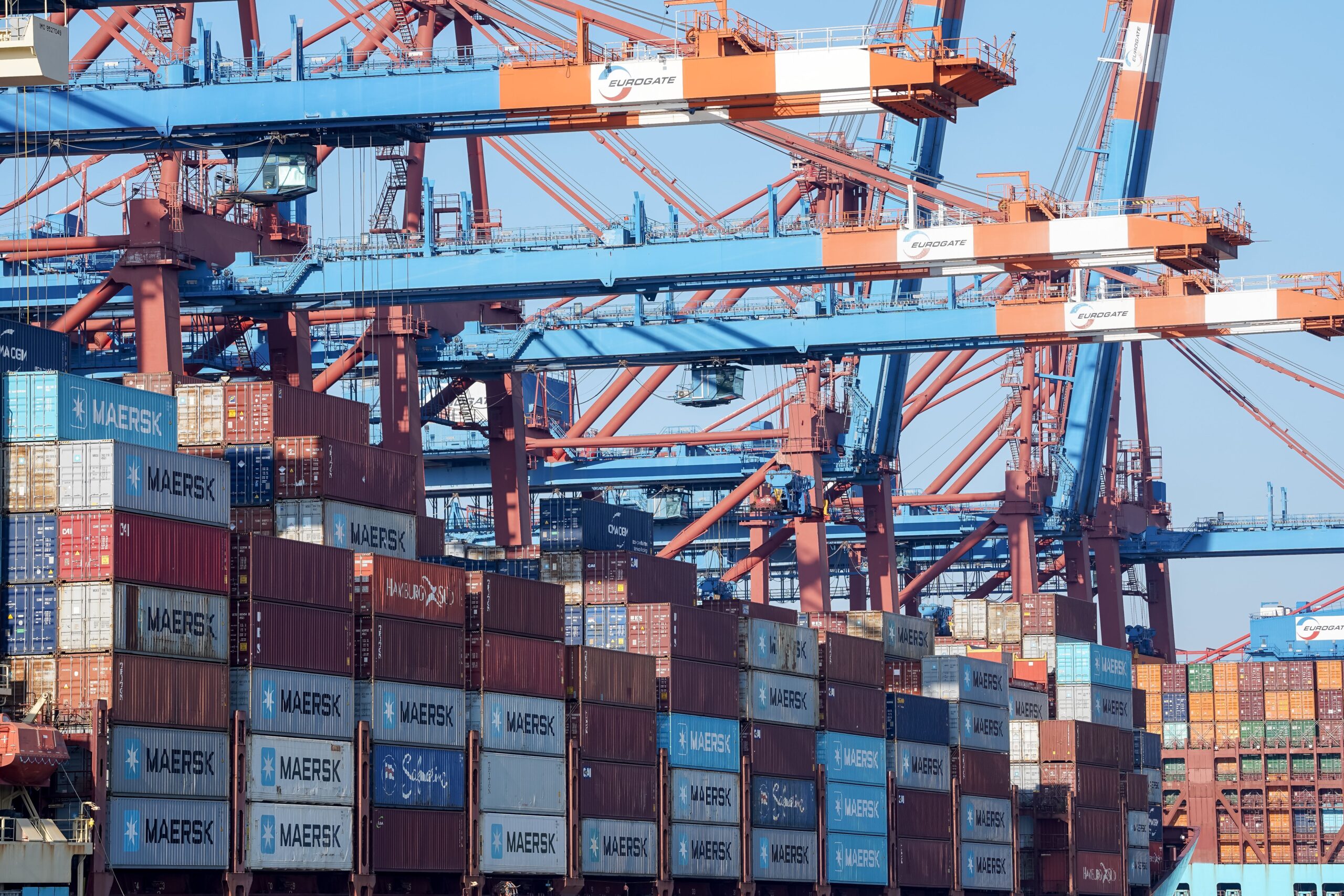
The data paints a picture of a company navigating a complex environment. The year-to-date gain of 62.7% for Maersk, compared to the 6.5% average for the broader transportation sector, illustrates the specific tailwinds facing the shipping industry. However, the fact that the stock is trading around 25% higher than the average 12-month target price among analysts suggests that much of the positive news may already be priced in. Betting against Maersk has been a painful trade for investors in 2026, with the shares outperforming the average target price set by analysts. This discrepancy between the stock price and analyst targets highlights the uncertainty surrounding the future trajectory of freight rates and the company’s ability to convert its current strong cash generation into sustained value for shareholders.
For businesses and consumers, the implications of these shipping dynamics are felt through the cost of goods. Higher freight rates can translate into increased costs for importers and retailers, potentially contributing to inflationary pressures. The disruptions in the Red Sea and Strait of Hormuz have not only affected Maersk but the entire container shipping industry, making supply chain reliability a key concern for global trade. As the company prepares to resume normal Red Sea transits, the market will be watching closely to see how quickly supply normalizes and how this impacts freight rates. The next key data point to watch will be the company’s ability to maintain its upgraded 2026 guidance while managing the expected cooling of freight rate momentum. The divergence between the bullish short-term outlook and the bearish long-term view remains a critical factor for investors and market participants alike.





One Comment