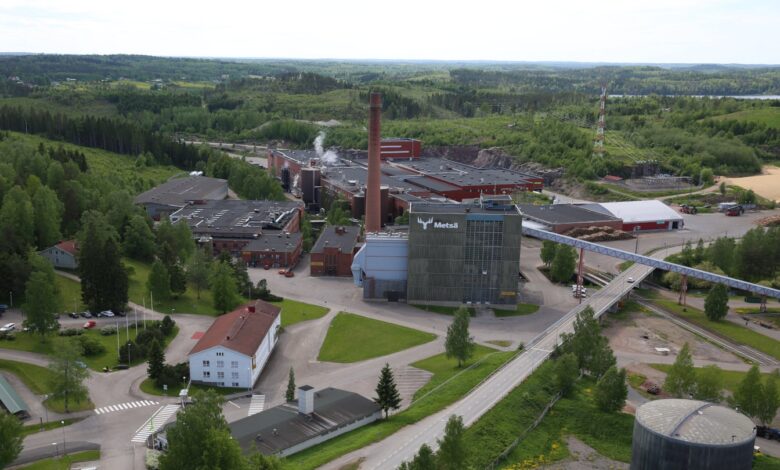
CEO Esa Kaikkonen attributed the earnings recovery to the company’s own improvement measures, firmer paperboard prices, and approximately €10 million in tariff refunds. These refunds helped offset high logistics costs. While demand at Finnish paperboard mills was described as good, with stronger order books supporting operating rates, the Husum mill complex in Sweden remained loss-making due to low operating rates and a prolonged market-related shutdown in July. Kaikkonen noted that while the market has gradually improved, the company’s comparable operating margin and return on capital employed remained around zero, below target levels.
Net cash flow from operations reached €22.3 million, exceeding internal expectations but falling short of the €122.0 million recorded a year earlier. For the first nine months of 2025, sales amounted to €1,227.9 million, down from €1,382.2 million, while the comparable operating result remained negative at €2.2 million. Net cash flow for the period was negative at €39.5 million. The company expects paperboard delivery volumes to decline seasonally in the fourth quarter, though previously implemented price increases are expected to support profitability.
Operational improvements were underpinned by the modernisation of the Simpele board mill in south-east Finland, which commenced operations in October 2025. This phase of a comprehensive investment programme involved a €60 million ($64 million) investment, with more than 430 professionals involved in the delivery. The upgrade increased the mill’s production capacity by approximately 10,000 tonnes per annum, bringing total Simpele folding boxboard capacity to around 310,000 tonnes per annum. The project improved the surface quality and printability of MetsaBoard Classic FBB, a product used primarily in food and pharmaceutical packaging.
The Simpele modernisation also aligned with Metsä Board’s ambition to achieve fossil-free production across all mills by the end of 2030. The project replaced liquified petroleum gas with fossil-free electricity for drying systems and sheet packing. Subsequent phases of the Simpele project will involve upgrading mechanical pulp production and constructing a new power plant. The technology for the board machine refurbishment was acquired in June 2024, with new pre-drying and coating sections installed during the autumn 2025 maintenance shutdown.
Metsä Board’s broader transformation programme has yielded an estimated annual EBITDA improvement run rate of approximately €148 million, with around €99 million in benefits realised in reported EBITDA by the end of September. In related capital expenditure, the company decided to upgrade the winder on the board machine at its Kemi mill in Finland. Work on this project is scheduled for October and November 2026, aiming to improve product consistency and delivery dependability for the mill’s 465,000 tonnes per annum of coated white-top kraftliners. This follows a separate announcement by Metsä Group to invest €25 million in a new Muoto fibre packaging production line in Äänekoski, with operations expected to start in 2028.
Metsä Board expects market pulp demand and prices to remain subdued in the coming months, though production curtailments and capacity closures should gradually improve market balance. The company anticipates that Metsä Fibre’s result will improve in the fourth quarter compared with the preceding quarter, supported by a better starting point for year-end annual negotiations despite ongoing pressures from energy, logistics, and chemical costs.