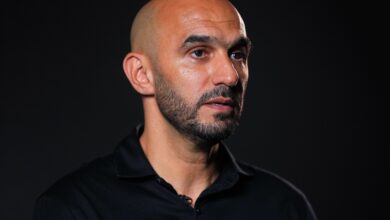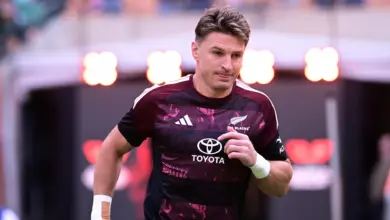
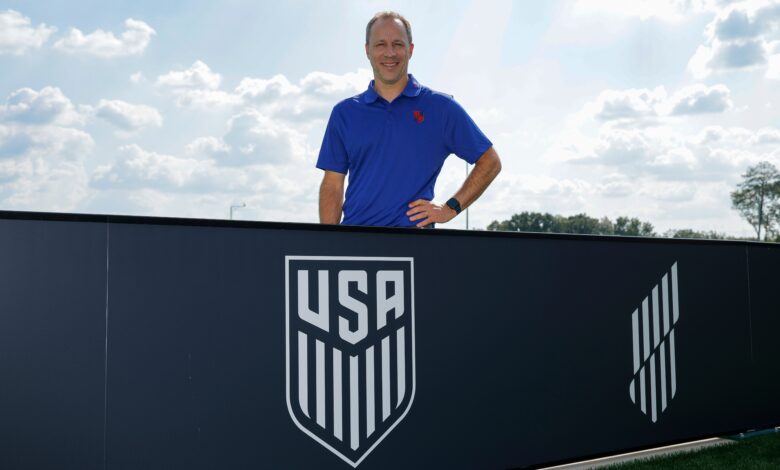
The search is not limited to continental borders, with the candidate pool split distinctly between domestic contenders who have deep roots in U.S. soccer and European heavyweights who could bring a new tactical identity to the squad. The decision will likely hinge on whether the federation prioritizes a coach who is already embedded in the developmental structure or one whose pedigree offers a significant step up in competitive pedigree.
Among the domestic options, the head coach of the U.S. men’s U-23 team emerges as a logical interim candidate. Having played in Germany and represented the USMNT, this coach possesses a direct link to the senior program’s culture. His recent tenure with LAFC, where he guided the club to a Supporters’ Shield and the MLS Cup title in his first season in 2022, demonstrates an ability to deliver immediate results in a high-pressure domestic environment. This track record suggests he could provide stability during the transition period, allowing the federation to continue its long-term search without disrupting the team’s momentum.
Another strong domestic contender is the current head coach of Nashville SC. A familiar figure within the USMNT program, he previously served as an assistant under Gregg Berhalter and stepped in as interim head coach between Berhalter’s two stints. His familiarity with the squad’s dynamics and the federation’s internal processes is a significant asset. Since taking charge of Nashville in 2024, he has delivered immediate success, leading the club to a league-record 77 points and the Supporters’ Shield this season. This statistical dominance in Major League Soccer suggests a tactical acumen that could translate to the international stage, offering a proven domestic alternative to international hires.

On the international front, the conversation centers on a former Manchester City boss who is reportedly the top target for U.S. Soccer executives. His resume is arguably the most decorated in the modern game, featuring managerial stints at Barcelona, Bayern Munich, and Manchester City. He has secured three Champions League titles, six Premier League trophies, and three titles each in La Liga and the Bundesliga. For a federation aiming to maximize its chances of success in 2026, his experience in managing elite squads in high-stakes environments is an undeniable advantage.
Also in the mix is a 48-year-old New Jersey native currently managing Real Sociedad. Having expressed interest in the USMNT position previously, he offers a unique blend of American heritage and European success. His recent appointment at Real Sociedad has been fruitful, leading the club to a Copa del Rey title and keeping them in contention for a Champions League spot. His background provides a cultural bridge that could ease the integration of American players into a more Europeanized tactical system.
The list of European candidates also includes a Spaniard with significant international pedigree, most recently coaching Belgium and Portugal. His tenure with Belgium saw them reach the 2018 World Cup semifinals, a historic achievement for that nation. However, his recent track record with Portugal has been less convincing, culminating in an underwhelming run at the most recent World Cup. This mixed record presents a risk-reward scenario: the federation would be hiring a coach with proven ability to reach deep into major tournaments but one whose recent consistency has raised questions.
Finally, Julian Nagelsmann, at 39 years old, represents the younger end of the European spectrum. His career includes high-profile roles at Bayern Munich and the German national team. He oversaw Germany’s campaigns at the 2024 Euros and the 2025 Nations League, though his most recent tournament run with Germany at the 2026 World Cup ended in the Round of 32 with a loss to Paraguay. While his age suggests a long-term vision, the recent exit from the World Cup may influence the federation’s assessment of his current tactical form.
As the federation evaluates these options, the stakes are clear. The chosen coach will not only manage a squad but will also be tasked with navigating the political and professional complexities of the 2026 World Cup, which the U.S. will co-host. The decision will define the tactical identity of the team for the next two years and set the tone for a competitive cycle that demands both immediate performance and long-term development.