
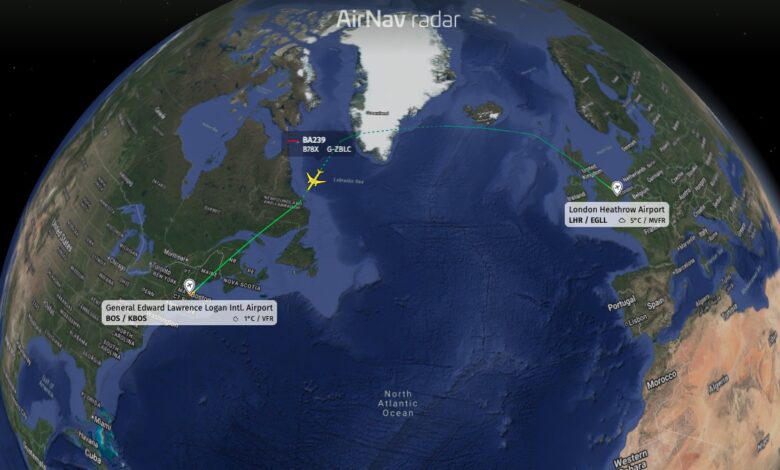
The incident occurred as the aircraft exited Greenland’s airspace. Following the alert, pilots initiated standard safety protocols by reducing airspeed and descending to 28,000 feet. While initial tracking data suggested a potential diversion to St. John’s or Gander in Newfoundland, or Keflavik in Iceland, the crew elected to continue toward Massachusetts. According to reports citing aviation tracking data, pilots informed Gander air traffic control that the oil loss occurred at high power but stopped worsening once thrust was reduced. The engine continued to operate at low power, and there were no reports of a full engine shutdown. Accounts regarding the decision-making process vary slightly; some sources cite airline operations control authorizing the continuation, while others reference maintenance recommendations for diversion that were apparently overridden by the crew’s assessment of the engine’s condition.
This event marks the second oil-related incident involving the specific aircraft, registration G-ZBLC, in less than two weeks. On November 14, while operating a flight bound for Dubai, the engine oil quantity on the same airframe dropped to zero, forcing an emergency diversion to Athens. While it remains unclear whether the two consecutive events are mechanically linked, the Rolls-Royce Trent 1000 engine series has faced ongoing industry scrutiny in recent years regarding durability and maintenance issues. British Airways has not confirmed the exact technical cause of Tuesday’s issue, describing it only as a “minor” technical matter that prompted a procedural emergency declaration. A company spokesperson stated that safety remains the airline’s highest priority.
The decision not to divert, despite the emergency declaration, has been a point of contention among aviation analysts and media reports. While radar data showed the aircraft maintaining a steady path toward New England after the alert, early social media posts and automated alerts had suggested an unscheduled landing in Iceland. The flight ultimately completed its transatlantic crossing without further incident.
Regulatory investigations into the specific cause of the oil loss and the decision-making process behind the non-diversion are expected to follow the safe arrival of the aircraft.