
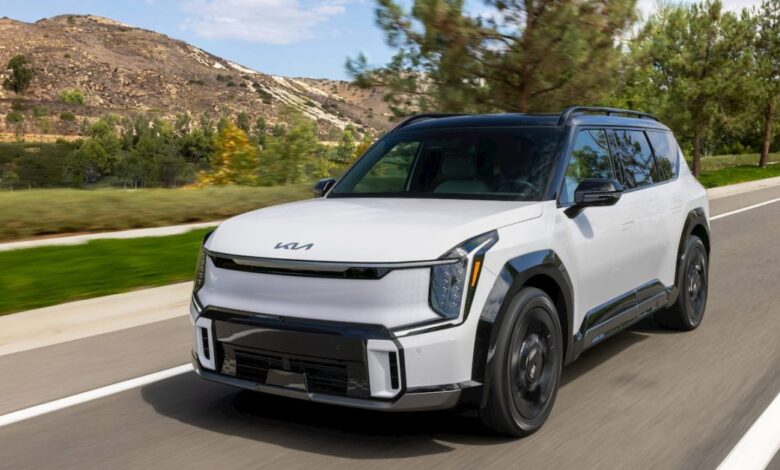
This emerging health concern arrives at a critical moment for the electric vehicle (EV) market, where manufacturers are competing to lower barriers to entry. Kia, for instance, recently announced that its new 2027 EV3 has arrived at dealerships across the US, accompanied by aggressive promotional offers of up to $10,000 in customer cash on select models. The move is designed to sustain momentum following a record quarter in US sales, aiming for a fourth consecutive year of record performance. With gas prices soaring, the economic incentive to switch to EVs is strong, yet the physical comfort of passengers remains a variable that early adopters are now documenting.
The physiological link between EVs and motion sickness is not yet fully understood, but medical experts are taking the reports seriously. Dr. Irene Di Giulio, a senior lecturer in anatomy and biomechanics at King’s College London, notes that initial research suggests some individuals experience more severe motion sickness in electric vehicles than in their internal combustion counterparts. Dr. Nicholas Hac, a neurologist at Northwestern Medicine in Chicago who specializes in dizziness and vertigo, states that he hears this complaint from approximately two patients a month. “They just notice that they’re much more likely or prone to be motion sick” in electric vehicles, Dr. Hac says. However, the scientific consensus is still forming. Dr. Bill Yates, a motion sickness researcher at the University of Pittsburgh, describes the current body of research as “pretty sketchy at this point,” noting a reliance on anecdotal information rather than extensive, rigorous studies.
For families, the impact can be immediate and disruptive. Mark Quigg, 45, from Lincolnshire, selected an electric vehicle last year primarily for its lower running costs. While he describes the car as “wonderful” to drive, he noticed a sharp increase in his nine-year-old daughter’s motion sickness. Previously, she only experienced nausea on 600-mile drives to France during school holidays. In the EV, even a 30-minute trip to the nearest city induces unwellness, and on one recent journey, she vomited—a reaction that had never occurred before.
The technology itself offers specific characteristics that may contribute to these reports, though the causal link remains under investigation. The Kia EV3, currently on sale, highlights the advanced features now standard in affordable EVs. The vehicle offers a choice between a 58.3 kWh battery providing up to 221 miles of range and an 81.4 kWh battery offering up to 321 miles. Both support rapid charging, with the larger battery reaching from 10% to 80% in approximately 31 minutes. All models feature a native NACS port, allowing access to Tesla Supercharger networks without adapters, and include Kia’s connected car Navigation Cockpit with a combined screen space of nearly 30 inches. While these features enhance convenience and connectivity, the smooth, rapid acceleration typical of electric drivetrains—devoid of the engine vibration and gear shifts familiar to combustion cars—may alter the sensory cues that the brain uses to maintain balance. Whether this shift in sensory input triggers the vestibular system to misinterpret motion, leading to nausea, is the subject of ongoing, albeit early-stage, inquiry.
Commercially, the stakes are high. Kia is offering a special lease rate for the EV3 Wind FWD starting at $349 per month, aiming to make the technology accessible to a broader demographic. Tesla’s EV sales have also recently topped estimates, signaling a stabilizing car business and broader market acceptance. Yet, for consumers like Baird and Quigg, the decision to buy an EV is not solely a calculation of fuel savings or charging speed. It is also a consideration of daily comfort and health for all occupants.
As the market expands and new models like the EV3 become commonplace, the question of motion sickness shifts from a niche complaint to a potential design and consumer protection issue. Until more extensive clinical studies are conducted, the evidence remains anecdotal, but the frequency of reports from both patients and everyday drivers suggests that automakers and researchers will need to address this physiological variable. For now, the decision for many families rests on a balance between the economic benefits of electrification and the uncertain physical impact on passenger comfort.