Exports of crude from the Strait of Hormuz have largely returned to levels seen before the outbreak of the Iran war, which began on 28 February with US and Israeli strikes. Data from global trade intelligence firm Kpler indicates that at least 16.5 million barrels per day (bpd) left the region in September, a figure that equals the pre-war average when excluding Iran. This volume is 10.5 million bpd higher than the monthly average recorded in March, during the initial weeks of the conflict. JPMorgan has corroborated this recovery, noting that Mideast crude oil flows have hit 98% of the pre-war level.
The restoration of these flows marks a significant shift in logistics following Tehran’s attempts to exert authority over the strategic waterway, which at times included declarations closing the strait. As Iran’s control appears to have declined in recent weeks, oil exporters and the shipping industry have developed robust workarounds to maintain supply chains. Approximately 40% of the region’s crude is now transported without transiting the strait, compared with just 17% prior to the war. This increase is driven largely by the utilization of Saudi and Emirati pipelines.
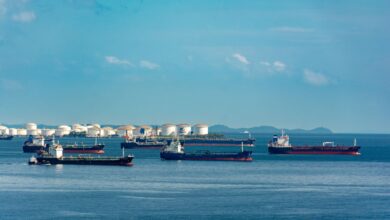
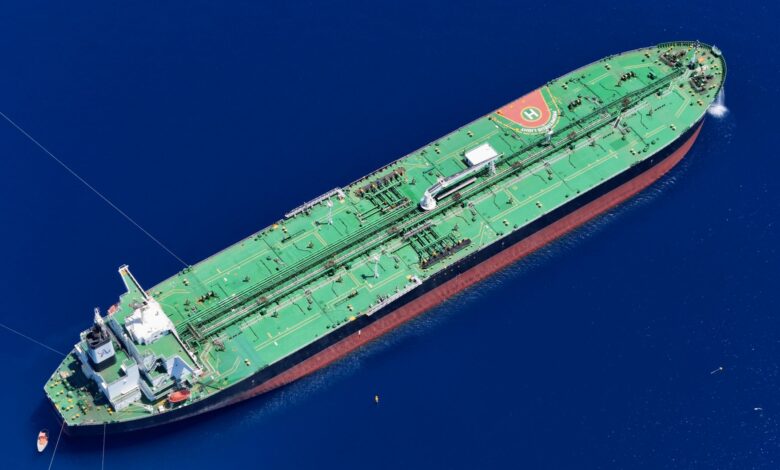
Saudi Arabia was able to restart operations on its east-west pipeline in late September after it sustained damage during drone attacks. This restoration allows exports to resume from the Red Sea port of Yanbu, providing a critical bypass around the Persian Gulf. Meanwhile, for the majority of crude still moving through the Strait of Hormuz, the shipping methodology has changed dramatically. Vessels are increasingly operating as a shuttle fleet, primarily consisting of very large crude carriers sailing with satellite transponders turned off.
These carriers move cargo to different tankers in open water, typically off the coast of Oman or Fujairah in the United Arab Emirates. In August, more than 70% of the crude passing through the strait changed tankers, a stark contrast to the pre-war period when almost no Gulf crude underwent such transfers in the Gulf of Oman. The US military continues to escort some vessels, further complicating the operational environment but ensuring the safety of key commercial routes.
A Divergent Market for Refined Products
Despite the near-normalization of crude exports, the recovery remains unbalanced. The supply of refined products, which are essential for transportation and industrial use, has not followed the same trajectory. Kpler analysts found that less than 20% of pre-war levels of refined products are currently being shipped through Hormuz. This bottleneck poses a significant problem for businesses and households that depend on diesel to run cars, vans, and lorries.
The disparity between crude and product flows is driving prices higher in consumer markets. In the UK, motorists are already reporting prices above £2 per litre at some forecourts. “Diesel carries the sharpest risk,” according to Kpler analysts, highlighting that the constraint on refined fuels presents a more immediate and severe challenge than the crude supply itself. The inability to fully ramp up refined product exports means that even as the broader oil market stabilizes, specific sectors and consumers continue to face elevated costs and supply uncertainty.
The situation illustrates the complexity of modern energy logistics. While infrastructure such as the Saudi east-west pipeline and adaptive shipping tactics have successfully mitigated the impact on crude supply, the refining and distribution networks for liquid fuels remain vulnerable. The reliance on ship-to-ship transfers in open waters, while effective for crude, does not translate as easily to the more diverse and often smaller-scale logistics required for refined products. As the conflict’s aftershocks continue to influence regional security, the gap between crude availability and refined product supply remains the central factor determining price volatility and energy security for global consumers.