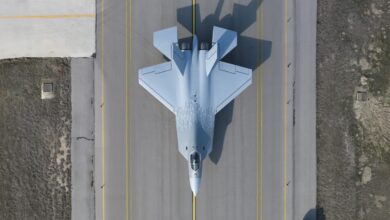
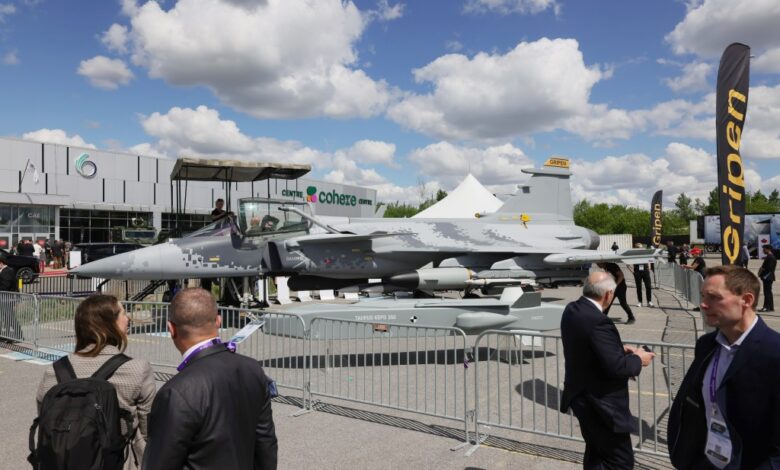
The Swedish defense manufacturer signed a Teaming Agreement with IMP Aerospace & Defence to establish a final assembly line for the Gripen in Canada. Under this arrangement, IMP would be responsible for electrical assembly production and in-service support (ISS) for the Canadian fleet. In parallel, Saab signed a Memorandum of Understanding (MoU) with Magellan Aerospace, which would handle the local manufacturing of advanced aerostructures, composite structures, and structural assemblies. These agreements build upon a previously signed MoU with CAE, which covers the delivery of advanced fighter pilot and technician training, mission systems engineering, and sustainment capabilities.
Micael Johansson, President and CEO of Saab, stated that the collaboration is designed to create a “strong Canadian industrial ecosystem” that delivers operational effect and national sovereignty. David Gossen, President of IMP Aerospace & Defence, noted that while the capability is being established to meet Canadian requirements, it positions Canadian industry to support other Gripen customers internationally, viewing the project as an opportunity to become an enduring part of the global Gripen program.
The industrial mobilization is taking place against the backdrop of a volatile strategic environment for Canada’s air force modernization. In January 2023, Canada announced an agreement to acquire 88 F-35As. However, Prime Minister Mark Carney ordered a review of the purchase in March 2025 following threats from U.S. President Donald Trump to economically sanction Canada and suggestions that the country could be annexed as the 51st state. As of April 27, 2026, Defense Minister David McGuinty told the Senate defense committee that the review is continuing without providing a specific date for a final decision.
Despite the review, the F-35 program remains partially active. The Canadian government has committed to the first 16 aircraft, and the Royal Canadian Air Force accepted its first two F-35As at Luke Air Force Base in Arizona on October 22, 2026. Department of National Defence spokeswoman Andrée-Anne Poulin confirmed that these two aircraft were transferred to Canada on October 9 and October 22, respectively. The remaining 72 aircraft in the original 88-aircraft deal are subject to the ongoing political and strategic assessment.
For Saab, the Gripen E offer is part of a broader strategy to deepen its footprint in the Canadian defense market. On May 27, 2026, the Canadian government named Saab its preferred supplier for an airborne early warning and control capability based on the GlobalEye aircraft, which utilizes the Canadian-built Bombardier Global 6500 airframe. This contract, estimated to boost domestic defense production, complements the potential Gripen acquisition. Saab CEO Johansson stated in March 2026 that delivering the first Gripen to Canada within five years is achievable, signaling a timeline that could align with the eventual resolution of the F-35 review.
The strategic significance of these industrial partnerships extends beyond immediate procurement. By securing agreements with established Canadian aerospace leaders like CAE, IMP, and Magellan, Saab is mitigating the logistical and political risks associated with importing a foreign platform. The proposed ecosystem includes high-technology manufacturing, advanced materials, and model-based systems engineering, all performed domestically. This approach contrasts with the F-35 program, which relies heavily on a global supply chain and U.S. industrial base, a dependency that has become a point of contention in recent bilateral relations.
The Gripen E is an advanced multi-role fighter designed for air superiority and ground attack missions. While the Canadian government has not yet selected a final platform, the formalization of the industrial base for the Gripen indicates that Saab is preparing for a potential shift in procurement strategy. The decision will likely weigh the operational compatibility of the F-35 with existing NATO and Five Eyes intelligence sharing against the industrial sovereignty and diversified supply chain offered by the Gripen. As the review continues, the Canadian aerospace industry is now positioned to support either path, having secured roles in both the F-35 sustainment and the potential Gripen production lines.