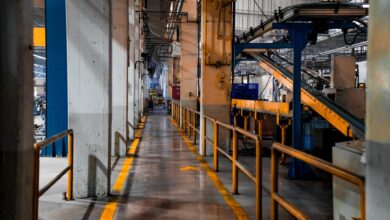
On the ground, Estonia’s Milrem Robotics has opened an assembly line in Born, Netherlands, in partnership with VDL Defentec to produce THeMIS unmanned ground vehicles (UGVs). The facility has already delivered the first THeMIS vehicle to the Dutch government, part of a pledge of more than 100 robots for Ukraine. Milrem CEO Kuldar Väärsi stated that the new line demonstrates Europe’s ability to rapidly scale production. Ukrainian forces have utilized these tracked UGVs since 2022 for various missions, including assault, reconnaissance, and casualty evacuation, with frontline operations tripling between November and March of the most recent reporting period.
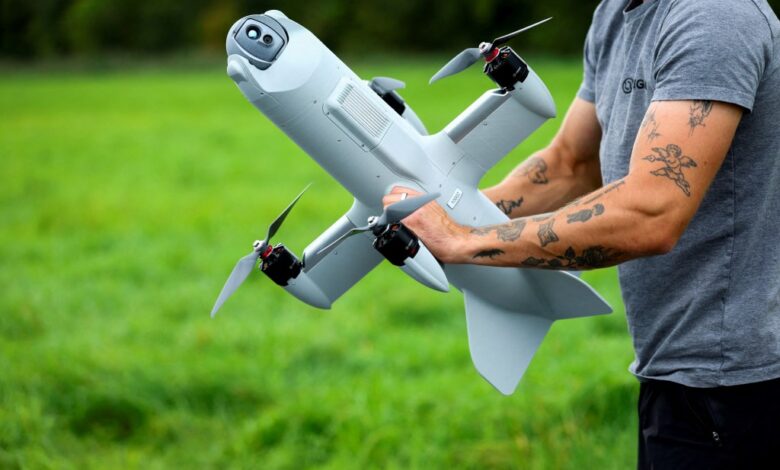
Domestically, the Royal Netherlands Navy is procuring a new counter-unmanned aerial system (C-UAS) capability from defense firm Destinus. The program, slated for completion in the second quarter of 2027, will equip the fleet with Destinus’ Hornet B2 interceptor drones. This kinetic solution is designed to address the growing threat of low-cost, high-volume aerial attacks on warships. Destinus CEO Mikhail Kokorich emphasized that the system inverts the economics of naval air defense by offering a cost-effective alternative to firing expensive missiles at cheap threats. The Dutch Ministry of Defence stated that the addition is necessary to provide sailing units with effective self-defense in fleet operations.
These acquisitions are part of a broader Dutch investment in defense modernization and support for Ukraine. The Netherlands has allocated approximately €1.4 billion to Ukraine’s drone program since 2022 and has provided over €12.5 billion in total military aid, including nearly one million drones. According to the Kiel Institute, European aid for drones rose from €400 million in 2022 to €1.6 billion in the first four months of 2026. Additionally, Oshkosh Defense has begun producing a prototype of the Dutch Expeditionary Patrol Vehicle (DXPV), a modified Joint Light Tactical Vehicle (JLTV) adapted for the Netherlands Ministry of Defence. The Dutch military ordered the vehicles in January under a contract valued between $25 million and $30 million, leveraging Oshkosh’s mature production lines to accelerate delivery.
These developments highlight a coordinated European industrial effort to enhance both Ukrainian resilience and Dutch combat capabilities. The integration of AI in decision-making, the scaling of unmanned ground and aerial systems, and the adaptation of existing platforms for specific national needs reflect a strategic pivot toward rapid, scalable defense technologies. As threats on the battlefield evolve, the emphasis on cost-effective, autonomous solutions is becoming a central pillar of Western military policy.