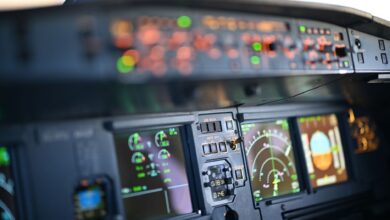
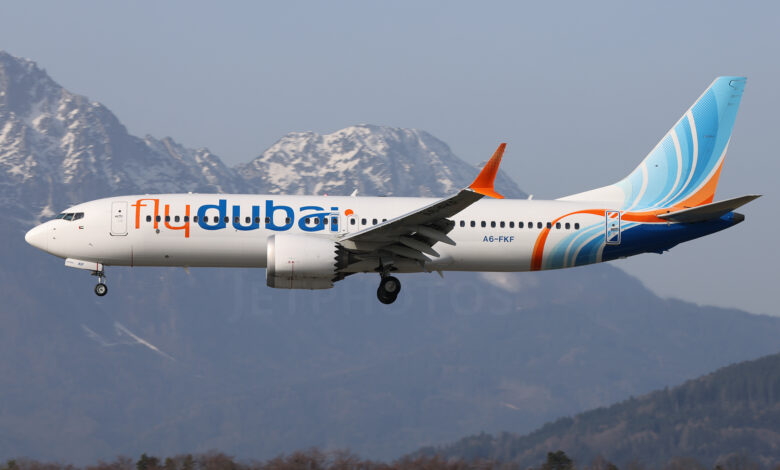
The incident began shortly after the aircraft departed Dubai International Airport at 03:05 UTC. For the first two hours, the flight proceeded normally, climbing to its planned cruising altitude. At 05:21 UTC, the aircraft initiated a steep descent, followed by a sharp ascent and another rapid drop, before stabilizing around 15,000 feet. Flight tracking data indicates that the aircraft’s altitude continued to oscillate around this lower level for the remainder of the flight, with significant fluctuations in ground speed.
At 05:28 UTC, while flying along the Saudi-Jordanian border, the aircraft began squawking 7700, the standardized transponder code for a general emergency. Seven minutes later, at 05:35 UTC, the code changed to 7500, which internationally denotes unlawful interference. The flight briefly entered Jordanian airspace before executing a 180-degree turn to head southwest toward Tabuk. As it approached the Saudi airport, the transponder code reverted to 7700. The last automatic dependent surveillance-broadcast data received from the aircraft confirmed a safe landing at 06:58 UTC.
Official statements and flight data confirm that an altercation occurred in the flight deck. One pilot attacked the other, attempting to seize control of the aircraft. The motivation behind the attack remains unknown and is subject to formal investigation. In response to the emergency, Israel scrambled fighter jets, operating under the concern that the flight was being hijacked. The aircraft carried approximately 170 passengers, many of whom were Israelis, who reported fearing for their lives during the turbulent descent.
The crisis was resolved when a secondary set of pilots and other crew members, who were traveling on the flight, gained access to the cockpit. They subdued the attacker and secured the aircraft. With the flight deck under control, the crew completed the diversion and landed safely in Tabuk. A FlyDubai spokesperson confirmed that all passengers and crew were safe and accounted for. The airline has since deployed two replacement aircraft to Tabuk to relieve those on board and stated that the incident has no impact on other scheduled operations across its network.
The event has raised significant questions regarding aviation security and the potential threat posed by pilots to public safety. The incident occurred just days before the anniversary of the October 7, 2023, attack on Israel, a timing that has rekindled anxieties about airline security in the region. While the immediate threat was neutralized by the actions of the onboard crew, the underlying reasons for the attack remain unverified. Authorities have urged the public to refrain from premature speculation while the formal investigation gathers facts to determine the full scope and cause of the event.
The successful diversion and landing in Tabuk prevented a potential catastrophe, but the incident highlights the vulnerabilities inherent in the trust placed in flight crews. The response of the secondary crew and passengers proved decisive in securing the aircraft, ensuring that the flight concluded safely despite the severe disruption to its intended route. The focus now shifts to the official inquiry, which will determine the specific circumstances and motivations behind the cockpit attack.