The central tension lies in the disparity between the physical risk to energy infrastructure and the restrained political and military response from Washington. President Donald Trump has accused the adversaries of “behaving very badly” and stated that the U.S. will “move very quickly,” but concrete military action has been minimal. This hesitation appears calculated. Both the U.S. and Iran appear to be eyeing the November 3 midterm elections. The administration seeks to avoid escalation that would further drive up gasoline and diesel prices before the vote, while Iran aims to inflict maximum political damage. Trump acknowledged this dynamic on social media on Tuesday, writing, “I’ll be there after the Elections, and I will never forget!”
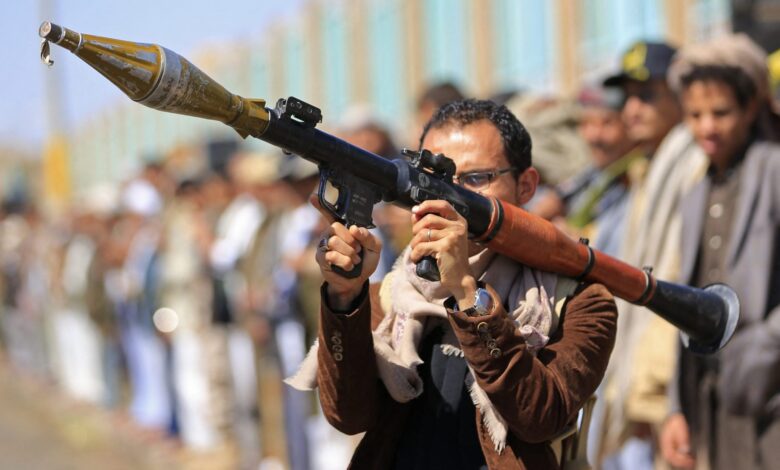
The stakes of this strategic pause are becoming visible on the ground. On Wednesday, a missile strike hit a portion of the Saudi Aramco headquarters, the massive state oil company. This followed devastating attacks over the preceding weekend on the crowded Riyadh airport, which killed at least 20 people, including one U.S. citizen, and injured hundreds more. The Houthis have pledged to continue striking energy facilities and airports, marking a significant shift in their operational scope.
Fernando Ferreira, director of the geopolitical risk service at Rapidan Energy Group, described the Houthi success against critical Saudi infrastructure as unprecedented. “The measured [U.S.] response reflects the fact that there are not a lot of good options to respond here,” Ferreira told Fortune. He noted that while the U.S. could impose significant pain on the Houthis, it would not necessarily alter their calculus or significantly degrade their capabilities, which are now well-protected underground.
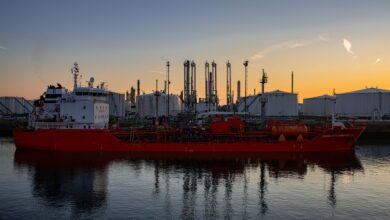
This dynamic is mirrored in the Strait of Hormuz, where traffic, though high, is slowing again this week. The International Energy Agency reported on Wednesday that September oil volumes out of the Middle East rose to essentially 75% of pre-war volumes. Despite this recovery, the U.S. has not matched its previous “tanker-for-a-tanker” promise, where responses often exceeded the initial attack. Ferreira noted that the U.S. has not effectively responded to the latest wave of Iranian attacks, which includes at least 20-plus incidents over the past two weeks. The critical question remains whether Washington will wait until after November 3 for an escalated response or if further provocations will force an earlier answer.
Analysts are divided on the interpretation of this lull. Dan Pickering, founder of Pickering Energy Partners, wonders if the U.S. will focus solely on Iran or if this is the “calm before the storm” of an inevitable intensification. “We’re staring at the midterms and there is no response,” Pickering said. “It’s an unpopular conflict. If you’re ramping [the war] back up, that’s scary. If you just choose words, that looks weak.” He argues that the U.S. has chosen to ignore the problem rather than address it, avoiding the expenditure of political capital and military resources required for direct, larger-scale attacks on the Houthis.
The Houthi tactics have evolved, utilizing advanced drone warfare and years of planning. Although the Saudis possess greater overall firepower, they cannot defend against every strike, and each Saudi response is typically met with Houthi escalation. Part of the U.S. hands-off approach may stem from the success of increased military escorts, which have allowed more oil to exit the region despite volatility. However, Ferreira warns this could backfire. “Iran will not accept the status quo as we have now where we’re moving millions of barrels a day through Hormuz,” he said. “They will not just simply stand by and allow that to happen. We’re seeing that playing out now, and they’re forcing a confrontation.”
The economic consequences of this stalemate are immediate. Oil is priced well over $100 per barrel, with gasoline and diesel prices at or near seasonal record highs. In an attempt to mitigate domestic fuel costs, Trump brokered a deal with Russia for a limited amount of diesel exports in exchange for reduced Russian sanctions. However, experts indicated this move will have little impact on pricing. The prolonged price stability above $100 is altering the behavior of U.S. oil producers. With the war in its eighth month, producers are beginning to prepare for higher prices persisting deep into 2027 and possibly 2028.
This shift in expectations suggests more spending, drilling, and U.S. volumes pushed to new record highs next year. “The producers haven’t had a price signal to react to, but they’re starting to get one,” Pickering said. As the administration weighs its options, the market is increasingly pricing in a scenario where high fuel costs remain a feature of the economic landscape, not a temporary blip.
As the November 3 elections approach, the focus remains on whether the U.S. will maintain its current restraint or be forced into a more aggressive posture. For now, the Strait of Hormuz remains open, but the underlying tensions suggest that the current trade volumes may be a temporary reprieve rather than a return to normalcy.