
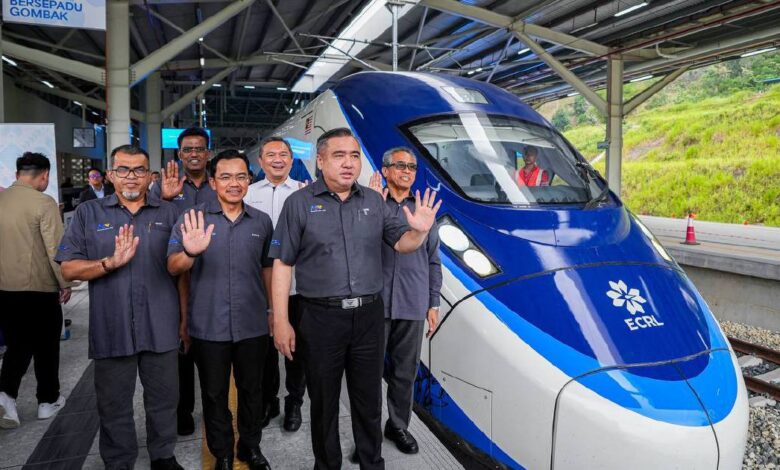
The ECRL represents a major transformation in Malaysia’s internal connectivity, designed to bridge the gap between the densely populated western economic corridor and the resource-rich states of Kelantan, Terengganu, and Pahang. Currently, the first phase of the line, covering the 519-kilometer route between Kota Bharu in Kelantan and Gombak, is on track for completion in December. Commercial passenger services are targeted for January 2027, although Minister Loke has indicated a desire to accelerate the launch to December if testing proceeds smoothly and strict safety requirements are met. The project, developed in partnership with China Communications Construction Company (CCCC) under China’s Belt and Road Initiative, is poised to alter the economic and social dynamics of the Malaysian east coast.
The primary economic benefit of the ECRL is the dramatic reduction in travel time. An express service along the completed first phase will cut the journey between Gombak and Kota Bharu from seven hours by road to approximately four hours by rail. For households and businesses, this compression of time has tangible implications for labor mobility, tourism, and regional development. The faster alternative to road travel is expected to be particularly significant during peak periods such as Eid al-Fitr, easing congestion and offering a more reliable mode of transport for travelers moving between the two coasts. By improving access to communities and destinations along the east coast, the rail link is also positioned to stimulate tourism and support broader regional economic growth.
While the passenger service draws public attention, the project’s logistical implications are equally substantial. Construction has recently begun on a new 25-kilometer rail connection, designated as Section D, which will link the ECRL directly with Northport and Westports at Port Klang. This new alignment runs from the ECRL station at Jalan Kastam to the two major container ports, completing a central part of the railway’s planned east-west freight corridor. The design combines a new standard-gauge ECRL track with existing metre-gauge infrastructure operated by Keretapi Tanah Melayu, allowing cargo services to leverage both rail networks.
This freight connection is intended to move more container and other cargo by rail between the two coasts, specifically linking Northport and Westports with the ECRL freight facilities serving Kuantan Port on the east coast. By facilitating this direct rail link, the project aims to reduce reliance on road haulage through the Klang Valley, a region often plagued by traffic bottlenecks. Strengthening Port Klang’s inland connections through this multimodal approach is expected to enhance Malaysia’s efficiency as a logistics hub, lowering transport costs for importers and exporters who depend on the movement of goods between the country’s western and eastern shores.
The operational readiness of the ECRL also reflects a broader strategy of technology transfer and skills development. The line will be operated by hundreds of local staff who have undergone training in China. This aspect of the project highlights the dual nature of the infrastructure investment: not only does it deliver physical assets, but it also builds human capital within the Malaysian workforce. The involvement of Chinese contractors and the integration of Chinese-led training programs have been central to the project’s development, ensuring that the operational knowledge required to run such a complex system remains within the country after the construction phase concludes.
Despite the progress, the project’s timeline remains sensitive to the outcomes of the current testing phase. The focus is now on integrating the railway’s key systems, including signaling, communications, and traction power. These technical trials are critical to ensuring that the train services can operate safely and efficiently at the required speeds. Any delays in this integration process could impact the target commercial launch date, though the current 95% completion rate suggests that the project is on a stable trajectory. The second phase of the ECRL, which will extend the railway from Gombak to Port Klang, is scheduled for construction completion in December 2027, with full operations expected from January 2028. This phased approach allows Malaysia to benefit from the inter-coastal link between the east and west early in the project’s life, while the final extension to the port complex further solidifies the rail network’s role in the national supply chain.
As the ECRL enters this final stretch, the attention of policymakers and industry observers turns to the results of the system integration tests. The ability to launch commercial services in January 2027, or potentially earlier as Minister Loke has suggested, will depend on meeting rigorous safety standards. For the communities along the east coast and the logistics operators in Port Klang, the next few months will be decisive in determining whether the promised benefits of reduced travel times and improved freight efficiency materialize as planned. The project stands as a testament to the potential of large-scale international collaboration to reshape domestic economic geography, provided that the technical and operational hurdles of the final commissioning phase are successfully navigated.