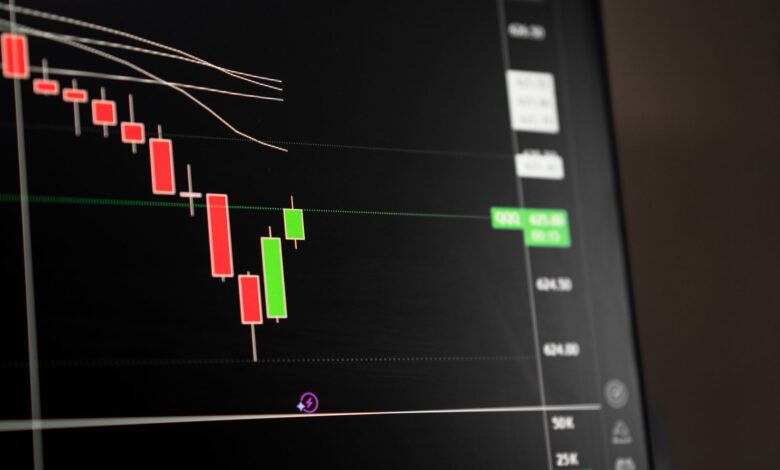
At the heart of this market adjustment is Intel’s recently issued outlook for the personal computer sector. Intel, which has long held a dominant position in the PC processor market, signaled a weaker-than-expected performance for the industry ahead. This cautious guidance served as a bellwether for investors, casting doubt on the broader recovery and growth of the PC market. Because AMD competes directly with Intel in the CPU market, particularly in the laptop and desktop segments, Intel’s forecast effectively rewrites the expected revenue environment for AMD. When the market leader projects stagnation or decline, the secondary player’s growth potential is inherently constrained, leading to a re-evaluation of AMD’s future earnings projections.
The geopolitical and economic implications of this sector-wide caution extend beyond mere stock price fluctuations. The personal computer industry is a critical component of the global technology supply chain, heavily influenced by macroeconomic factors such as consumer spending confidence, inflation rates, and global trade policies. Intel’s weak outlook suggests that these broader pressures are biting into consumer and corporate demand for new hardware. For AMD, this means that even if its products are competitive, the total addressable market may be shrinking or growing at a slower pace than previously anticipated. This creates a strategic challenge: AMD must justify its valuation not just on the strength of its silicon, but on its ability to capture market share in a potentially contracting pie.
Investors have become increasingly sensitive to these cross-sector correlations. In previous cycles, AMD was often viewed as a high-growth alternative to Intel’s mature base, allowing its stock to decouple from Intel’s movements during periods of strong PC demand. However, in a downturn or a period of uncertainty, the two stocks tend to move in tandem. The recent decline in AMD shares demonstrates that this decoupling is fragile. It underscores that while AMD offers a credible alternative in terms of performance and architecture, it is not immune to the fundamental realities of the hardware cycle. If consumers and businesses delay upgrades due to economic headwinds, both companies suffer, but the narrative of AMD’s growth story becomes harder to sustain without a robust underlying market.
From a strategic perspective, this development places pressure on AMD to demonstrate differentiation beyond just market share. The company may need to emphasize its strengths in data center and AI processing, where the demand dynamics differ significantly from the consumer PC space. However, the immediate market reaction focused on the PC segment, indicating that investors are still heavily weighing the consumer hardware cycle in their valuation models. This highlights a tension within the semiconductor industry: the rapid shift toward AI and data center workloads is creating new growth engines, but the traditional PC market remains the largest volume driver for many chipmakers. Intel’s forecast serves as a reminder that the transition to these new markets is not instantaneous, and the legacy PC business continues to hold significant weight in the overall financial health of the sector.
The neutrality of this market reaction is important to note. There is no suggestion of technical failure or loss of trust in AMD’s product line. The price action is a rational response to revised macroeconomic assumptions. Intel’s guidance acts as a proxy for the entire industry’s health. When the largest player in a duopoly expresses caution, it forces a reassessment of the competitive landscape. AMD’s management may argue that they are better positioned to capture share in a downcycle due to aggressive pricing or superior product cycles, but the market’s initial reaction was to discount those possibilities in favor of the immediate signal from Intel’s balance sheet and outlook.
This incident also reflects the broader fragility of the tech sector’s reliance on consumer spending. As global economies navigate inflation and interest rate decisions, discretionary purchases like new computers are often the first to be postponed. Intel’s weak outlook is a direct reflection of this consumer behavior. For AMD, this means that the path to revenue growth is no longer just about engineering excellence; it is about navigating a cautious consumer landscape. The company’s future performance will depend on its ability to stimulate demand in a market that is currently risk-averse.

Looking ahead, the focus will shift to whether AMD can provide counter-evidence to Intel’s gloomy forecast. Any signs of strong order books or positive commentary from AMD’s own earnings calls will be scrutinized to see if they can diverge from the sector trend. However, the initial dip in shares serves as a reminder that in the semiconductor world, no company is an island. The fate of the PC market is a shared destiny for its major players, and the recent movement in AMD’s stock is a clear testament to that interconnectedness. The market is now waiting to see if AMD’s specific strengths can provide a buffer against the broader industry slowdown, or if the sector-wide caution will persist, keeping a lid on valuations for both giants.
As the trading day closed, the lower price of AMD stock stood as a quiet but significant indicator of the shifting winds in the tech industry. The decision to lower the share price was not a signal of failure, but a reflection of a more cautious reality. The stage is set for the next round of earnings reports, where the battle over market share and narrative control will be contested anew. For now, the market has spoken: the PC recovery is still a work in progress, and the optimism that fueled recent gains is being tempered by the hard data from the industry’s most established player.