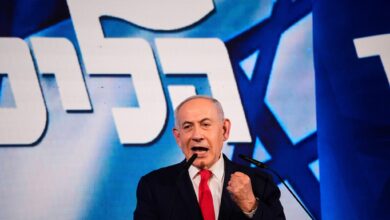
The outcome leaves Israel in a state of political deadlock. Neither the incumbent government nor its primary challenger possesses the 61 mandates necessary to form a stable administration. This stagnation places the power to determine the next government squarely in the hands of the Joint List and Ra’am, the two Arab-led parties that collectively won 19 seats. For Palestinian citizens of Israel, this result is being interpreted as a direct response to four years of domestic policies, perceptions of insecurity, and the broader context of the war in Gaza and conditions in the West Bank.
The path to a new government is now determined by a specific constitutional procedure. In the coming days, the Israeli President will consult with the leaders of all elected parties. Each party leader will recommend a candidate they believe is most likely to assemble a coalition. The President is not obligated to task the leader of the largest party—Netanyahu’s Likud, which remained the single largest party with 27 seats—with the task of forming a government. Instead, the mandate is given to the candidate deemed most viable, who then has 28 days, extendable by a further 14, to secure the support of at least 61 lawmakers. Failure to assemble a majority within this timeframe allows the President to turn to another candidate, potentially leading to a prolonged period of negotiations or a return to the polls.
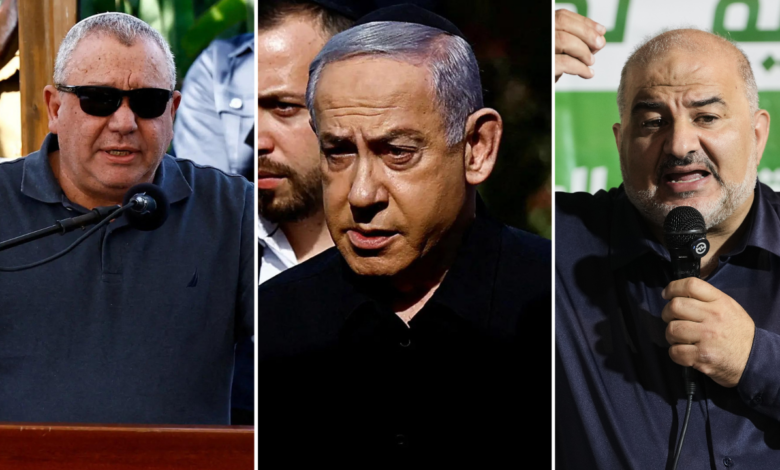
Despite the numerical possibility of an opposition-led government, significant ideological barriers remain. Eisenkot, a former military chief of staff and leader of the centrist Yashar party, has repeatedly stated that he cannot form a coalition dependent on the support of Arab parties. His justification centers on their positions regarding Hamas and the war in Gaza; some Arab party officials have refused to endorse the military goal of eliminating Hamas or to condemn it as a terrorist organization. Other prominent figures in Eisenkot’s bloc, including Naftali Bennett and Avigdor Liberman, have also previously rejected reliance on Arab parties for governing support. Conversely, Yair Golan, leader of the Democrats party, has urged cooperation with Arab parties specifically to remove Netanyahu from power.
The political landscape is further complicated by Netanyahu’s own coalition dynamics. His traditional partners in the right-wing, far-right, and ultra-Orthodox spectrum do not possess enough seats to return him to power without new alliances. Reports indicate that President Donald Trump has expressed a preference for a unity government bringing together Netanyahu and Eisenkot, a scenario that could bypass the need for Arab party participation but faces its own internal obstacles. Meanwhile, Netanyahu has publicly accused Arab parties of “stealing” the election, alleging fraud, bribery, and foreign interference, claims that have added a layer of tension to the already delicate negotiation process.
The surge in Arab party representation is attributed by analysts and party members to a mobilization driven by frustration over organized crime, budget allocations, and political rights. Reem Hazzan, a member of the political bureau of the Communist Party of Israel (Hadash), part of the Joint List, described the result as a validation of voter agency, stating that the turnout reflected a desire to protect their communities and influence national policy. Nidal Foqaha, a political analyst based in Ramallah, noted that the success of these parties is linked to a sense of threat felt by Arab citizens under the current government, particularly regarding the policies of ministers like Itamar Ben Gvir. However, views on the potential for a post-Netanyahu government vary; while some in Israel see a clear path to change, Palestinians in the West Bank are viewing the possibility of a new government with more caution.
As the certification of results is expected on November 4, the focus shifts to the practical mechanics of coalition building. The four primary scenarios identified by observers include a unity government, defections from opposition parties to join the current bloc, the formation of a government reliant on Arab support (a step Eisenkot has ruled out), or another election. The uncertainty surrounding these paths leaves the public and international community awaiting the President’s decision on who will be tasked with the difficult job of assembling a majority in a deeply divided parliament.