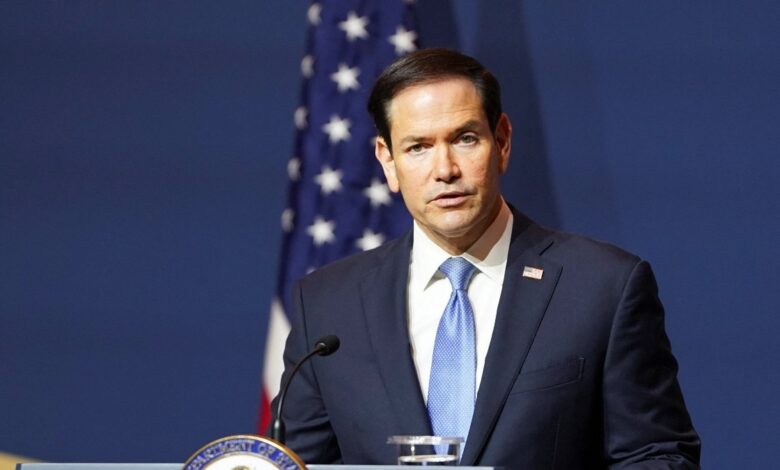
Rubio emphasized that the disruption is not merely a regional issue but a systemic risk to the global economy. “When you talk about the Black Sea, you saw a lot of countries speak up and express their willingness to contribute,” Rubio said, noting that both Turkey and India had “come to the table with some ideas about how we can get grain shipments moving.” He clarified that the stakes extend beyond agriculture, stating that the instability threatens “global food security and, to some extent, energy security as well.” By linking the two sectors, the administration is framing safe maritime passage as a dual imperative for economic stability and national security.
The urgency of restoring Black Sea transit is underscored by the mechanics of trade. Grain shipments from the region are vital for global supply chains, and their interruption forces importers to seek alternative, often more expensive, routes or sources. While the specific technical details of the Indian and Turkish proposals were not detailed in the immediate briefing, their introduction signals a diplomatic push to create a framework for safe passage. This aligns with broader international efforts to maintain the flow of commodities, ensuring that price volatility in food markets does not exacerbate inflationary pressures in importing nations.
In contrast to the collaborative tone surrounding the Black Sea initiative, Rubio presented a more guarded assessment of security in the Strait of Hormuz. He described securing safe passage through this critical energy chokepoint as a “more complicated challenge,” citing the limited ability of many nations to project military power in the region. “The President has repeatedly asked countries to join us in the effort to protect global shipping through the Strait of Hormuz,” Rubio stated. “So far, we’ve had very limited cooperation, but not much.” He acknowledged that the burden of protecting these shipping lanes has “primarily fallen on the United States,” highlighting a disparity between the global need for security and the current distribution of military responsibility.
The tension in the Strait of Hormuz is driven by direct threats to commercial vessels. Rubio pointed to specific incidents involving Iran, noting that Iranian attacks have targeted ships carrying Indian sailors and energy supplies destined for countries represented at the G20 table. “Iran is blowing up ships, including ships that have, for example, Indian sailors on them, including ships that have energy that’s destined for countries represented at that table,” he warned. This targeting of commercial infrastructure directly impacts the cost and reliability of energy imports. When vessels are attacked or insurance premiums rise due to perceived risk, the cost of transporting crude oil and other fuels increases, a factor that ultimately filters through to consumer energy prices and industrial production costs globally.
The broader context of these maritime disruptions was reinforced by a separate communiqué from the Quad foreign ministers. On the same day, the group called for the preservation of navigational rights and freedoms in the Strait of Hormuz, the Red Sea, and the Bab el-Mandeb Strait. This appeal reflects a consensus among major powers that the safety of international trade is under unprecedented strain. The Quad’s statement underscores that the challenges facing the Black Sea are part of a wider pattern of instability in key maritime corridors, where threats to commercial shipping are raising concerns over the safety of international trade and energy supplies.
Rubio framed these events as a fundamental shift in the geopolitical landscape. “We live in a world in which a country is openly… saying we will blow up commercial ships,” he said. “Think about that, okay? Think about the world we now live in. It sounds like something from 100 years ago or 80 years ago, that’s happening, and every country there is challenged.” This rhetorical framing serves to highlight the severity of the threats, moving beyond abstract security concepts to the tangible reality of commercial disruption. The mention of “100 years ago” or “80 years ago” draws a historical parallel to periods of intense maritime conflict, suggesting that the current environment poses risks comparable to those of major past wars, albeit in a different form.
For the global economy, the interplay between the Black Sea and the Strait of Hormuz creates a compounded risk. The Black Sea disruption affects the supply of agricultural commodities, while the Hormuz tensions threaten the flow of energy. Together, they create a scenario where both food and fuel prices face upward pressure, complicating inflation control for central banks and governments worldwide. The willingness of countries like India and Turkey to propose solutions for the Black Sea suggests a growing recognition that unilateral or purely military responses are insufficient. Diplomatic frameworks for safe passage, potentially involving insurance mechanisms or escort arrangements, may be necessary to restore confidence in these trade routes.
However, the “limited cooperation” noted by Rubio regarding the Strait of Hormuz indicates that achieving a similar consensus for energy security remains elusive. The disparity in military capabilities and political will among G20 nations means that the US may continue to bear a disproportionate share of the security burden. This dynamic could lead to further strain on international relations, particularly if other nations perceive the US as shouldering costs without adequate shared responsibility. The impact on businesses operating in these corridors is immediate: shipping companies may reroute vessels away from high-risk areas, increasing transit times and fuel consumption, while insurers may raise premiums, both of which contribute to the final cost of goods and energy for consumers.
As the G20 meeting concludes, the focus shifts to whether the proposals from India and Turkey can be operationalized. The next critical step will involve detailed technical negotiations to define the parameters of safe passage in the Black Sea. Simultaneously, the international community must address the “limited cooperation” issue in the Persian Gulf. Without a broader coalition to secure the Strait of Hormuz, the threat to energy security will persist, leaving global markets vulnerable to further shocks. The outcome of these diplomatic efforts will determine whether the global trading system can stabilize or if it faces a prolonged period of volatility driven by geopolitical conflict.