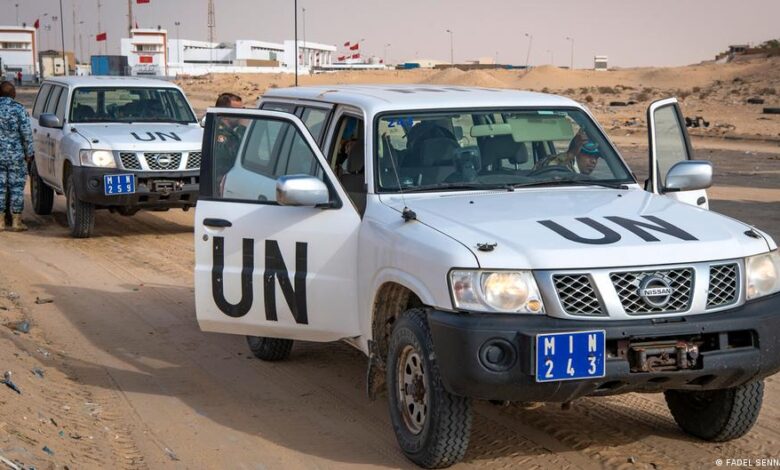
The crisis culminated on Friday in New York, when Russia vetoes a US-backed proposal to extend the mission for one year. Despite support from 11 of the 15 council members, with three abstaining, the resolution was blocked. In a subsequent vote, a rival Russian draft, which sought to renew the existing mandate without altering its terms, failed to secure the nine affirmative votes required for passage. The US exercised its own veto to block this second resolution. As a result, no new mandate has been approved, and the legal basis for MINURSO’s continued operation runs out on October 31.
The conflict at the Security Council mirrors the deeper geopolitical rift over the status of Western Sahara, a former Spanish colony in northwest Africa rich in minerals. Morocco considers the territory an integral part of its sovereign territory, while the Algeria-backed Polisario Front, representing the indigenous Sahrawi people, seeks to establish an independent state known as the Sahrawi Republic. MINURSO was established in 1991 to monitor a ceasefire and prepare for a referendum on the territory’s future. However, disagreements over the eligibility of voters have prevented the referendum from taking place for decades.
The US draft resolution proposed significant changes to the mission’s mandate. It would have removed the word “referendum” from the mission’s name, effectively rebranding it as MINUSO, and designated Morocco’s autonomy proposal as the sole basis for further negotiations. Under this plan, the territory would manage its internal affairs but remain under Moroccan sovereignty. This approach builds on a previous Security Council decision from last year, which described Morocco’s autonomy plan as the “most feasible” solution. US Ambassador Mike Waltz argued to the council that the referendum process had been stalled for decades, implying that a shift in diplomatic language was necessary to break the deadlock.
Russia, however, rejected the US proposal as a “unilateral approach” that favored one side. Russian UN Ambassador Vassily Nebenzia stated that the Security Council cannot “automatically pre-determine matters relating to sovereignty” and must not bless a “one-sided approach.” Consequently, Moscow vetoed the US draft and tabled its own alternative, which aimed to renew the mission’s mandate for another year while preserving the original terms, including the reference to a referendum. The failure of the Russian draft indicates that it also lacked sufficient support among the remaining council members.
The outcome of these votes has been welcomed by the primary parties involved in the territorial dispute, each interpreting the result to validate their position. Morocco’s royal palace welcomed the failure to renew MINURSO as it stood, stating on Friday that UN personnel and equipment should leave the territory. Conversely, Sidi Omar, the Polisario Front’s representative at the UN, told reporters that he welcomed Russia’s veto, arguing that the US proposal would undermine the right to Sahrawi self-determination. For the Polisario Front, the preservation of the referendum language in the original mandate is a critical point of contention.
The diplomatic standoff occurs against a backdrop of renewed tension in the region. Low-level fighting has continued since the Polisario Front announced it was resuming armed struggle in 2020. The expiration of the peacekeeping mandate raises questions about the security situation in the border areas, where tensions between Moroccan forces and Polisario fighters have persisted.
Historically, the Security Council has played a central role in managing this conflict, but the current episode highlights the limits of multilateral diplomacy when major powers hold opposing views on the path to resolution. The US sought to lock in a political solution aligned with Morocco’s sovereignty, while Russia sought to maintain the status quo of the ceasefire monitoring mission. With neither side able to command the necessary votes, the responsibility for the next steps now falls to the parties involved and the international community to determine if a last-minute agreement can be reached or if the mission will formally cease operations on Saturday.
As the deadline approaches, the fate of MINURSO remains unresolved. The absence of a renewed mandate leaves a vacuum in the monitoring of the ceasefire, a situation that both Morocco and the Polisario Front are navigating with distinct strategic calculations. The next development will hinge on whether the Council can convene for an emergency session to resolve the impasse or if the parties will accept the expiration of the mission as a de facto shift in the diplomatic landscape.