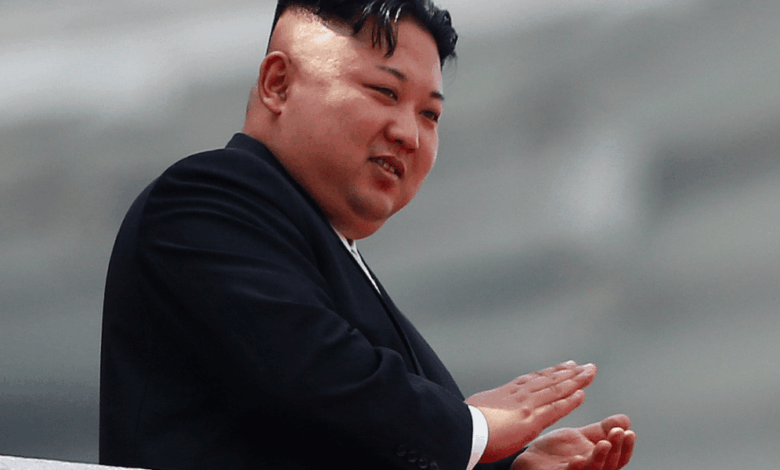
The timing of this diplomatic display is significant. It occurred days after US President Donald Trump departed Asia without securing a face-to-face meeting with Kim. During his visit to China for the Asia-Pacific Economic Cooperation (APEC) summit, Trump had previously suggested he might meet with the North Korean leader. However, the bilateral encounter did not materialize, and Trump left the region on Thursday following high-profile summits with Chinese and Russian leaders. In the immediate aftermath of this “snub,” Kim’s decision to personally preside over the credentialing ceremony drew sharp attention to Pyongyang’s shifting priorities. Rather than following up on Washington’s overtures, the North Korean leadership opted to reinforce its standing with a broader coalition of states, signaling that its diplomatic engagement is conditional and selective.
The strategic logic behind this move is rooted in what analysts describe as “multipolar sovereignty-based diplomacy.” Lim Eul-chul, a professor at Kyungnam University’s Institute for Far Eastern Studies, noted that by welcoming ambassadors while remaining unmoved by Trump’s diplomatic outreach, North Korea is signaling a shift in its approach. “The North has signalled a shift towards what could be described as ‘multipolar sovereignty-based diplomacy,'” Lim told AFP. This framework prioritizes independence and the defense of national sovereignty over the traditional binary of engagement or isolation vis-à-vis the US. For Pyongyang, the ceremony was not merely a formality but a public declaration of its intent to build good relations with nations that recognize its sovereignty and are “friendly towards us,” as Kim stated.
Kim’s remarks during the ceremony framed the current international environment as one of increasing instability. He described the world as witnessing an “unstable security crisis and political and economic chaos,” arguing that these conditions were forcing a significant change in how North Korea understands its own national sovereignty and security. In a statement that addressed both domestic and international audiences, Kim asserted that the Democratic People’s Republic of Korea neither pursues “supremacy nor expansion.” Instead, he emphasized that the country’s primary objective is to build up its security strength and settle its issues to the “utmost perfect satisfaction.” This rhetoric serves to justify North Korea’s defensive posture while projecting an image of a state seeking peaceful, albeit guarded, integration into the international community through specific, vetted channels.

The composition of the ten nations represented at the ceremony offers insight into Pyongyang’s diplomatic targets. The list included major powers such as Russia and China, alongside a diverse group of nations from Asia, Europe, and the Americas, including India, Sweden, Indonesia, Vietnam, Brazil, the Czech Republic, the Philippines, Thailand, and Bangladesh. Notably, while China is a key ally, it was not explicitly listed in the KCNA report of the ten countries, though the source material notes the inclusion of Russia and India as prominent examples. The presence of Russia is particularly noteworthy, as it coincides with a broader strengthening of ties between Pyongyang and Moscow. This alignment suggests that North Korea is actively deepening its relationship with Russia as a counterbalance to its stalled interactions with the United States, leveraging the current geopolitical tensions to secure its position in a more fragmented global order.
This diplomatic pivot follows a constitutional amendment passed in March that granted Kim the explicit power to accept foreign ambassadors’ credentials himself. This legal change provided the necessary institutional framework for the recent ceremony, allowing the leader to bypass traditional bureaucratic channels and take direct control of high-level diplomatic signals. By exercising this new authority, Kim demonstrated that North Korea’s foreign policy is now more centrally controlled and responsive to the leader’s immediate strategic assessments. The move underscores a trend where Pyongyang is increasingly willing to engage with the international community, but only on terms that reinforce its autonomy and security guarantees.
The failure of the Trump-Kim meeting in China has further isolated the US from this newly articulated diplomatic track. While Washington had sought a bilateral dialogue, Pyongyang’s response was to broaden its circle of engagement rather than narrow its focus to a single adversary. This strategy allows North Korea to maintain leverage by keeping multiple diplomatic channels open, ensuring that it is not dependent on any single relationship. For the US, the absence of a meeting during the APEC summit represents a missed opportunity to re-engage with Pyongyang, potentially ceding ground to other actors who are willing to meet North Korea’s conditions for dialogue.

As North Korea moves forward with this “sovereignty-based diplomacy,” the next steps will likely involve testing the depth of these new or renewed relationships. The emphasis on “independence, peace and friendship” provides a diplomatic cover for North Korea to pursue economic and security interests with a wider array of partners. However, the underlying tension remains: while Kim asserts that North Korea does not seek expansion, the continued buildup of security strength and the rejection of US overtures suggest that the fundamental disagreements between Pyongyang and Washington remain unresolved. The diplomatic shift is not a reconciliation, but a realignment, positioning North Korea to navigate a chaotic global landscape by hedging its bets across multiple geopolitical blocs.
The ceremony in Pyongyang stands as a testament to this new approach. By personally welcoming the envoys, Kim has placed the human element of diplomacy at the center of his statecraft, using the ritual of credentialing to assert North Korea’s legitimacy and agency. As the international community watches, the focus will turn to whether these new diplomatic ties can yield tangible economic or security benefits for North Korea, or if they will remain largely symbolic in the face of ongoing geopolitical friction. The next policy decision to watch will be whether Pyongyang attempts to leverage these relationships to ease sanctions or to secure further military and economic support from its new partners, particularly in a context where direct engagement with the US remains stalled.