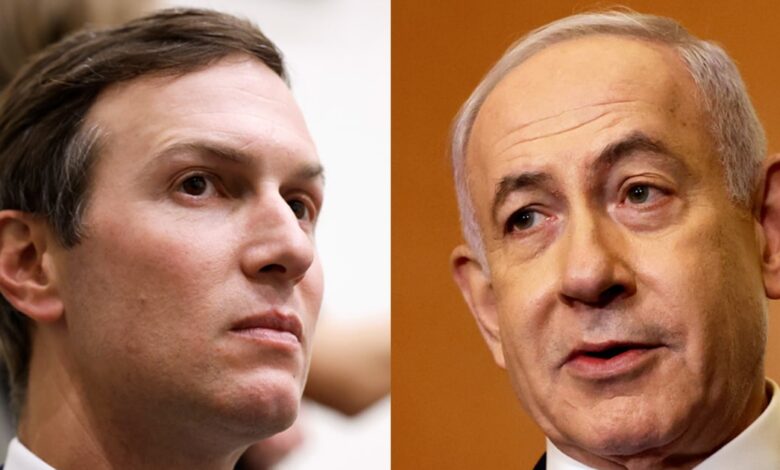
The agreement was forged during a meeting that included U.S. Ambassador to Israel Mike Huckabee and former British Prime Minister Tony Blair. It followed rare and direct talks between Kushner, other members of Trump’s “Board of Peace,” and the leader of Hamas. These discussions represent a renewed push to revive a Gaza peace plan that has been endorsed by both Trump and Hamas but previously rejected by the Israeli government. While the White House did not immediately respond to requests for comment on the specific details provided by a senior Israeli official, a Board of Peace official confirmed that the group “held deep and constructive discussions on the way forward.”
At the heart of the new framework is the sequencing of disarmament and reconstruction. Both Netanyahu and Kushner agreed that no reconstruction of Gaza should commence until Hamas is fully disarmed. This conditionality addresses a primary point of contention in previous negotiations. The Israeli official stated that Netanyahu “made it clear” that the Israel Defense Forces (IDF) will not redeploy from Gaza until this disarmament is complete. The IDF committed to continuing operations to “thwart” threats to its forces and residents of Israel, a stance that underscores the security risks Israel perceives in the current environment.
To operationalize these agreements, the parties agreed to immediately establish joint working groups. One group will focus specifically on the demilitarization of Gaza, while the other will address the basic needs of the Palestinian enclave, including the provision of clean water and addressing sanitation and environmental concerns. Netanyahu’s office confirmed the establishment of these two working groups in a public statement, although it did not confirm all the specific details outlined by the senior Israeli official. The prime minister’s office emphasized that both Israel and the Board of Peace view the disarmament and demilitarization process as needing to be “prompt and completed before any reconstruction happens in Gaza.”
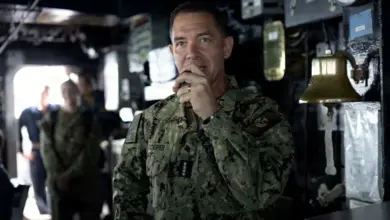
This diplomatic activity occurs against a backdrop of rare public divisions between the United States and Israel regarding the roadmap for the Palestinian enclave. Earlier this month, Netanyahu had rejected Trump’s 15-point plan, arguing that it required an Israeli military withdrawal contingent on Hamas’ disarmament rather than a verifiable cessation of threats. The current agreement appears to bridge this gap by placing the verification and supervision of the weapons handover under U.S. military authority, potentially offering the security guarantees Israel has demanded while satisfying the U.S. goal of a structured peace process.
The regional dynamics are further complicated by the positions of other stakeholders. Earlier on Monday, Hamas welcomed a joint statement from the United Arab Emirates, Qatar, Jordan, Indonesia, Pakistan, Turkey, Saudi Arabia, and Egypt condemning Israel’s previous rejection of the roadmap. Hamas has stated its willingness to disarm but insists that Israel must end its strikes and begin withdrawing from Gaza. Crucially, Hamas has indicated that the laying down of heavy weapons, a later stage in the process, would be contingent on the international recognition of a Palestinian state—a demand the current Israeli government firmly rejects.
Netanyahu faces significant domestic pressure as Israeli elections approach in October. His fragile coalition relies on far-right factions that are skeptical of any withdrawal from Gaza or concessions to Hamas. The decision to involve a U.S. general in the disarmament process may be a strategic move to mitigate these domestic risks by ensuring that the security burden of verifying Hamas’s compliance is shared with, or overseen by, a trusted ally. However, the path forward remains uncertain. The success of the joint working groups will depend on whether the technical mechanisms of weapons handover can be implemented without triggering renewed conflict, and whether the broader geopolitical conditions, including the status of Palestinian statehood, can be reconciled with Israel’s security requirements. The next critical step will be the operationalization of these working groups and whether the U.S. military supervision can effectively bridge the trust deficit between the parties.