
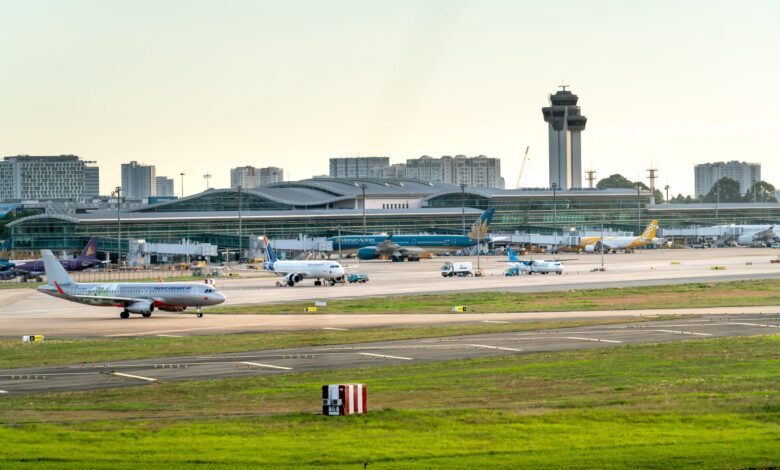
The disruption has drawn attention to the fundamental difficulty of modernizing critical infrastructure while keeping it operational. George Ferguson, a senior airlines analyst at Bloomberg Intelligence, noted in an interview on *Bloomberg This Weekend* that the ground stop illustrates the inherent complexities of upgrading a legacy system that must continue to function safely in real-time. Ferguson explained that the challenge is not merely technical but operational; the system must be updated without halting the flow of air traffic, a balance that has proven difficult to maintain.
The incident has also reignited the debate over funding for necessary upgrades. Jeff Mason, a White House correspondent for Bloomberg, reported on the administration’s response to the crisis. The focus of the discussion centered on Transportation Secretary Sean Duffy’s push for a $50 billion investment to modernize the US air traffic control system. This significant financial request highlights the scale of the infrastructure gap that has persisted for years, as the current systems struggle to cope with increasing traffic volumes and technological demands.
For airlines, the immediate aftermath of the ground stop has been a logistical scramble. Ferguson pointed out that restoring normal schedules after such a widespread disruption is a major undertaking. The ripple effects of thousands of cancellations and delays require airlines to reorganize crew rotations, aircraft maintenance schedules, and passenger itineraries, a process that takes time and resources even after the initial operational halt is lifted.
The broader context of this infrastructure challenge is being discussed alongside other significant policy and technological developments. During the same broadcast, Mason also addressed upcoming diplomatic engagements, including a planned trip by President Donald Trump to Asia and a scheduled meeting with Chinese President Xi Jinping. These discussions place the domestic infrastructure crisis in a wider geopolitical and technological landscape, where advancements in artificial intelligence and other technologies are also central to the national agenda.
However, the immediate focus remains on the air traffic control system. The distinction between the need for modernization and the reality of current operations is clear. The $50 billion request represents a proposed solution to a long-standing problem, but its implementation will require careful planning to avoid further disruptions. The recent ground stop serves as a practical demonstration of the risks associated with the current state of the system, reinforcing the argument that delaying further investment could lead to more frequent and severe operational failures.
Analysts emphasize that the complexity of the task involves integrating new technologies with existing legacy systems in a manner that ensures safety and efficiency. This is not a simple software update but a comprehensive overhaul of the infrastructure that supports one of the world’s busiest aviation networks. The incident has thus moved the discussion from theoretical debates about infrastructure funding to a concrete examination of the consequences of underinvestment in critical national systems.
As the aviation industry works to recover from the immediate disruptions, the pressure on policymakers to address the modernization funding will likely increase. The $50 billion figure requested by the Transportation Department is a specific proposal aimed at closing the gap between the current legacy infrastructure and the modern, reliable system required for future growth. The challenge lies in executing this transition without repeating the operational stoppages that have just occurred.
The situation underscores a broader principle in technology and infrastructure management: the cost of maintenance and modernization in active systems is invariably high due to the need for continuity. In the case of air traffic control, where safety is paramount, the margin for error is non-existent. The recent events have highlighted that while the technology may be aging, the stakes of failure are immediate and widespread, affecting not only airlines but the broader economy and public trust in the safety of air travel.
The path forward involves navigating the political and logistical hurdles of securing and deploying such a large-scale investment. The administration’s response to the ground stop and the subsequent emphasis on the $50 billion modernization plan suggests a recognition that the status quo is no longer sustainable. As discussions continue on both the domestic infrastructure front and the international technological stage, the air traffic control system remains a critical case study in the difficulties of upgrading essential services in real time.