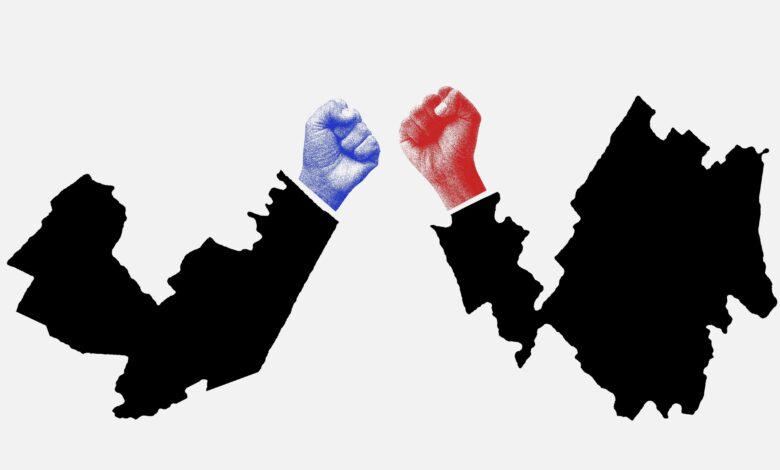
The failure of the redistricting campaign was most visible in states where Republicans had heavily invested in changing district boundaries. In North Carolina, a purple state, previous rounds of gerrymandering had already secured 10 of the state’s 14 House seats for Republicans. Last year, leveraging their legislative majorities, GOP lawmakers drew new lines specifically designed to eliminate the seat of Democratic Representative Don Davis in the largely rural First Congressional District. The new map was engineered to make the district significantly more Republican; had the lines been in place during the 2024 presidential election, Trump would have carried the constituency by 12 points. To achieve this, legislators pulled Republican voters from other districts, eroding their advantages elsewhere. However, Davis won his race, and with most ballots counted, Republicans are on the verge of losing five of their original House seats. Democrats are virtually assured of controlling a majority of the North Carolina delegation and came within several thousand votes of sweeping all 14 districts.
Similar patterns emerged in other key battlegrounds. Targeted Democratic incumbents in Florida, Ohio, and Alabama, who were considered vulnerable under the new maps, prevailed. In Texas, where Trump launched the initial gerrymandering blitz, candidates Bobby Pulido and Johnny Garcia benefited from a sharp swing to the left among Latino voters to win seats that had been redrawn. In Alabama, a new Republican-drawn map, which was enabled by a Supreme Court decision, had reduced the number of Black voters in a specific district, yet the anticipated Republican hold did not materialize as expected.
Analysts point to two primary factors that neutralized the GOP’s cartographic advantage. The first was a significant surge in Black voter turnout. This mobilization was a reaction to both Trump-administration policies and the Supreme Court’s decision to gut a key section of the Voting Rights Act (VRA). That ruling had spurred Republicans in southern states to redraw additional seats that the VRA had previously protected for majority-Black communities. Eric Holder, former Attorney General and current head of the National Democratic Redistricting Committee, noted that the ruling “galvanized the Democratic opposition.” LaTosha Brown, co-founder of the advocacy group Black Voters Matter Fund, characterized the phenomenon as “the great Blacklash.”
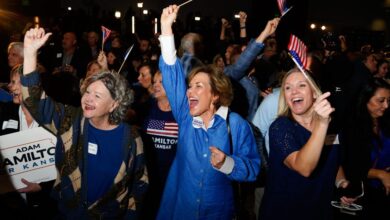
Beyond the House, the midterm results delivered a staggering defeat in the Senate, with victories that stood apart for both their historical significance and the demographic implications for the Democratic Party. James Talarico won a Texas Senate seat that had gone Democratic only once since 1988, and Adam Hamilton ended a 94-year losing streak for Kansas Democrats, who had last won a Senate race in 1932. Both Talarico and Hamilton are committed and prominent Christians, a factor that carries weight for a party that has become increasingly secular over the past several decades.
Talarico, whose grandfather was a Baptist preacher in South Texas, holds a master’s degree in theological studies from Austin Presbyterian Theological Seminary and had paused his path toward ordination to run for office. Hamilton, a United Methodist pastor for more than 35 years, founded the United Methodist Church of the Resurrection in Leawood, Kansas, in 1990. Starting from services held in a funeral home, he built it into the largest United Methodist congregation in America, with approximately 24,000 members across three states. Hamilton, who identifies as both a mainline Protestant and an evangelical, intends to remain as the church’s senior pastor on a part-time basis while serving in the Senate.

The arrival of Talarico and Hamilton in the Democratic caucus is significant because it addresses a long-standing tension between the party and Christian voters. For decades, the Democratic Party has drifted away from Christian communities, often displaying hostility or discomfort that has led many Christians to view Democrats as malicious rather than merely misguided. The notable exception has been Black Christians, many of whom are theologically conservative but have traditionally found a home in the Democratic Party, exemplified by Senator Raphael Warnock of Georgia, who continues to serve as the senior pastor of Ebenezer Baptist Church in Atlanta. With Talarico and Hamilton joining Warnock, the Democratic Party’s unease regarding evangelical and mainline Christian voters may begin to recede, potentially altering the party’s relationship with a key demographic in future elections.
The immediate consequence of Tuesday’s results is a shift in power that will constrain the President’s agenda and reshape the legislative landscape. The next formal step involves the certification of these results and the organization of the new congressional leadership, setting the stage for a more difficult path for the administration in the remaining years of the current term.