
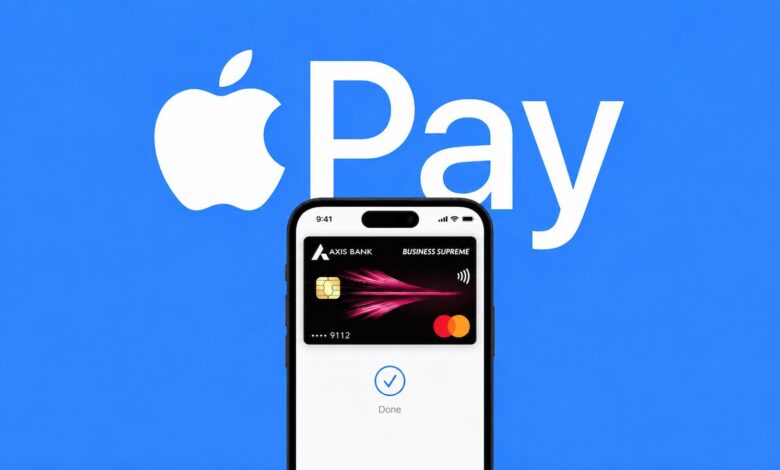
The availability of the service is currently restricted to a specific banking partner. At launch, users must possess an Axis Bank credit card on either the Visa or Mastercard network to use the feature. Major Indian financial institutions, including HDFC Bank, ICICI Bank, and State Bank of India (SBI) Card, have not yet added support for Apple Pay. Furthermore, RuPay, India’s domestic card network, is not compatible with the service. This limitation means that a significant portion of Indian cardholders cannot yet access the platform.
Merchants and payment terminals must also configure their systems to accept Apple Pay. Consequently, the service may not function at every contactless payment location across the country. The technical integration requires specific support from point-of-sale systems, which may result in an uneven user experience during the initial rollout phase as adoption spreads among retailers.

Regulatory Hurdles and Market Context
The delay in bringing Apple Pay to India was primarily attributed to regulatory issues that persisted for approximately a decade. India possesses a highly developed digital payment ecosystem dominated by the Unified Payments Interface (UPI). This state-backed system allows for the instantaneous transfer of funds between bank accounts and handles approximately 84 percent of the country’s digital transaction volume. UPI does not integrate with Apple Pay, creating a distinct competitive landscape where Apple’s service must coexist with, rather than replace, the dominant local infrastructure.
India has emerged as a strategically vital market for Apple, driven by both consumer growth and manufacturing expansion. The company has repeatedly highlighted strong performance in the region during quarterly earnings calls while increasing its retail presence. A key component of Apple’s strategy involves shifting a larger portion of iPhone production to India, aiming to diversify manufacturing capabilities away from a single geographic concentration.
Ongoing Legal and Environmental Challenges
The expansion of Apple’s operations in India coincides with several ongoing legal and regulatory disputes. The company is currently facing an antitrust case brought by the Competition Commission of India regarding its App Store practices. Additionally, Apple has refused to comply with a government order mandating that smartphone manufacturers preinstall a state-run application on new devices. These conflicts highlight the complex relationship between the company and Indian regulatory bodies as it deepens its market presence.

Environmental controversies have also arisen surrounding Apple’s supply chain in the country. Tata Electronics, a key manufacturing partner for Apple components, recently faced allegations from an Indian pollution regulator. The regulator claimed that wastewater from one of its iPhone component factories had contaminated local groundwater and nearby farmland. These issues underscore the broader operational challenges Apple faces as it scales its Indian footprint.
With the initial launch confirmed for Axis Bank customers, the next phase of development will likely focus on expanding banking partnerships and merchant adoption. The absence of support for major state-owned and private banks, as well as the domestic RuPay network, suggests that the service remains in an early stage of its Indian rollout.